
Clubroot Disease: Recognizing Swollen Roots in Crucifers

Ready to unlock the secrets of a thriving, organic garden? At CultivateYourFood, we empower you to grow your own delicious fruits, vegetables, and herbs. But what happens when unexpected challenges arise? This is where our expertise comes in. Learn how to identify and combat the devastating effects of Clubroot disease, a common threat to cruciferous crops, using completely organic methods. Discover effective strategies for control and ensure a bountiful harvest – let's cultivate success together!
- Understanding Clubroot Disease in Cruciferous Vegetables
- Diagnosing Clubroot: Distinguishing it from Other Root Problems
- Organic Control Strategies for Clubroot Disease
- Preventing Clubroot: Best Practices for Healthy Crucifers
- Living with Clubroot: Long-Term Management Strategies
- Frequently Asked Questions
- Final Reflection: A Sustainable Future for Cruciferous Crops
- Unleash Your Inner Plant Detective!
Understanding Clubroot Disease in Cruciferous Vegetables
Clubroot disease, caused by the soilborne pathogen Plasmodiophora brassicae, is a significant threat to cruciferous vegetable production, impacting crops like cabbage, cauliflower, broccoli, kale, and turnips. This insidious disease can severely reduce yields and even kill plants, making its early detection and management crucial for home gardeners and small-scale farmers alike. This article focuses on recognizing the telltale signs of clubroot—specifically the characteristic swollen roots—and explores sustainable and organic control methods to combat this persistent pathogen.
We'll delve into the disease's life cycle to understand how to best prevent and manage infestations, ensuring healthy and thriving cruciferous crops using environmentally friendly practices. Learning to identify clubroot early is a key strategy in organic clubroot disease control, minimizing the need for harsh chemical interventions and preserving the health of your soil. This guide provides practical steps for organic gardeners to effectively manage this challenging plant disease.
Identifying Clubroot Symptoms: Swollen Roots and Wilting
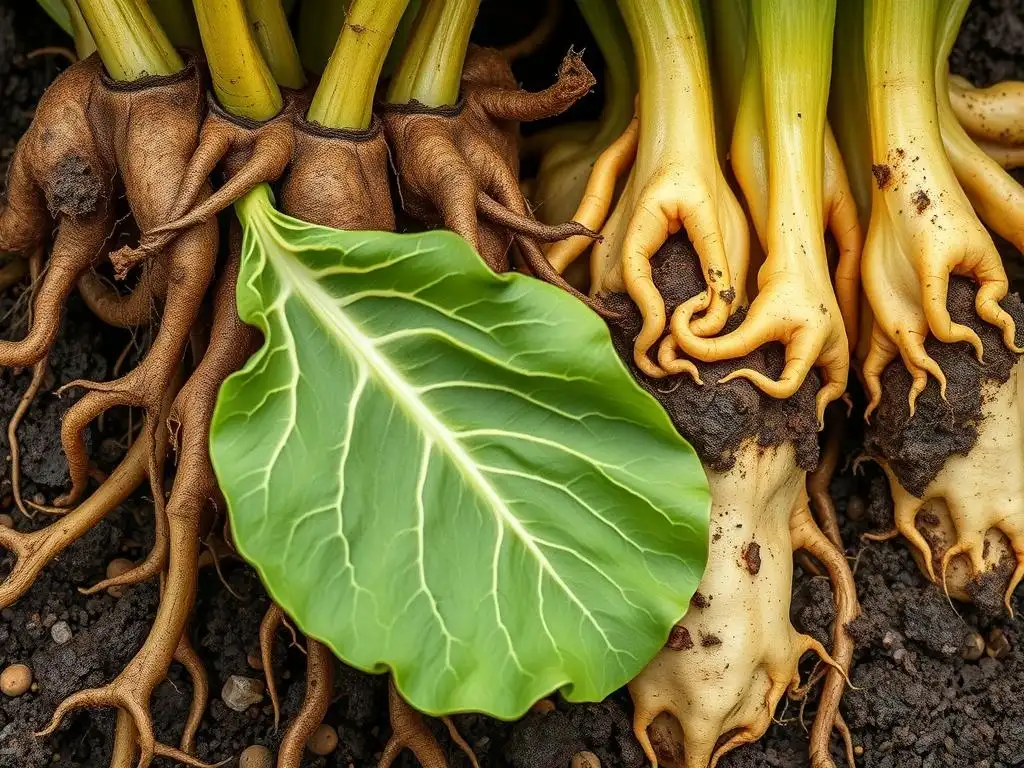
The most striking symptom of clubroot disease is the galling or swelling of the roots. Instead of a healthy, fibrous root system, infected plants develop large, misshapen root structures. These galls can vary in size, from small nodules to growths the size of a golf ball or even larger. The severity of the swelling is often correlated with the level of infection.
Initially, you might notice stunted growth and wilting, particularly during hot, dry periods, even when the soil moisture appears adequate. This is because the deformed roots are less efficient at absorbing water and nutrients. The plant may also exhibit yellowing leaves (chlorosis) as a result of nutrient deficiencies.
Further examination of the root system will reveal the characteristic club-shaped galls, which are often firm and can be difficult to break apart. These galls are the result of the pathogen's activity within the root tissue. It's important to distinguish clubroot galls from other root abnormalities caused by physical damage or other pathogens.
Clubroot galls are usually more numerous and concentrated near the main taproot. Remember to carefully inspect the root systems of your cruciferous plants, especially if you observe any signs of stunted growth or wilting. A careful examination of the roots is paramount in the early diagnosis and implementation of organic clubroot disease control.
Early Detection of Clubroot: Preventing Widespread Infection
Early detection is key to effective clubroot management. Regular monitoring of your cruciferous crops is crucial. Look for the tell-tale signs mentioned above: stunted growth, wilting, yellowing leaves, and, most importantly, the characteristic swollen roots. Begin inspecting your plants early in the growing season, paying close attention to young seedlings. If you suspect an infection, immediately isolate the affected plants to prevent the spread of the pathogen. Do not compost infected plants, as the pathogen can survive in the compost and reinfect your garden.
Implementing preventative measures is crucial in organic clubroot disease control. Crop rotation is a highly effective strategy, as the pathogen's survival in the soil is limited. Avoid planting cruciferous vegetables in the same location for at least 3-4 years. This allows the pathogen's population to decline naturally.
Soil pH management is also important, as the pathogen thrives in slightly acidic conditions (pH 6.0-7.0). Amending your soil with lime to raise the pH can help to suppress the disease. Furthermore, maintaining good soil drainage helps to reduce the pathogen's spread, as it favors moist conditions. Careful attention to these preventative measures can significantly reduce the risk of clubroot infection.
Clubroot Disease Life Cycle: Understanding the Pathogen
Plasmodiophora brassicae exists in the soil as resting spores, which are highly resistant to environmental conditions. These spores can remain viable in the soil for many years, making eradication challenging. When the spores encounter susceptible cruciferous roots, they germinate and infect the root cells. The pathogen then undergoes a complex life cycle within the root tissue, leading to the formation of galls. These galls produce more resting spores, which are released back into the soil when the plant decomposes.
Understanding this life cycle is crucial for effective management. The long survival time of resting spores emphasizes the importance of preventative measures like crop rotation and pH adjustment. While complete eradication is difficult, implementing these strategies minimizes the pathogen's population and reduces the risk of severe infections. Proper sanitation, including removing infected plant debris and avoiding the spread of soil from infected areas, also plays a vital role in preventing the spread of Plasmodiophora brassicae. By recognizing the pathogen's life cycle and implementing appropriate control measures, organic gardeners can significantly reduce the impact of clubroot disease on their crops.
Diagnosing Clubroot: Distinguishing it from Other Root Problems
Clubroot disease, caused by the soilborne pathogen Plasmodiophora brassicae, presents unique challenges in diagnosis due to its similarity to other root abnormalities. Accurate identification is crucial for effective management, especially when employing organic clubroot disease control methods. Misdiagnosis can lead to ineffective treatments and further crop losses. This section focuses on differentiating clubroot from other root problems commonly encountered in cruciferous plants.
Differentiating Clubroot from Other Root Diseases and Abnormalities
Several factors can cause root abnormalities in cruciferous vegetables, mimicking the symptoms of clubroot. Nutrient deficiencies, for example, can lead to stunted growth and root deformation, but these typically lack the characteristic galls and swellings associated with clubroot. Root knot nematodes also cause root swelling, but these swellings are usually smaller, smoother, and more rounded than the irregular, often large, galls caused by P. brassicae. Furthermore, nematode infestations often result in a larger number of smaller galls distributed along the root system, whereas clubroot typically manifests as fewer, larger, and more pronounced galls, frequently near the crown.
Consider this example: a cabbage plant exhibiting stunted growth and slightly swollen roots might initially be suspected of having clubroot. However, a closer examination reveals numerous small, smooth swellings along the finer roots, suggesting root-knot nematodes instead. Soil testing for nematodes would then confirm the diagnosis and guide the choice of appropriate organic control measures, which would differ significantly from those used for clubroot.
Another important distinction lies in the root's overall appearance. While clubroot causes significant distortion and swelling, primarily at the crown and larger roots, other root problems might affect the entire root system more uniformly. For instance, compacted soil can restrict root growth, resulting in a general reduction in root size and branching, but without the characteristic galls of clubroot. Similarly, certain fungal infections can cause root rot, leading to decay and discoloration, but not the distinctive club-shaped swellings.
Visual Inspection: Examining Roots for Characteristic Swellings
Visual inspection is the first step in diagnosing clubroot. Careful examination of the roots is essential. Look for the telltale signs: irregular, often large, and club-shaped swellings on the roots, particularly near the crown of the plant. These galls can range in size from small bumps to swellings several centimeters in diameter. The color of the galls can vary, ranging from pale to dark brown, depending on the stage of the infection and the plant species. Severely affected roots may appear distorted and stunted, with reduced branching.
The following table summarizes key visual differences:
| Feature | Clubroot | Root-Knot Nematodes | Nutrient Deficiency | Compacted Soil |
|---|---|---|---|---|
| Root Swellings | Large, irregular, club-shaped galls | Small, smooth, rounded galls | Minimal or absent | Minimal or absent |
| Gall Location | Primarily crown and larger roots | Distributed throughout the root system | N/A | N/A |
| Root Color | Varies, often pale to dark brown | Often discolored | May be discolored, depending on nutrient | Generally unchanged |
| Root Growth | Stunted, distorted | Stunted, but may have numerous fine roots | Stunted, thin roots | Stunted, reduced branching |
Remember, early detection is key for effective organic management. Regular monitoring of your cruciferous crops, paying close attention to root development, is crucial for early intervention. The presence of even a few characteristic galls warrants further investigation.
Laboratory Testing: Confirming Clubroot Diagnosis
While visual inspection provides strong preliminary evidence, laboratory testing is often necessary for definitive diagnosis. A soil sample can be sent to a diagnostic laboratory for analysis to confirm the presence of Plasmodiophora brassicae. Laboratory testing offers several advantages: it allows for accurate identification of the pathogen, ruling out other possible causes of root abnormalities. It helps to determine the severity of the infection, aiding in the selection of appropriate management strategies.
Furthermore, laboratory confirmation is especially important when implementing organic clubroot disease control strategies, ensuring that resources are applied effectively. This precise identification is critical for the long-term health of your soil and the success of your organic gardening practices. Without confirmation, treatment could be misdirected, leading to wasted effort and potential crop failure. Several methods are employed in the lab, including microscopic examination of soil samples to identify the pathogen's resting spores.
Organic Control Strategies for Clubroot Disease

Clubroot disease, caused by the soilborne pathogen Plasmodiophora brassicae, is a significant threat to cruciferous crops. While chemical controls exist, many home gardeners prioritize organic methods for clubroot disease organic control. Fortunately, several sustainable strategies can effectively manage and even prevent this devastating disease. These methods focus on disrupting the pathogen's life cycle, improving soil health, and utilizing naturally occurring antagonists. Let's explore effective organic approaches.
Soil Management Practices for Clubroot Prevention
Proactive soil management is crucial for preventing clubroot outbreaks. By focusing on soil health and creating an unfavorable environment for the pathogen, you can significantly reduce the risk of infection.
Crop Rotation: Breaking the Clubroot Life Cycle
Implementing a rigorous crop rotation is paramount. Plasmodiophora brassicae survives in the soil for many years as resting spores. Rotating away from cruciferous crops (broccoli, cauliflower, cabbage, kale, radish, turnips, etc.) for at least 4-6 years, ideally longer, is essential. During this period, plant non-host species. Good options include legumes (peas, beans), grasses, and grains. This extended break disrupts the pathogen's life cycle, preventing the build-up of inoculum. Precise rotation schedules should be tailored to your specific region and soil conditions. For example, a longer rotation might be necessary in areas with a history of severe clubroot infestations.
Soil pH Management: Creating an Unfavorable Environment
The pathogen thrives in slightly acidic soils (pH 6.0-7.5). Raising the soil pH to a more alkaline level (above 7.5) can significantly hinder its development. Soil testing is crucial to determine your current pH. Liming is a common practice to increase soil pH. The amount of lime needed will depend on your soil type and desired pH increase. It's crucial to follow recommended application rates and conduct regular soil testing to monitor pH levels over time. Over-liming can have negative consequences, so careful management is key.
Soil Amendments: Improving Soil Health and Drainage
Well-drained soil is less susceptible to clubroot. Amend heavy clay soils with organic matter, such as compost, well-rotted manure, or leaf mold, to improve drainage and aeration. Improved drainage reduces soil moisture, which is crucial, as the pathogen thrives in wet conditions. Organic matter also enhances soil structure, promoting beneficial microbial activity that can help suppress the pathogen. Remember to avoid using manure from animals that have grazed on cruciferous crops, as this could introduce the pathogen into your garden.
Biological Control Methods for Clubroot Suppression
Beyond soil management, incorporating biological control methods can further enhance clubroot management.
Beneficial Microorganisms: Enhancing Soil Health
Certain beneficial microorganisms can compete with Plasmodiophora brassicae for resources or directly inhibit its growth. While research is ongoing, some studies suggest that introducing specific bacteria or fungi into the soil might aid in clubroot suppression. Composting and the use of diverse soil amendments can encourage the growth of these beneficial organisms. More research is needed to fully understand the efficacy of these methods for widespread clubroot organic control. [Specific beneficial microorganisms and their application methods pending].
Resistant Cultivars: Choosing Clubroot-Tolerant Plants
Selecting clubroot-resistant or -tolerant cultivars is a crucial aspect of organic disease management. Breeders are constantly developing new varieties with increased resistance. Check seed catalogs and consult with local agricultural extension services to identify cultivars specifically bred for clubroot resistance in your region. While no cultivar offers complete immunity, choosing resistant options significantly reduces the risk of severe infections and minimizes the need for other control measures. Remember that even resistant varieties may succumb to the disease under extremely high pathogen pressure.
Integrated Pest Management (IPM) for Clubroot
Integrated Pest Management (IPM) is a holistic approach to clubroot disease control that emphasizes prevention and minimizes reliance on chemical treatments. This strategy focuses on understanding the clubroot lifecycle and employing a combination of tactics to suppress the pathogen. A crucial component of IPM for clubroot is crop rotation. Rotating crops with non-cruciferous plants for at least four years is vital, as the Plasmodiophora brassicae pathogen survives in the soil for extended periods. During this rotation period, the pathogen's viability significantly decreases, reducing the risk of infection in subsequent cruciferous crops. Careful selection of resistant or tolerant varieties is another key element.
While complete immunity is rare, some cruciferous varieties exhibit greater resistance to clubroot than others. Consult with your local agricultural extension office or seed supplier to identify varieties suitable for your region and soil conditions. Regular soil testing can help determine the severity of the clubroot infestation, guiding management decisions. Testing reveals the presence and density of the pathogen, enabling informed choices regarding crop rotation length and variety selection. Finally, maintaining optimal soil pH is critical.
The pathogen thrives in slightly acidic conditions (pH 6.0-7.0). Adjusting soil pH to a more alkaline range (pH 7.0-7.5) can significantly hinder its development. This can be achieved through liming, but careful consideration of the soil's specific needs is essential to avoid unintended consequences. The success of IPM relies on the integration of all these strategies, working synergistically to reduce clubroot pressure and promote healthy crop growth. Ignoring any one aspect can compromise the effectiveness of the entire system.
Combining Organic Control Methods for Effective Management
Combining various organic control methods significantly enhances the effectiveness of clubroot management. For instance, integrating crop rotation with resistant varieties offers a more robust defense than either method alone. The resistant variety reduces the initial infection pressure, while the crop rotation ensures that the pathogen's population remains low even after the resistant crop. Similarly, combining soil pH adjustment with biofumigation strengthens the overall control strategy.
Biofumigation, using plants like mustard or radish as green manure, releases isothiocyanates into the soil, which have nematicidal and fungicidal properties, effectively suppressing the clubroot pathogen. Adjusting the soil pH concurrently creates an unfavorable environment for the pathogen, further reducing its survival and infectivity. Another effective combination involves the use of compost tea alongside resistant varieties. Compost tea, rich in beneficial microorganisms, can improve soil health and suppress soilborne pathogens, including Plasmodiophora brassicae.
The use of resistant varieties reduces the initial inoculum, and the compost tea helps to further suppress the remaining pathogen population and promote overall plant vigor. The key to success lies in a tailored approach, selecting the combination of methods most suitable to your specific circumstances, considering factors like soil type, climate, and the severity of the infestation. Careful observation, record-keeping, and adaptation are crucial for optimizing the integrated approach and achieving long-term sustainable clubroot management. Remember that consistent application of these techniques over several years is essential for effective, long-term organic control of clubroot disease.
Preventing Clubroot: Best Practices for Healthy Crucifers
Clubroot disease, caused by the soilborne pathogen Plasmodiophora brassicae, can devastate cruciferous crops like cabbage, broccoli, cauliflower, and kale. While eradicating P. brassicae from the soil is difficult, implementing preventative measures significantly reduces the risk of infection and promotes healthy plant growth. Organic control strategies, focusing on soil health and preventative practices, are crucial for long-term success in managing clubroot. This section details essential steps for preventing clubroot and ensuring a bountiful harvest of your cruciferous vegetables. The key is proactive management, focusing on soil health and plant vigor.
Selecting Healthy Seedlings and Transplants
Choosing healthy seedlings and transplants is the first line of defense against clubroot. Infected plants will show symptoms even at a young age, so careful selection is paramount. Look for vigorous plants with deep green, healthy foliage. Avoid any seedlings or transplants showing signs of stunted growth, yellowing leaves, or thickened, distorted roots. Purchasing from reputable nurseries that practice rigorous disease management protocols is highly recommended. Consider purchasing disease-resistant varieties whenever possible, as these cultivars exhibit inherent resistance to P. brassicae. This inherent resistance is a significant advantage in organic clubroot management.
Many seed companies now offer clubroot-resistant varieties, clearly labeled as such. Check seed packets and nursery catalogs carefully. While no variety is completely immune, resistant varieties significantly reduce the likelihood of infection, even in soil with a history of clubroot. Investing in these varieties is a strategic step towards successful organic clubroot control. Remember to always check the specific resistances listed for each variety, as resistance can vary depending on the specific P. brassicae pathotype present in your region.
Maintaining Proper Soil Drainage and Aeration
Plasmodiophora brassicae thrives in poorly drained, compacted soils with high moisture content. Improving soil drainage and aeration is therefore a cornerstone of organic clubroot control. Well-drained soil reduces the amount of time the pathogen spends in favorable conditions for infection. This means less opportunity for the pathogen to infect your plants. Consider these steps:
- Soil Testing: Conduct a soil test to determine your soil's pH and drainage capabilities. Clubroot prefers slightly acidic conditions (pH 6.0-7.0), so amending the soil to raise the pH above 7.0 can help suppress the pathogen.
- Soil Amendments: Incorporate organic matter such as compost, well-rotted manure, or cover crops to improve soil structure, drainage, and aeration. Organic matter helps create a healthier soil environment less conducive to clubroot development. Aim for a soil rich in organic matter, which improves its ability to retain moisture without becoming waterlogged.
- Raised Beds: Construct raised beds to improve drainage and aeration, particularly in areas with heavy clay soils. This provides better control over soil moisture and reduces the risk of waterlogging.
- Crop Rotation: Rotate your crops, avoiding planting cruciferous vegetables in the same location for at least three years. This helps reduce the pathogen's population in the soil over time, as it relies on cruciferous hosts to reproduce.
Remember that consistent soil improvement is a long-term commitment. Annual amendments and careful attention to drainage are key to creating a less hospitable environment for P. brassicae.
Avoiding Overwatering and Poor Soil Conditions
Overwatering is a major contributor to clubroot development. Excessive moisture creates the ideal conditions for the pathogen to thrive and infect plant roots. Avoid overwatering your cruciferous crops, and ensure that the soil has adequate drainage to prevent waterlogging. Monitor soil moisture regularly using your finger or a moisture meter. Water deeply and less frequently, allowing the soil to dry slightly between waterings.
Beyond watering, soil compaction also plays a significant role. Compacted soils restrict root growth and create anaerobic conditions, favoring the pathogen. Avoid walking or working on wet soil, as this can further compact it. Regular tilling (if appropriate for your soil type) can help alleviate compaction.
Furthermore, maintaining a balanced soil pH is vital. The use of lime to increase the pH is a common organic practice that can help suppress clubroot. Regular soil testing and pH adjustment as needed will help maintain optimal conditions for plant health and disease resistance. Regular soil monitoring and adjustments are critical components of successful, long-term organic clubroot management.
Sanitation Practices: Preventing Disease Spread
Maintaining impeccable sanitation is paramount in preventing the spread of clubroot disease. This pathogen survives for years in the soil, clinging to infected plant debris. Therefore, removing any infected plant material is crucial. Don't just pull up the plants; thoroughly remove all roots, even the smallest root fragments, as these can harbor the Plasmodiophora brassicae pathogen.
Dispose of infected plants responsibly – ideally, burning them if local regulations allow. Composting infected plants is strongly discouraged as the composting process may not reach temperatures high enough to kill the clubroot pathogen. This practice could inadvertently spread the disease to other areas of your garden.
Furthermore, rigorous cleaning of gardening tools and equipment is essential. After working with infected plants or in contaminated soil, thoroughly clean shovels, hoes, and other tools with a strong disinfectant solution, such as a diluted bleach solution (always follow product instructions carefully). This prevents the accidental transfer of soil containing the pathogen to healthy areas of your garden. Similarly, if you use any shared equipment, such as a tiller, ensure it's thoroughly cleaned before and after use to prevent cross-contamination.
This proactive approach significantly minimizes the risk of spreading clubroot disease within your garden or to other gardens. The meticulous removal of infected plant matter, coupled with thorough tool sterilization, forms the backbone of a comprehensive sanitation strategy for organic clubroot disease control. Failing to do so risks a persistent and expanding infestation.
Living with Clubroot: Long-Term Management Strategies
Clubroot disease, caused by the soilborne pathogen Plasmodiophora brassicae, is a persistent challenge for home gardeners growing cruciferous vegetables. Eradication is often unrealistic; therefore, a long-term management strategy focusing on minimizing its impact and building soil resilience is crucial. This involves a multi-pronged approach encompassing careful monitoring, adjusted gardening techniques, and a commitment to improving overall soil health. Effective "Clubroot disease organic control" necessitates patience and consistent effort.
Monitoring for Clubroot Recurrence
Regular monitoring is the cornerstone of successful long-term clubroot management. Early detection allows for timely intervention, preventing widespread infection. This involves vigilant observation throughout the growing season, paying close attention to the root systems of your cruciferous plants (broccoli, cauliflower, cabbage, kale, etc. ).
Look for the telltale signs: swollen, club-shaped galls on the roots. These galls disrupt water and nutrient uptake, leading to stunted growth and reduced yields. Begin your inspections as soon as seedlings emerge, checking both above-ground symptoms (wilting, yellowing) and below-ground galls.
It's advisable to conduct a thorough root examination at harvest. Even if no visible symptoms were present during the growing season, examining the roots can reveal latent infections. Documenting the presence and severity of clubroot in each growing area helps track its spread and inform future planting decisions. Consider keeping a detailed garden journal, noting the location of affected plants and the severity of the infestation. This detailed record is invaluable for refining your long-term management plan. Careful monitoring provides the most effective "Clubroot disease organic control" strategy.
Adapting Gardening Practices to Manage Infection
Modifying your gardening practices can significantly reduce clubroot pressure. Crop rotation is paramount. Avoid planting cruciferous vegetables in the same location for at least 4-5 years. This allows the pathogen to decline in the soil due to lack of a suitable host. Consider incorporating non-host plants in your rotation, such as legumes (peas, beans), grasses, or grain crops. These can help improve soil structure and suppress the pathogen indirectly.
Soil pH plays a crucial role. Plasmodiophora brassicae thrives in slightly acidic conditions (pH 6.0-7.0). Raising the soil pH to a more alkaline range (pH 7.2-7.5) can inhibit its development. This can be achieved through the application of lime, but careful soil testing is necessary to determine the appropriate amount. Overliming can also be detrimental to plant health.
Another crucial aspect is avoiding soil disturbance. Minimizing tillage reduces the spread of clubroot spores. No-till or reduced-till methods are highly recommended for areas with a history of clubroot. Instead of tilling, use methods such as cover cropping to improve soil health.
Long-term Soil Health Improvement for Clubroot Resistance
Building healthy, resilient soil is the ultimate goal in managing clubroot organically. Healthy soil supports vigorous plant growth, making plants less susceptible to disease. This involves several key practices:
- Composting: Incorporating well-rotted compost improves soil structure, nutrient content, and microbial diversity, all of which contribute to plant health and resilience against pathogens. Avoid using compost from plants infected with clubroot.
- Cover Cropping: Planting cover crops such as legumes (e.g., clover, vetch) improves soil fertility and structure, while also suppressing weeds that can compete with your vegetables. Legumes also fix nitrogen, reducing the need for synthetic fertilizers.
- Soil Biodiversity: A diverse soil microbiome is crucial for healthy soil. Encouraging beneficial microorganisms through practices like composting and cover cropping helps create a less hospitable environment for the clubroot pathogen.
- Biological Control: While research is ongoing, some studies indicate that certain beneficial microorganisms may have antagonistic effects on Plasmodiophora brassicae. Further research on promising biological control agents is needed to determine their practical application in home gardens. This is a promising area for future "Clubroot disease organic control" strategies. The focus should remain on creating a soil environment that supports plant health and discourages the pathogen.
Frequently Asked Questions
What is clubroot disease?
Clubroot disease is a soilborne disease affecting plants in the Brassicaceae family (crucifers), like cabbage, broccoli, and cauliflower. It causes swollen, distorted roots, hindering water and nutrient uptake. This leads to stunted growth and reduced yields.
How do I identify clubroot disease?
Look for swollen, galls, or club-shaped growths on the roots of your cruciferous plants. Above-ground symptoms include stunted growth, wilting, and yellowing leaves. Dig up the plant to confirm the diagnosis.
What are some organic control methods for clubroot?
Crop rotation is crucial, avoiding cruciferous plants for at least 4-5 years. Soil amendments like compost and resistant varieties can also help. Maintaining soil pH above 7.0 can suppress the disease.
Can clubroot survive in the soil for a long time?
Yes, clubroot spores can survive in the soil for many years, even decades. This is why long crop rotation is vital for effective control. Thorough soil management is key.
Are there any chemical controls for clubroot disease?
While chemical treatments exist, CultivateYourFood focuses on sustainable and organic practices. These methods, although requiring more time and effort, are more environmentally friendly and safer for your plants and the environment.
Final Reflection: A Sustainable Future for Cruciferous Crops
The devastating impact of clubroot disease on cruciferous crops demands immediate and sustained action, threatening both food security and the livelihoods of farmers worldwide. Ignoring this insidious threat is no longer an option; proactive, sustainable solutions are crucial for the future of our food systems.
The insidious nature of clubroot, its ability to persist in the soil for years, underscores the urgent need for integrated pest management strategies. The best time to plant a tree was 20 years ago. The second best time is today.
This proverb perfectly encapsulates our responsibility to address clubroot now, implementing preventative measures and exploring organic control methods to protect future harvests. The shift towards organic farming practices, while challenging, offers a pathway towards a healthier environment and a more resilient agricultural system, minimizing the reliance on harmful chemical treatments.
You, the reader, are now equipped with knowledge to identify and combat clubroot. Consider the information presented – from early detection techniques to the implementation of organic control methods – and actively integrate these strategies into your own gardening or farming practices. Let's work together to build a future where healthy, vibrant cruciferous crops thrive, ensuring food security and environmental sustainability for generations to come.
Unleash Your Inner Plant Detective!
Thank you for learning about clubroot disease! You now have the knowledge to identify this sneaky threat to your brassica crops. Let's put that knowledge to work.
- Immediately inspect your brassica plants: Check for swollen roots—an early sign of clubroot. Early detection is crucial and could save your harvest.
- Share your findings (and photos!): Help fellow gardeners by posting your experiences and images in the comments below. Let's build a community of informed growers!
- Choose resistant varieties for your next planting: A little research now can prevent significant problems later.
What's your plan to protect your brassica crops from clubroot this year? Let's discuss your strategies in the comments!