
Wheelchair Gardening: Avoiding Common Mistakes and Challenges


Welcome to CultivateYourFood, your guide to growing a thriving garden, organically and sustainably! Ready to discover the joys of homegrown produce, even if you're using a wheelchair? Our new article on Accessible Wheelchair Gardening Tips tackles common challenges and offers practical solutions to help you cultivate your own food paradise, regardless of mobility. Learn how to overcome obstacles and reap the rewards of a bountiful harvest – let's get growing!
- Accessible Wheelchair Gardening Tips: Planning Your Accessible Garden
- Overcoming Physical Challenges in Wheelchair Gardening
- Common Mistakes to Avoid in Accessible Wheelchair Gardening
- Maintaining Your Accessible Wheelchair Garden
- Harvesting and Enjoying Your Accessible Garden Produce
-
Frequently Asked Questions
- What are some common mistakes wheelchair users make when gardening?
- What adaptive gardening tools are most helpful for wheelchair users?
- How can I make my garden more accessible from a wheelchair?
- What are some tips for successful wheelchair gardening in small spaces?
- How can I prevent pest problems in my accessible wheelchair garden?
- Final Reflection: Cultivating Independence, One Bloom at a Time
- Unleash Your Green Thumb: Grow a Bountiful Garden, No Matter Your Mobility!
Accessible Wheelchair Gardening Tips: Planning Your Accessible Garden
Cultivating your own fruits, vegetables, and herbs is a rewarding experience, offering fresh, healthy produce and a connection to nature. However, for wheelchair users, navigating the typical garden can present significant challenges. This guide focuses on providing practical, accessible wheelchair gardening tips, helping you overcome common obstacles and create a thriving, inclusive garden space. We'll explore essential planning stages, from assessing your physical capabilities and available space to selecting appropriate tools and designing a layout that promotes ease of movement and access.
Mastering these fundamental aspects will empower you to enjoy the joys of gardening regardless of physical limitations, fostering independence and a fulfilling connection with the natural world. Remember, an accessible garden isn't about limiting your ambitions, but rather about adapting your approach to create a space that works perfectly for you. Let's delve into the key steps to ensure your gardening journey is both productive and enjoyable.
Assessing Your Physical Capabilities and Garden Space for Wheelchair Gardening
Before you even think about planting a single seed, a thorough self-assessment is crucial. Honestly evaluate your physical capabilities and limitations. Consider your range of motion, upper body strength, and stamina. Are you able to lift heavy objects? How long can you comfortably maintain a gardening position? These factors will directly influence the design and practicality of your accessible garden.
Next, carefully measure your available garden space. Consider not only the overall area but also the accessibility of that space. Are there slopes or uneven terrain? Are there obstacles that might impede wheelchair navigation, such as steps, narrow pathways, or low-hanging branches?
Take detailed measurements and note any potential challenges. Sketching a rough plan of your garden area, including existing features and obstacles, can be incredibly helpful in the planning process. Accurate measurements and a realistic assessment of your physical abilities are fundamental to creating a truly accessible and enjoyable gardening experience. Remember, it's better to start small and build gradually than to attempt too much too soon.
Choosing the Right Gardening Tools and Equipment for Wheelchair Users
Selecting the right tools is paramount for comfortable and efficient wheelchair gardening. Avoid tools with awkward handles or those requiring excessive bending or reaching. Prioritize ergonomic designs that minimize strain and maximize ease of use. Consider the following:
- Lightweight tools: Opt for lightweight trowels, hand rakes, and hoes made from aluminum or other lightweight materials.
- Long-handled tools: Long-handled tools extend your reach, reducing the need for excessive bending or stretching.
- Adaptive tools: Explore adaptive gardening tools specifically designed for individuals with limited mobility. These might include tools with ergonomic grips, swivel heads, or other features that enhance accessibility.
- Seated gardening tools: Consider tools that can be used while seated, further reducing physical strain.
- Power tools: For larger tasks, power tools such as electric tillers or weed whackers can significantly reduce physical exertion. Remember safety and always follow the manufacturer's instructions.
Consider the use of a raised garden bed system to eliminate bending and kneeling. This is a game changer for accessible gardening!
Designing an Accessible Garden Layout: Paths, Raised Beds, and Seating
Designing an accessible garden layout is key to maximizing your gardening experience. Focus on creating a space that is easy to navigate and allows you to comfortably reach all areas of your garden.
- Wide, level pathways: Ensure pathways are at least 36 inches wide to allow for easy wheelchair access and turning. Maintain a level surface to avoid obstacles and ensure smooth navigation. Consider using paving stones, gravel, or mulch for pathways, ensuring a firm, stable surface.
- Raised garden beds: Raised beds significantly reduce the need for bending and kneeling, making gardening more accessible. The ideal height depends on your individual needs and wheelchair type; aim for a height that allows you to comfortably reach and tend to your plants while seated.
- Seating: Integrate comfortable seating strategically throughout your garden. This allows for breaks and reduces fatigue during longer gardening sessions. Choose sturdy, weather-resistant seating that is easy to access from your wheelchair.
- Vertical gardening: Consider vertical gardening techniques using trellises or hanging baskets to maximize space and minimize bending.
Remember, creating an accessible garden is an iterative process. Don't hesitate to adjust your design and adapt as needed to optimize your comfort and enjoyment. Happy gardening!
Overcoming Physical Challenges in Wheelchair Gardening
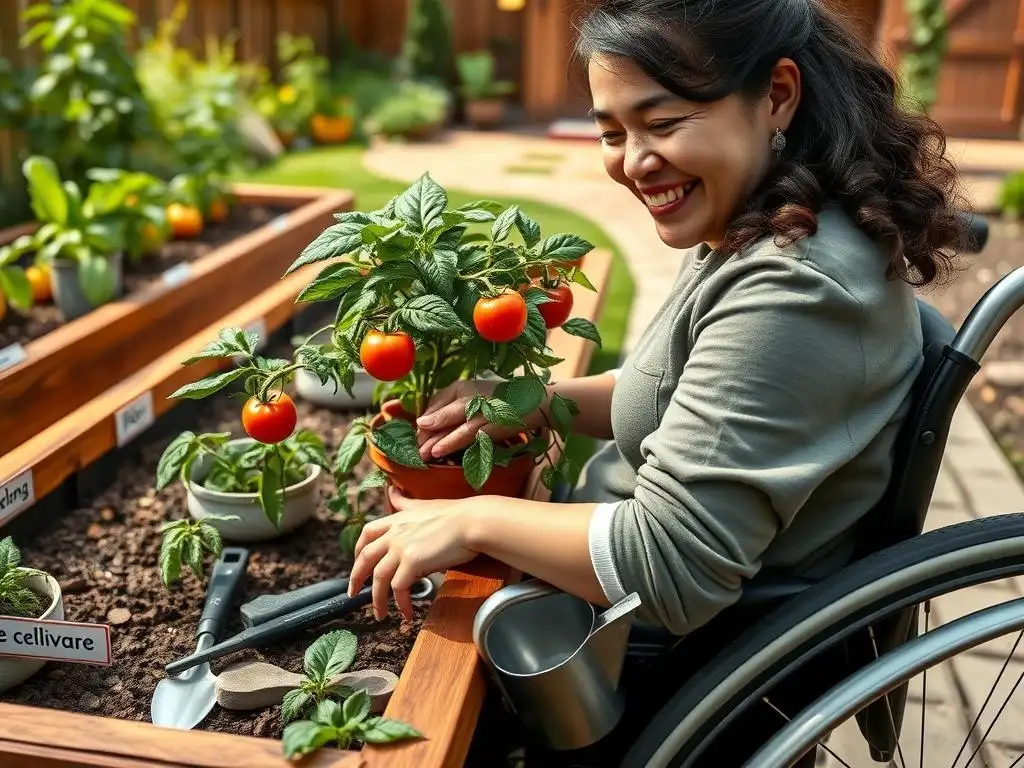
This section focuses on practical strategies for wheelchair users to successfully cultivate their own food, addressing common physical limitations encountered while gardening. We'll explore techniques and tools that promote accessibility and maximize gardening enjoyment. Remember, adapting your garden to your specific needs is key to a rewarding experience. The goal is to make gardening accessible and enjoyable for everyone, regardless of physical limitations.
Adapting Gardening Techniques for Wheelchair Accessibility
Adapting gardening techniques is crucial for wheelchair users. Instead of bending over, consider raised garden beds. These can be built at a height comfortable for your wheelchair, minimizing strain. The ideal height depends on your chair and personal preferences, but a range of 30-36 inches is often suitable. Consider using wide, sturdy pathways between beds, allowing for easy wheelchair maneuverability. Avoid narrow pathways or obstacles that could impede movement. Think about the layout of your garden. A circular or spiral design can minimize the distance needed to reach all plants, reducing fatigue.
Another important adaptation involves choosing the right gardening tools. Long-handled tools, such as trowels and cultivators with extended handles, allow you to work the soil without excessive bending or reaching. Lightweight tools are also crucial to prevent strain. Consider ergonomic handles that provide a comfortable and secure grip. Using a kneeling pad or seat can also help alleviate pressure on your knees and lower back if you need to perform some tasks at a lower level.
Furthermore, selecting appropriate plants is vital. Compact, low-growing varieties are easier to manage and maintain in a wheelchair-accessible garden. Consider using trellises or other support systems for climbing plants to keep them within reach. Remember, the goal is to create a sustainable and productive garden that's easy to manage from your wheelchair.
Ergonomic Considerations for Wheelchair Gardening: Preventing Strain and Fatigue
Ergonomics plays a vital role in wheelchair gardening. Prolonged gardening sessions can lead to significant strain and fatigue if proper techniques aren't employed. Maintaining good posture is crucial. Ensure your wheelchair is properly positioned to support your back and minimize strain on your shoulders and neck. Take frequent breaks to rest and stretch, preventing muscle fatigue and stiffness.
Consider using a gardening cart or caddy to transport tools and supplies around your garden. This eliminates the need for constant bending and reaching, reducing fatigue. Organize your tools and supplies strategically to minimize the distance you need to travel. Keep frequently used items within easy reach. Plan your gardening tasks efficiently, grouping similar activities together to minimize unnecessary movements.
Regularly assess your posture and body positioning while gardening. If you experience any pain or discomfort, adjust your position or take a break. Listen to your body and don't push yourself too hard. Remember that a sustainable gardening practice involves pacing yourself and prioritizing your well-being. Prioritize short, frequent gardening sessions rather than long, strenuous ones. This approach prevents overexertion and allows for more consistent gardening activity.
Utilizing Assistive Devices and Technologies for Wheelchair Gardeners
Several assistive devices and technologies can significantly enhance the accessibility of wheelchair gardening. For instance, a reacher tool can help retrieve items from hard-to-reach areas without excessive bending or stretching. A rotating seat for your wheelchair can allow you to easily turn and access different parts of your garden without having to move your chair. Consider using a garden hose with a trigger nozzle for easier watering, eliminating the need for heavy watering cans.
Power tools can also reduce physical strain. A small electric tiller can make soil preparation easier, and a battery-powered weed wacker can simplify weed control. Adaptive gardening tools, specifically designed for people with disabilities, are becoming increasingly available and can offer significant improvements in ease of use. These often incorporate ergonomic designs and features to minimize strain.
Investigate available technology that might aid in gardening tasks. Smart irrigation systems can automate watering, reducing manual labor. Remote-controlled tools are also emerging, allowing for control of gardening equipment from a distance. While some of these technologies may be more expensive, the long-term benefits in terms of reduced physical exertion and increased accessibility can be significant. Remember to research the various assistive technologies available and select those that best meet your individual needs and capabilities. Researching specific tools and technologies tailored to wheelchair users will provide a more comprehensive understanding of the available options.
Common Mistakes to Avoid in Accessible Wheelchair Gardening

This section focuses on prevalent errors gardeners make when designing and maintaining wheelchair-accessible gardens. Avoiding these pitfalls is crucial for creating a truly inclusive and productive growing space. We'll delve into specific issues and offer practical solutions to ensure your gardening journey is both enjoyable and successful.
Poor Garden Design and Accessibility Issues for Wheelchair Users
Many enthusiastic gardeners, eager to create an accessible space, overlook fundamental design principles. This often leads to frustrating limitations for wheelchair users. A poorly planned garden can present significant obstacles, hindering movement and access to plants.
For example, narrow pathways restrict maneuverability, making it difficult to reach specific plants or perform essential gardening tasks. Raised beds, while helpful for many, must be carefully designed. Beds that are too high require excessive reaching, causing strain and discomfort. Conversely, beds that are too low can be difficult to access, especially for those with limited mobility in their legs or arms.
Consider these crucial aspects:
- Pathway Width: Aim for at least 36 inches (91 cm) wide pathways to allow for easy wheelchair navigation and turning. Wider pathways are even better, especially if using larger equipment or multiple wheelchairs.
- Surface Material: Choose smooth, firm surfaces like compacted gravel, paving stones, or concrete. Avoid loose materials like mulch or soil that can impede wheelchair wheels. Consider the impact of weather – some surfaces can become slippery when wet.
- Raised Bed Height: Ideally, raised beds should be between 18 and 24 inches (46-61 cm) high, allowing for comfortable access without excessive bending or stretching. Consider the use of adjustable height benches or stools for added flexibility.
- Ramp Slopes: If incorporating raised beds or other elevated areas, ensure ramps have a gentle slope (no steeper than 1:12) for safe and easy access.
- Turning Radius: Design pathways with sufficient space for comfortable 360° wheelchair turns. Consider the dimensions of the wheelchair being used.
Failing to address these design elements can render even the most beautiful garden inaccessible and frustrating for wheelchair users. Careful planning is key to a successful and inclusive gardening experience.
Neglecting Soil Preparation and Accessibility for Wheelchair Gardening
Proper soil preparation is essential for any garden, but it takes on added significance in accessible gardening. Difficult-to-access areas or challenging soil conditions can significantly impact the gardener's ability to plant, maintain, and harvest crops.
Many gardeners underestimate the physical effort involved in soil preparation. Digging, tilling, and weeding can be extremely strenuous, even for able-bodied individuals. For wheelchair users, these tasks can be near impossible without appropriate tools and strategies.
To mitigate these challenges:
- Raised Beds and Containers: Utilizing raised beds and containers eliminates the need for extensive soil preparation in the ground. This simplifies planting and reduces the physical strain.
- Soil Amendments: Incorporating organic matter like compost significantly improves soil structure, making it easier to work with. Well-structured soil requires less effort to dig and maintain.
- No-Till Gardening: Consider no-till gardening techniques, which minimize soil disturbance, reducing the physical demands on the gardener.
- Adaptive Tools: Utilize adaptive gardening tools designed to make soil preparation easier for wheelchair users. These tools often feature ergonomic handles and long reach capabilities.
- Soil Testing: Regular soil testing ensures the soil's pH and nutrient levels are optimal, maximizing plant growth and minimizing the need for excessive soil manipulation.
By proactively addressing soil preparation challenges, you create a more manageable and enjoyable gardening experience for wheelchair users. The focus should be on minimizing physical strain and maximizing accessibility.
Choosing the Wrong Plants and Crops for Wheelchair Accessible Gardens
Plant selection plays a crucial role in creating a successful and accessible garden. Choosing the wrong plants can lead to frustration and limit the gardener's ability to enjoy the fruits (or vegetables!) of their labor.
High-maintenance plants that require frequent bending, stretching, or kneeling are unsuitable for many wheelchair users. Similarly, sprawling plants that require constant pruning or support can pose challenges.
Consider these factors when selecting plants:
- Plant Height and Growth Habit: Choose compact plants that remain manageable in size and don't require excessive pruning or support. Vertical gardening techniques can also be beneficial.
- Ease of Harvesting: Select plants with easily accessible fruits or vegetables. Consider plants that produce their bounty at a convenient height.
- Low-Maintenance Varieties: Opt for low-maintenance varieties that require minimal pruning, weeding, or pest control. Disease-resistant plants can also reduce the workload.
- Self-Supporting Plants: Choose self-supporting plants that don't require staking or other support structures, simplifying maintenance.
- Container Gardening: Container gardening offers excellent control over plant selection and allows for easy movement and access.
Choosing appropriate plants is vital for ensuring a rewarding gardening experience. Prioritizing ease of access and maintenance allows wheelchair users to fully participate in the joys of cultivating their own food. Remember, accessible gardening is about inclusivity and empowerment, not limitation.
Maintaining Your Accessible Wheelchair Garden

Maintaining an accessible wheelchair garden requires thoughtful planning and adaptable techniques. While the initial setup focuses on accessibility, ongoing care needs equal consideration to ensure continued ease of use and a thriving garden. This section explores key maintenance aspects, offering practical solutions for wheelchair users to keep their gardens flourishing. Remember, even small adjustments can make a significant difference in making gardening a more enjoyable and less physically demanding experience. We'll delve into efficient watering, weed control, and pest management strategies specifically designed for wheelchair gardeners.
Efficient Watering Techniques for Wheelchair Gardeners
Efficient watering is crucial for a healthy garden, and for wheelchair users, it's vital to minimize strain and maximize reach. Traditional watering methods can be cumbersome and tiring. Consider these alternatives:
- Soaker hoses: These are highly recommended. Simply lay them along your planting rows, ensuring even moisture distribution without the need for constant bending or lifting. They reduce water waste and prevent runoff. You can easily control the water flow with a timer, ensuring consistent hydration even when you're away.
- Drip irrigation systems: These are more advanced, offering precise water delivery directly to plant roots. A timer-controlled system ensures consistent watering schedules, saving you time and effort. They are particularly beneficial for raised beds and containers, common features in accessible gardening designs.
- Self-watering containers: These containers use a reservoir system, slowly releasing water to the plants. This minimizes the frequency of watering and reduces the physical demands of the task. Choose containers with wide openings for easy access and maneuverability.
- Watering can with a long handle or hose attachment: If you prefer a watering can, opt for one with a long handle or a hose attachment to extend your reach. This reduces the need for excessive bending and stretching.
Remember to regularly check soil moisture levels to avoid overwatering or underwatering. A moisture meter can assist in determining the optimal watering schedule for your specific plants and soil conditions.
Weed Control Strategies for Wheelchair Accessible Gardens
Weed control is an ongoing challenge in any garden, but especially so for wheelchair users. Manual weeding can be physically demanding. Here's how to minimize the effort:
- Pre-emergent herbicides: Applying a pre-emergent herbicide before planting can significantly reduce weed growth. This preventative measure minimizes the need for frequent weeding. Always follow the manufacturer's instructions carefully and choose an herbicide safe for your chosen plants.
- Mulching: A thick layer of mulch (such as straw, wood chips, or shredded bark) around plants suppresses weed growth effectively. It also helps retain soil moisture, reducing the need for frequent watering. The mulch acts as a barrier, preventing weed seeds from germinating.
- Weed barrier fabric: This landscape fabric, placed beneath the mulch, provides an extra layer of weed control. It allows water and nutrients to reach the plants while blocking most weed growth. Cut holes in the fabric for your plants to ensure proper growth.
- Hoeing with a long-handled hoe: For stubborn weeds, a long-handled hoe can help you remove them without excessive bending. A standing hoe, designed to be used while standing upright, is particularly helpful for wheelchair users.
- Regular, but less frequent weeding: Instead of one large weeding session, opt for shorter, more frequent weeding sessions. This breaks down the task into smaller, more manageable chunks, minimizing strain.
Pest and Disease Management in Wheelchair Accessible Gardens
Pest and disease management is crucial for a healthy and productive garden. Accessibility considerations are paramount here:
- Preventative measures: The best approach is prevention. Choose disease-resistant plant varieties, maintain good garden hygiene (removing debris and diseased plants promptly), and practice crop rotation to avoid pest build-up.
- Beneficial insects: Encourage beneficial insects, such as ladybugs and lacewings, which naturally control many common garden pests. Provide habitat for these insects through the use of flowering plants.
- Natural pest control methods: Opt for organic and natural pest control methods whenever possible. These are safer for you, your plants, and the environment. Consider using insecticidal soap or neem oil, which are effective against many common garden pests. Always follow label instructions.
- Raised beds and containers: These can help isolate plants from soil-borne diseases and pests. They also make it easier to inspect plants for signs of infestation or disease.
- Accessible tools: Use tools with long handles or ergonomic designs to minimize strain when inspecting plants or applying pest control measures.
Remember that consistent monitoring and timely intervention are key to successful pest and disease management in any garden, especially one designed for accessibility. Early detection is crucial for effective treatment.
Harvesting and Enjoying Your Accessible Garden Produce
This section focuses on maximizing the enjoyment of your hard work by detailing accessible harvesting techniques and effective preservation methods for your wheelchair-accessible garden. Remember, even small harvests can be incredibly rewarding! The goal is to make the entire process, from picking to preserving, as comfortable and efficient as possible.
Accessible Harvesting Techniques for Wheelchair Users
Harvesting shouldn't be a struggle. Several techniques can make this part of gardening easier and more enjoyable for wheelchair users. Proper planning during the garden design phase is key. Consider these accessible harvesting techniques:
- Raised Beds at Optimal Heights: Raised beds are essential for accessible gardening. However, the height needs careful consideration. Beds that are too high can be difficult to reach, while those that are too low might require excessive bending. Ideally, the top of the bed should be at a height that allows comfortable harvesting while seated. This often means a height of around 28-32 inches, depending on individual needs and chair type. Experiment to find the perfect height for you.
- Strategic Plant Placement: Don't overcrowd your raised beds. Sufficient spacing between plants allows for easier access and reduces the need for excessive reaching or bending. Consider using vertical gardening techniques, such as trellises or hanging baskets, for plants that might otherwise be difficult to reach. This also increases the yield in a smaller space.
- Adaptive Tools: Long-handled harvesting tools, such as reachers and grabber tools, are invaluable for picking produce from difficult-to-reach spots. These tools extend your reach significantly, minimizing strain and maximizing independence. Look for lightweight options with ergonomic handles for added comfort.
- Rolling Stools and Benches: Consider using a rolling stool or bench that you can easily maneuver around your garden. This allows you to change positions and access different parts of your raised beds without needing to transfer. Make sure the stool is stable and has adequate support.
- Power Tools: For larger harvests, consider using small, lightweight power tools such as electric shears for trimming herbs or small fruit trees. This can significantly reduce the physical strain of harvesting.
Preserving and Storing Your Harvested Produce from Your Accessible Garden
Preserving your harvest ensures you can enjoy the fruits (and vegetables!) of your labor throughout the year. Here are some accessible preservation methods:
- Freezing: Freezing is a simple and effective method for preserving many fruits and vegetables. Blanching vegetables before freezing helps to retain their color, texture, and nutrients. Use freezer-safe containers and label them clearly with the date and contents. Consider using pre-portioned bags for easier single-serving access.
- Canning: While canning requires more preparation and equipment, it provides a longer shelf life for many items. Water bath canning is generally safer for beginners. Choose canning jars and lids specifically designed for this purpose. Ensure you follow safety guidelines carefully to avoid spoilage or contamination. This method is particularly useful for preserving jams, jellies, and pickled vegetables.
- Dehydrating: Dehydration is a great way to preserve herbs and some fruits. A food dehydrator is helpful, but you can also dehydrate produce using a low oven temperature. Properly dehydrated foods have a long shelf life and retain many of their nutrients.
Remember, adapting your gardening practices to your specific needs is key. Don't be afraid to experiment and find what works best for you. With a little planning and creativity, you can enjoy a bountiful and accessible harvest from your garden year after year! Happy gardening! 🥕🍅
Frequently Asked Questions
What are some common mistakes wheelchair users make when gardening?
One common mistake is underestimating the physical demands, even with adaptive tools. Another is neglecting proper ergonomics to avoid strain and injury. Planning for easy access to all areas of the garden is also crucial.
What adaptive gardening tools are most helpful for wheelchair users?
Many tools are available, including raised garden beds, long-handled tools, and seated gardening carts. Rotating seed trays and adjustable height benches can also improve accessibility. Consider tools with ergonomic handles for better grip and comfort.
How can I make my garden more accessible from a wheelchair?
Prioritize wide, level pathways, and consider removing obstacles like rocks or uneven terrain. Raised beds at a comfortable height are essential. Using a gardening cart can reduce the need for excessive bending and reaching.
What are some tips for successful wheelchair gardening in small spaces?
Use vertical gardening techniques like trellises and hanging baskets. Opt for compact plant varieties and utilize space-saving containers. Careful planning and efficient use of space is key to success in small gardens.
How can I prevent pest problems in my accessible wheelchair garden?
Regular inspection and early intervention are key. Use organic pest control methods to minimize risks to health and the environment. Companion planting can deter some pests naturally.
Final Reflection: Cultivating Independence, One Bloom at a Time
The ability to garden, to nurture life from the earth, is a fundamental human connection often overlooked in discussions of accessibility. For wheelchair users, this connection can feel even more distant, but with the right knowledge and approach, the joy of gardening becomes attainable, a testament to human resilience and the power of adaptation. This article has highlighted practical solutions to common challenges, proving that a thriving garden isn't a privilege reserved for the able-bodied.
The impact of accessible gardening extends far beyond the physical act of planting. It fosters a sense of independence, accomplishment, and connection with nature, all vital components of well-being. Gardening provides a therapeutic outlet, a space for creativity and self-expression, and a tangible link to the natural world. The glory of gardening: hands in the dirt, head in the sun, heart with nature. To nurture a garden is to feed not just the body, but the soul.
This quote beautifully captures the essence of what accessible gardening represents – a pathway to nourishment on multiple levels.
Now, consider your own space, your own potential. Think about the small changes you can make to create a more accessible and fulfilling gardening experience for yourself or someone you know. Perhaps it's a raised bed, a strategically placed tool, or simply a shift in perspective. Embrace the challenge, celebrate the small victories, and remember that the most rewarding gardens are often the ones that bloom against the odds. Let's cultivate a world where everyone can experience the joy of nurturing life, regardless of physical limitations.
Unleash Your Green Thumb: Grow a Bountiful Garden, No Matter Your Mobility!
Thank you for joining us on this journey into accessible gardening! We hope you've gained valuable insights and feel empowered to cultivate your own thriving garden. Ready to begin?
- Start small, but dream big: Begin with a manageable plot and a few easy-to-grow plants like lettuce or herbs. Don't be afraid to experiment and discover what thrives in your space!
- Share your gardening journey: Connect with our community on social media and inspire others with your green space – both successes and challenges are welcome!
- Consider ergonomic gardening tools: Explore the wide range of tools designed to make gardening more comfortable and efficient, reducing strain and maximizing enjoyment.
What gardening technique are you most excited to try?