
Understanding Humidity Levels in Your Root Cellar: A Detailed Guide


Welcome to CultivateYourFood, your guide to a bountiful and sustainable harvest! Are you ready to unlock the secrets to preserving your homegrown fruits, vegetables, and herbs for months to come? Then delve into our expert guide on root cellar humidity control, crucial for maintaining the quality and longevity of your precious harvest. Learn how to achieve the perfect balance and prevent spoilage – your journey to year-round freshness starts now!
- The Importance of Humidity Control in Root Cellar Storage
- Measuring Humidity in Your Root Cellar
- Ideal Humidity Levels for Different Root Vegetables
- Controlling Humidity in Your Root Cellar: Practical Strategies
- Troubleshooting Common Humidity Problems in Root Cellars
- Maintaining Consistent Humidity Throughout the Storage Season
- Frequently Asked Questions
- Final Reflection: Cultivating the Perfect Harvest: A Legacy of Preservation
- Unlock Your Root Cellar's Potential: Take Control of Humidity Now!
The Importance of Humidity Control in Root Cellar Storage
Maintaining the right humidity levels in your root cellar is paramount for successful long-term storage of your homegrown fruits, vegetables, and herbs. Root cellaring, a time-honored method of preserving the harvest, relies heavily on creating a cool, dark, and, crucially, humid environment. Unlike refrigeration, which drastically lowers humidity, a root cellar mimics the natural conditions under which these crops thrive, slowing down their metabolic processes and extending their shelf life significantly.
This guide delves into the intricacies of humidity control, providing practical tips and strategies to ensure your root vegetables remain fresh and flavorful throughout the winter months. Understanding and managing humidity is not just about preventing spoilage; it's about maximizing the quality and longevity of your hard-earned harvest, making root cellaring a truly rewarding and sustainable practice. We'll explore the ideal humidity range, common problems associated with incorrect levels, and practical solutions to maintain the perfect environment for your root cellar bounty.
This detailed guide will empower you to become a master of root cellar humidity control, transforming your harvest preservation efforts from a daunting task into a successful and enjoyable endeavor. Let's dive in! 🥕
Maintaining Optimal Humidity for Root Vegetable Preservation
Maintaining optimal humidity in your root cellar is crucial for preserving the freshness and quality of your root vegetables. The ideal humidity level generally falls between 70% and 90%, although the precise range may vary slightly depending on the specific crops you are storing. Humidity levels below 70% can lead to dehydration and shriveling, while levels above 90% increase the risk of mold and rot.
To monitor humidity, consider using a reliable hygrometer. These inexpensive tools provide accurate readings, allowing you to make necessary adjustments. There are several methods to adjust humidity levels. For example, if the humidity is too low, you can introduce moisture by placing containers of water or damp sand in the cellar.
Conversely, if the humidity is too high, increasing ventilation, using a dehumidifier (carefully, to avoid drying the produce too much), or adding absorbent materials can help reduce moisture. Regular monitoring and proactive adjustments are key to maintaining optimal conditions throughout the storage period. Think of it like tending a garden, but underground! 🧑🌾
Preventing Spoilage and Rot Due to Improper Humidity
Improper humidity levels are a major contributor to spoilage and rot in root cellars. High humidity, exceeding 90%, creates a breeding ground for mold and bacteria, leading to rapid deterioration of stored produce. Conversely, low humidity, below 70%, causes root vegetables to dehydrate, shrivel, and lose their flavor and nutritional value. The following table summarizes the effects of different humidity levels:
| Humidity Level (%) | Effect on Root Vegetables | Potential Issues |
|---|---|---|
| < 70 | Dehydration, shriveling, loss of quality | Increased spoilage, reduced shelf life |
| 70-90 | Optimal storage conditions | Minimal spoilage, prolonged shelf life |
| > 90 | Increased risk of mold and rot | Rapid spoilage, potential loss of entire harvest |
Understanding these risks is vital for preventing significant losses. Regular inspection of your stored produce is crucial; promptly remove any showing signs of rot to prevent the spread of disease. Proper ventilation and temperature control complement humidity management, creating a synergistic effect that safeguards your harvest. Remember, prevention is always better than cure! 🧅
The Relationship Between Humidity and Root Vegetable Longevity
The longevity of your root vegetables is directly impacted by the humidity levels within your root cellar. Maintaining the optimal humidity range significantly extends their shelf life. For example, properly stored carrots can last for several months, but improper humidity can reduce this to just a few weeks. The same principle applies to other root vegetables like potatoes, beets, and sweet potatoes.
Consider the following factors influencing the relationship between humidity and longevity:
- Vegetable Type: Different root vegetables have varying humidity requirements. Research the specific needs of each variety you are storing.
- Storage Duration: Longer storage periods require more precise humidity control to maintain quality.
- Ventilation: Adequate airflow helps regulate humidity and prevents the buildup of moisture.
By carefully monitoring and managing humidity, you can significantly extend the storage life of your root vegetables, ensuring a continuous supply of fresh, homegrown produce throughout the winter months. Investing time in understanding and implementing proper humidity control is an investment in the quality and longevity of your harvest. Happy root cellaring! 🥔
Measuring Humidity in Your Root Cellar
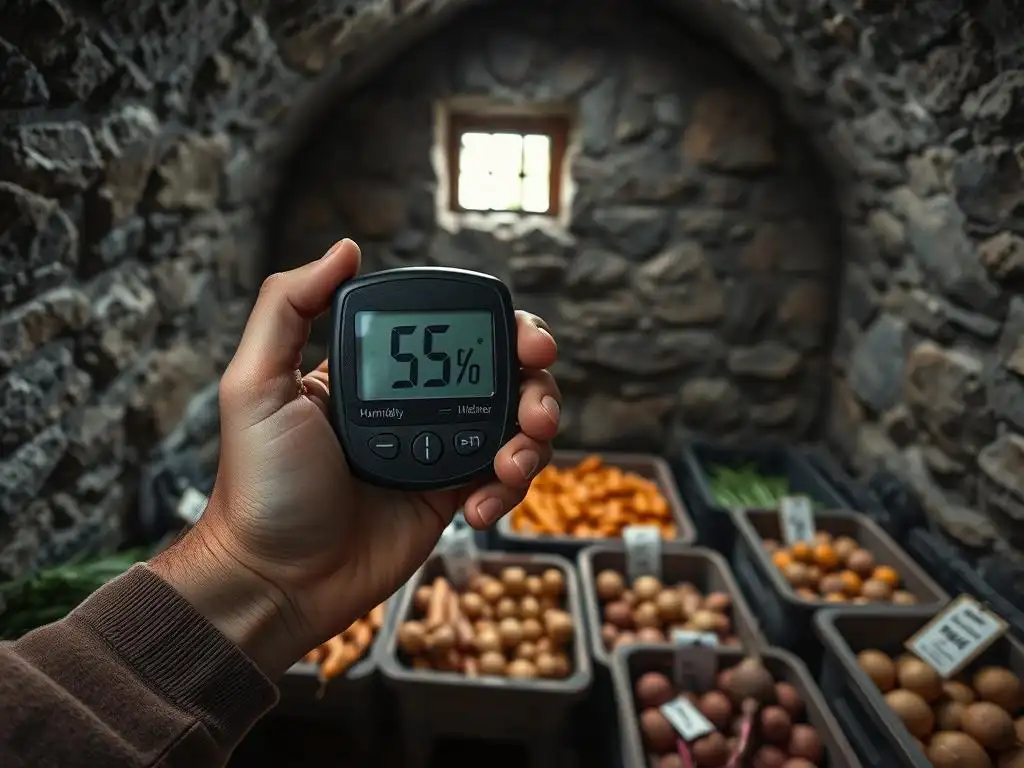
Maintaining the optimal humidity level in your root cellar is crucial for preserving your harvest. Accurate measurement is the first step towards effective root cellar humidity control. Without precise readings, you're essentially guessing, risking spoilage and compromising the longevity of your stored produce. This section focuses on the practical aspects of humidity measurement, providing you with the tools and knowledge to monitor your root cellar environment effectively. Consistent monitoring is key to preventing issues like mold growth and vegetable rot, ensuring a successful root cellaring experience.
Using a Hygrometer for Accurate Humidity Readings
A hygrometer is your primary tool for monitoring humidity levels within your root cellar. These devices come in various types, each with its strengths and weaknesses. Analog hygrometers, often using a hair or bimetallic strip, are relatively inexpensive but may lack precision. Digital hygrometers, on the other hand, provide more accurate readings and often include additional features such as temperature sensors and data logging capabilities.
For effective root cellar humidity control, investing in a digital hygrometer with a maximum/minimum reading function is highly recommended. This allows you to track humidity fluctuations over time, identifying trends and potential problems early. Placement is also critical; position your hygrometer away from direct airflow, drafts, or sources of heat or moisture to ensure accurate readings reflective of the overall root cellar environment. Regular calibration is important to maintain accuracy.
Many digital hygrometers have a calibration function, but for analog models, you might need to consult the manufacturer's instructions or seek professional calibration services. Consider using multiple hygrometers strategically placed throughout your root cellar to account for potential microclimates and ensure a comprehensive understanding of your humidity profile. This holistic approach provides a more accurate representation of the conditions affecting your stored produce. Accurate humidity readings form the foundation of effective root cellar humidity control, allowing you to adjust ventilation and other factors to maintain the ideal environment.
Interpreting Hygrometer Readings and Understanding Humidity Ranges
Once you have accurate humidity readings from your hygrometer, understanding what those readings mean is crucial. The ideal humidity range for most root cellar storage is between 90% and 95% relative humidity (RH). Readings below this range can lead to excessive drying and shriveling of your produce, while readings significantly above this range increase the risk of mold growth and decay. Regularly monitoring your hygrometer readings allows you to identify deviations from the ideal range and take corrective action.
For instance, a consistently low reading might indicate a need to increase humidity through methods like adding moisture to the air or reducing ventilation. Conversely, consistently high readings might require improved ventilation or the removal of excess moisture. Keep a detailed log of your hygrometer readings, noting any changes in temperature or ventilation practices. This log provides invaluable data for long-term root cellar management, helping you understand seasonal variations and refine your humidity control strategies over time.
By meticulously tracking your humidity levels, you can fine-tune your root cellar environment to optimize storage conditions and minimize spoilage. Remember that different types of produce may have slightly different optimal humidity requirements. Consulting resources specific to the types of produce you're storing can offer further guidance on maintaining the perfect environment.
Understanding Relative Humidity (RH) and its Impact on Root Cellaring
Relative humidity (RH) represents the amount of moisture in the air relative to the maximum amount of moisture the air can hold at a specific temperature. Understanding RH is fundamental to effective root cellar humidity control. High RH levels are essential for preventing produce from drying out, but excessively high RH levels can lead to the growth of mold and bacteria, spoiling your carefully stored harvest. The ideal RH range for root cellaring, typically between 90% and 95%, strikes a balance between preventing desiccation and minimizing microbial growth.
Temperature plays a significant role in RH. Colder temperatures generally hold less moisture, meaning that the same amount of moisture in the air will result in a higher RH percentage at lower temperatures. Conversely, warmer temperatures can lead to lower RH even with the same amount of moisture. This interplay between temperature and RH highlights the importance of monitoring both parameters in your root cellar.
Maintaining a consistently cool temperature, in conjunction with the appropriate RH level, is crucial for long-term preservation of your produce. This detailed understanding of the complex relationship between temperature and RH empowers you to fine-tune your root cellar environment for optimal storage conditions, minimizing waste and maximizing the lifespan of your stored fruits, vegetables, and herbs. Understanding RH is not just about numbers; it’s about understanding the delicate balance required to preserve your hard work throughout the year.
Ideal Humidity Levels for Different Root Vegetables
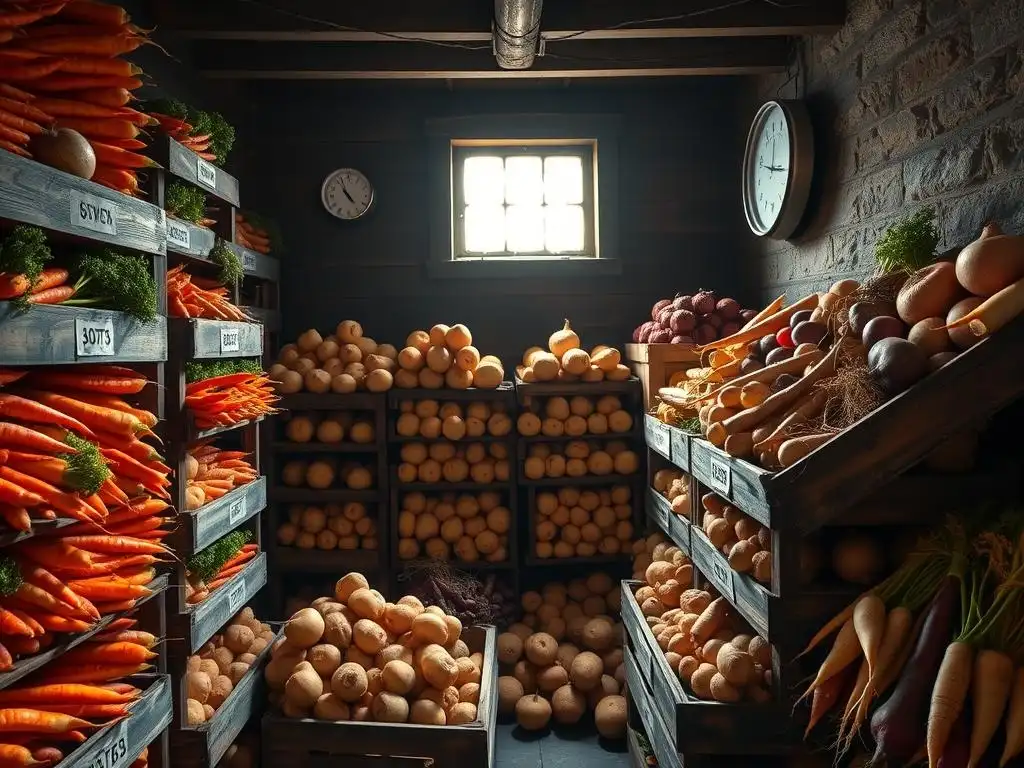
Maintaining the correct humidity in your root cellar is crucial for the long-term storage of your harvest. Different root vegetables have varying humidity requirements, and neglecting these can lead to spoilage, rot, and significant losses. This section details the ideal humidity ranges for several common root crops and offers practical advice for achieving optimal storage conditions. Understanding these nuances is key to successful root cellar humidity control. This guide will help you master root cellar humidity control and significantly extend the shelf life of your precious produce.
Humidity Requirements for Potatoes, Carrots, and Beets
Potatoes, carrots, and beets all benefit from relatively high humidity, but the exact levels differ slightly. Ideal humidity for potatoes ranges from 85-95%. Lower humidity can cause them to shrivel and lose moisture, while excessively high humidity can promote fungal growth and rot. Carrots, on the other hand, thrive in a slightly lower humidity range of 70-85%. High humidity can lead to softening and increased susceptibility to diseases.
Beets, similar to carrots, prefer a humidity range of 75-85%. Maintaining these humidity levels is essential for preventing premature sprouting and preserving their crispness and flavor. Regular monitoring with a reliable hygrometer is recommended, allowing for timely adjustments to maintain these ideal ranges. Failure to do so can result in significant crop loss. Consider the following table for a quick reference:
| Vegetable | Ideal Humidity Range (%) | Potential Issues with Low Humidity | Potential Issues with High Humidity |
|---|---|---|---|
| Potatoes | 85-95 | Shriveling, weight loss | Rot, fungal growth |
| Carrots | 70-85 | Shriveling, loss of crispness | Softening, disease susceptibility |
| Beets | 75-85 | Shriveling, loss of flavor | Rot, fungal growth |
Humidity Needs for Onions, Garlic, and Sweet Potatoes
Onions, garlic, and sweet potatoes have lower humidity requirements compared to potatoes, carrots, and beets. These crops are more susceptible to rot and spoilage in high-humidity environments. For onions and garlic, a humidity level between 60-70% is generally optimal. Higher humidity can encourage mold growth and decay. Sweet potatoes, while tolerating slightly higher humidity than onions and garlic, still benefit from a drier environment of 65-75%.
Maintaining a well-ventilated space is crucial for these crops to prevent moisture buildup. Proper airflow helps to regulate humidity and minimize the risk of fungal diseases. Remember that consistent monitoring and adjustment are key to maintaining these ideal humidity levels for your root cellar. A slight deviation from the ideal can significantly impact the longevity of your stored produce.
Adjusting Humidity Based on Vegetable Type and Storage Time
The ideal humidity levels aren't static; they can change based on the storage time and even the specific variety of the vegetable. For instance, as storage time increases, the humidity requirements might slightly shift. Early in the storage period, maintaining the ideal humidity range is crucial for preventing initial spoilage. However, as the storage season progresses, you might need to make minor adjustments based on your observations.
For example, if you notice increased shriveling in potatoes, you might need to slightly increase the humidity. Conversely, if you observe signs of rot or mold, you might need to decrease the humidity. Regular inspection and the use of a hygrometer are essential for making informed adjustments throughout the storage period.
Careful observation and timely interventions are essential for maximizing the shelf life of your stored root vegetables. Remember, a little attention to detail can make a big difference in the success of your root cellar storage. 🥕🧅🥔
Controlling Humidity in Your Root Cellar: Practical Strategies
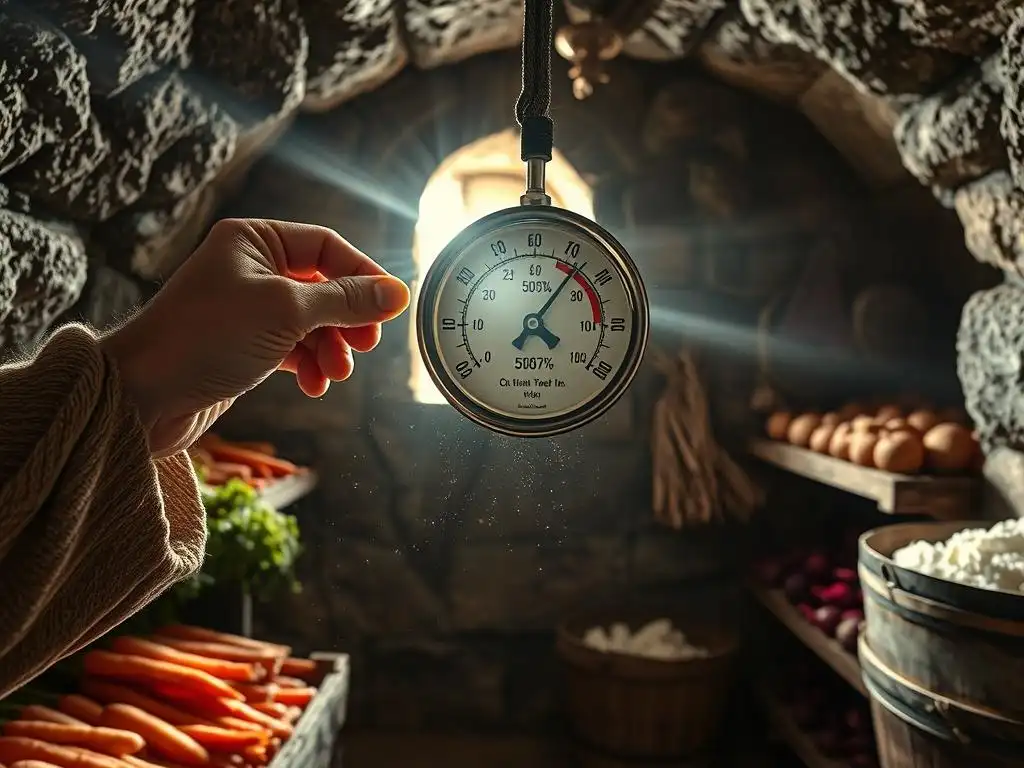
Maintaining the ideal humidity level in your root cellar is crucial for the long-term preservation of your harvested fruits, vegetables, and herbs. Fluctuations in humidity can lead to spoilage, rotting, and the growth of mold and mildew, significantly reducing the shelf life of your carefully cultivated produce. This section details practical strategies for effective root cellar humidity control, empowering you to create the perfect environment for your stored bounty.
Understanding your cellar's microclimate and employing appropriate techniques is key to successful root cellaring. This guide focuses on achieving optimal humidity levels for your root cellar, a key element in the overall success of your root cellaring endeavors.
Natural Ventilation Techniques for Humidity Regulation
Natural ventilation is a fundamental aspect of humidity regulation in a root cellar. It leverages the principles of air exchange to control moisture levels without relying on mechanical devices. Effective natural ventilation requires careful consideration of your cellar's design and location.
Properly placed vents, strategically positioned at both the top and bottom of your cellar, allow for passive airflow. Warm, moist air rises, exiting through upper vents, while cooler, drier air enters through lower vents, creating a natural convection current. The size and placement of these vents are crucial. Too small, and insufficient airflow results in high humidity. Too large, and excessive air exchange can lead to temperature fluctuations, compromising storage conditions.
Consider the prevailing winds in your area. Position vents to take advantage of prevailing breezes, maximizing natural airflow and improving humidity regulation. Remember that effective ventilation is a continuous process, requiring ongoing monitoring and adjustments based on seasonal changes and prevailing weather conditions. You might need to adjust vent openings throughout the year to maintain the optimal humidity range of 70-80%, crucial for preserving the quality of your root cellar harvest.
Regularly inspect your vents for obstructions like leaves or debris that could impede airflow and compromise humidity control. This proactive approach enhances the longevity of your stored produce, maximizing the benefits of your root cellaring efforts. Properly implemented, natural ventilation offers a sustainable and cost-effective method for managing humidity in your root cellar.
Implementing a Dehumidifier for Excess Moisture Control
In situations where natural ventilation alone proves insufficient, a dehumidifier becomes a valuable tool for controlling excess moisture. Dehumidifiers work by extracting moisture from the air, effectively lowering the humidity level within the root cellar. The choice of dehumidifier depends on the size of your cellar and the level of moisture control required. Consider a dehumidifier with a moisture-removal capacity appropriate for your cellar's volume. Oversized units are unnecessary and wasteful, while undersized units may struggle to maintain optimal humidity levels, especially during periods of high moisture.
Before installation, carefully review the dehumidifier's operating instructions and safety guidelines. Ensure proper ventilation around the unit to prevent overheating. Regular maintenance, including cleaning or replacing filters, is essential for optimal performance and longevity. Monitoring the humidity levels regularly with a reliable hygrometer allows you to adjust the dehumidifier's settings as needed, ensuring consistent humidity levels within the desired range.
Remember that dehumidifiers require energy consumption, so factor this into your overall root cellaring strategy. However, their effectiveness in maintaining ideal humidity levels, especially in damp climates or cellars with compromised ventilation, makes them a valuable investment for preserving your stored produce. Consider the energy efficiency rating (EER) of the dehumidifier to minimize running costs and environmental impact.
Using a Humidifier to Increase Humidity Levels When Necessary
While often focused on reducing humidity, maintaining adequate moisture levels in your root cellar is equally important. In extremely dry conditions, especially during winter months, you may need to use a humidifier to increase the humidity levels. This is especially crucial for preventing produce from shriveling and losing its quality.
Humidifiers add moisture to the air, counteracting excessively dry conditions. Similar to dehumidifiers, the size and type of humidifier should be matched to your root cellar's dimensions. Using a cool-mist humidifier is generally recommended for root cellars to avoid temperature fluctuations. Regular cleaning and maintenance of the humidifier are essential to prevent the growth of mold and mildew, ensuring the air remains clean and healthy for your stored produce.
As with dehumidifiers, monitor the humidity levels with a hygrometer to precisely adjust the humidifier's settings and maintain the optimal range, thereby improving the shelf life and quality of your stored root vegetables and fruits. This ensures your carefully preserved harvest remains in peak condition throughout the storage period. Remember, consistent monitoring and adjustment are key to successful humidity control, maximizing the longevity and quality of your root cellar produce.
The Role of Proper Root Cellar Insulation in Humidity Management
Proper insulation is paramount for effective root cellar humidity control. A well-insulated root cellar minimizes temperature fluctuations, which directly impacts humidity levels. Significant temperature swings cause condensation, leading to increased humidity and the risk of mold and rot in your stored produce. Conversely, consistent temperatures within the ideal range (around 32-40°F or 0-4°C) help maintain stable humidity levels. This stability is crucial for preserving the quality and longevity of your stored fruits and vegetables.
Think of insulation as a buffer against the outside environment. In the summer, it prevents warm, humid air from penetrating the cellar, keeping the interior cool and dry. During winter, it prevents the cold from seeping in, minimizing the risk of freezing your produce and creating excessive humidity through condensation as the temperature warms slightly.
The type of insulation used is also significant. Materials like rigid foam insulation boards offer superior R-value (a measure of thermal resistance) compared to less effective materials, contributing to better temperature and humidity regulation. Proper installation is just as important as the material itself; gaps and air leaks can negate the benefits of even the best insulation.
Careful attention to sealing around doors and windows is essential to prevent drafts and maintain a stable environment. Investing in high-quality insulation translates directly into better humidity control, reduced spoilage, and a longer storage life for your harvest. The upfront cost of efficient insulation is far outweighed by the long-term savings in reduced food waste and improved preservation.
Consider also the impact of ground insulation. The earth surrounding your root cellar provides a natural buffer against temperature changes, but this effect can be enhanced by adding additional insulation around the cellar's exterior walls. This extra layer significantly reduces temperature fluctuations, promoting a more stable humidity level within the cellar. For above-ground root cellars, the insulation requirements are even more critical, requiring a more robust approach to maintain optimal temperature and humidity levels.
Different climates require different insulation strategies. A root cellar in a region with extreme temperature variations will require a thicker layer of insulation compared to one in a more moderate climate. Careful consideration of your specific geographic location and climate is crucial for designing an effective insulation system for your root cellar.
Troubleshooting Common Humidity Problems in Root Cellars
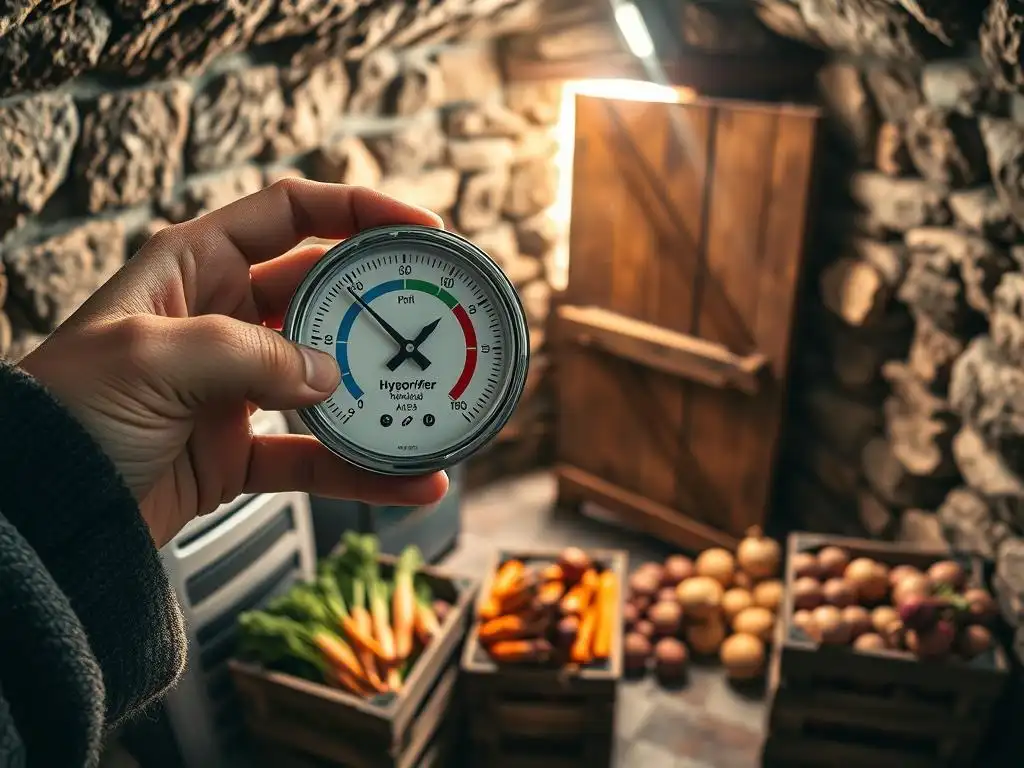
Maintaining the ideal humidity levels in your root cellar is crucial for the long-term preservation of your harvest. Fluctuations can lead to spoilage, rotting, and shrinkage of your precious root vegetables, herbs, and fruits. This section will guide you through troubleshooting common humidity problems, offering practical solutions to keep your root cellar environment optimal. Remember, consistent monitoring is key to success in root cellar humidity control. The goal is to maintain a humidity level between 70% and 90%, depending on the specific produce stored.
Dealing with High Humidity and Excessive Moisture
High humidity, exceeding 90%, creates the perfect breeding ground for mold, mildew, and bacteria, leading to rapid spoilage of your stored produce. The musty smell is a telltale sign. Several factors contribute to excessive moisture:
- Poor Ventilation: Inadequate airflow is a primary culprit. A poorly designed or blocked ventilation system prevents the escape of moisture-laden air. Check for obstructions in vents and ensure proper airflow. Consider adding additional vents if necessary.
- Leaks: Water leaks from pipes, cracks in the walls, or even condensation dripping from the ceiling can significantly raise humidity levels. Thoroughly inspect your root cellar for any leaks and repair them promptly.
- Overcrowding: Packing your root cellar too tightly restricts airflow, trapping moisture and increasing humidity. Ensure adequate spacing between stored items for optimal air circulation. Proper spacing also allows for better monitoring of individual produce items.
- Improper Storage: Storing produce in airtight containers without proper ventilation can lead to moisture buildup inside the containers, promoting spoilage. Consider using breathable containers or adding small ventilation holes.
Solutions for High Humidity:
- Improve Ventilation: Increase airflow by opening vents, adding exhaust fans, or installing a dehumidifier. Consider the use of a simple, passive ventilation system, such as a vent pipe leading to the outside.
- Address Leaks: Repair any leaks immediately to prevent further moisture accumulation.
- Thin Out Storage: Create more space between stored items to allow for better air circulation.
- Use Breathable Containers: Switch to breathable storage containers to allow moisture to escape.
- Monitor Regularly: Use a reliable hygrometer to monitor humidity levels consistently and make adjustments as needed. Regular monitoring is a critical component of a successful root cellar humidity control strategy.
Addressing Low Humidity and Root Vegetable Shrinkage
Low humidity, below 70%, causes root vegetables to dehydrate and shrink, impacting their quality and shelf life. This dryness leads to weight loss and a reduction in nutritional value. Causes include:
- Excessive Ventilation: Overly aggressive ventilation systems can dry out the air excessively.
- Dry Climate: Root cellars located in arid climates may naturally experience low humidity.
- Lack of Moisture Source: The absence of a natural moisture source, such as a nearby water source or damp earth floor, can contribute to low humidity.
Solutions for Low Humidity:
- Reduce Ventilation: Adjust ventilation systems to reduce airflow and increase humidity. Consider closing some vents during particularly dry periods.
- Add Moisture: Introduce moisture into the root cellar by placing shallow pans of water or damp materials, such as damp sand or gravel, on the floor. Monitor evaporation rates to gauge effectiveness.
- Use Humidity Tray: A humidity tray filled with water and pebbles can provide consistent moisture. Remember to regularly refill the tray as needed.
- Humidifier: In extreme cases, consider using a humidifier to increase humidity levels effectively. Monitor carefully to avoid over-humidification.
- Improve Insulation: Ensure proper insulation to maintain a more stable temperature and humidity.
Identifying the root cause of humidity problems requires careful observation and investigation. Symptoms such as mold growth, wilting vegetables, and musty odors point towards specific issues.
| Symptom | Possible Cause(s) | Solution |
|---|---|---|
| Mold growth | High humidity, poor ventilation, leaks | Improve ventilation, repair leaks, reduce crowding, use breathable containers |
| Root vegetable shrinkage | Low humidity, excessive ventilation | Reduce ventilation, add moisture, use humidity tray |
| Soft, mushy vegetables | High humidity, bacterial or fungal infection | Improve ventilation, remove affected produce, sanitize storage area |
| Musty odor | High humidity, mold growth | Improve ventilation, address leaks, remove affected produce |
| Rapid spoilage | Fluctuating humidity, temperature inconsistencies | Improve temperature and humidity control, monitor regularly |
Remember, preventing humidity problems is easier than solving them. Regular monitoring using a hygrometer, proper ventilation, and appropriate storage practices are crucial for maintaining optimal conditions and ensuring the longevity of your root cellar harvest. A proactive approach to root cellar humidity control is key to preserving the quality and quantity of your stored produce.
Maintaining Consistent Humidity Throughout the Storage Season
Maintaining optimal humidity levels in your root cellar is crucial for the long-term preservation of your harvest. Fluctuations can lead to spoilage, rotting, and premature sprouting, undermining your efforts to cultivate and store your homegrown produce. This section focuses on the practical aspects of consistent humidity management throughout the storage season, from regular checks to proactive adjustments. This detailed guide will help you achieve the ideal environment for your root vegetables and ensure a successful root cellar experience.
Regular Monitoring and Adjustments of Humidity Levels
Regular monitoring is the cornerstone of effective humidity control. Aim to check your root cellar's humidity at least once a week, ideally more frequently during periods of significant temperature or weather changes. A reliable hygrometer is essential for accurate readings. Note that digital hygrometers are generally more precise than analog ones. Remember to place the hygrometer in a representative location within the cellar, avoiding areas directly near ventilation or potential sources of moisture.
Record your readings in a logbook or spreadsheet to track trends and identify potential issues. This historical data will become invaluable in understanding your cellar's microclimate and anticipating seasonal variations. You can even create a simple chart to visualize the humidity levels over time. For example:
| Date | Humidity (%) | Temperature (°C) | Notes |
|---|---|---|---|
| Oct 26, 2023 | 85 | 10 | Slight increase due to recent rain |
| Nov 2, 2023 | 82 | 9 | Adjusted ventilation slightly |
| Nov 9, 2023 | 80 | 8 | Humidity stable, within ideal range |
Adjustments should be made gradually to avoid drastic shifts that can stress your stored produce. Small changes in ventilation – opening or closing vents slightly – can often be sufficient. If you're using a humidifier or dehumidifier, adjust the settings incrementally based on your readings. Remember, patience is key; drastic changes can be counterproductive. The goal is to maintain a slow and steady humidity level, not to aggressively chase a specific number.
Seasonal Variations in Humidity and Their Impact on Root Vegetables
Seasonal shifts in external temperature and humidity significantly impact your root cellar's internal environment. During the fall and winter months, the air outside often becomes drier, potentially leading to lower humidity levels in your root cellar. Conversely, spring and early summer can bring increased humidity, potentially leading to condensation and mold growth. Understanding these seasonal variations is crucial for proactive humidity management.
For example, during periods of exceptionally dry weather, you might need to increase humidity by introducing moisture-releasing materials, such as damp burlap sacks or shallow trays of water. However, avoid overdoing it; excessive moisture can foster mold and fungal growth, rapidly spoiling your carefully stored produce. Conversely, during periods of high external humidity, ensure adequate ventilation to prevent excessive moisture buildup. This might involve slightly increasing ventilation or using a dehumidifier if necessary.
Different root vegetables also have varying humidity requirements. Some, like carrots and beets, thrive in slightly higher humidity, while others, such as potatoes, prefer drier conditions. Therefore, consider zoning your root cellar if possible, separating different root vegetable types to provide optimal humidity for each. Proper spacing within the cellar is also crucial to allow for good airflow and prevent the buildup of moisture around individual root vegetables. This is particularly important during the warmer months. Consider the risk of spoilage and adjust ventilation accordingly.
Long-term strategies for maintaining humidity control in your root cellar
Long-term humidity control requires a holistic approach that incorporates both preventative measures and responsive adjustments. This includes proper cellar construction and insulation, regular maintenance, and the use of appropriate humidity control tools.
Proper insulation is paramount. A well-insulated root cellar minimizes fluctuations in temperature and humidity, creating a more stable environment for your stored produce. Regular maintenance includes checking for leaks, repairing any damage to the structure, and ensuring that ventilation systems are functioning correctly. This proactive approach minimizes the need for constant adjustments and reduces the risk of significant humidity swings. Regular cleaning is also crucial to prevent mold and mildew growth, which can dramatically impact humidity levels and the quality of your stored produce.
Consider investing in a high-quality, automated humidity control system for long-term convenience and precise management. These systems typically incorporate sensors, controllers, and either humidifiers or dehumidifiers, allowing for automated adjustments based on pre-set parameters. While an initial investment, these systems can save you considerable time and effort over the long term, ensuring consistently optimal humidity levels throughout the storage season and minimizing the risk of spoilage. Remember that successful root cellar management is a long-term commitment, and consistent monitoring and proactive adjustments are key to achieving your goals. 🥕🧅🥔
Frequently Asked Questions
What is the ideal humidity level for a root cellar?
The ideal humidity level for a root cellar is between 70% and 80%. Maintaining this range helps prevent spoilage and keeps your stored produce fresh for longer. Fluctuations outside this range can lead to rotting or shriveling.
How can I increase humidity in my root cellar?
You can increase humidity by using a humidifier, placing containers of water inside, or by using damp materials like sand or gravel. Proper sealing of the cellar is also crucial to prevent moisture loss.
How can I decrease humidity in my root cellar?
To lower humidity, improve ventilation by adding exhaust fans or ensuring adequate air circulation. Use a dehumidifier if necessary. Regularly check and remove any excess moisture or damp materials.
What are the signs of too much humidity in my root cellar?
Signs of excessive humidity include mold growth, dampness, and spoilage of stored produce. A musty odor is also a common indicator.
What are the signs of too little humidity in my root cellar?
Signs of low humidity include shrinking or shriveling of vegetables and fruits, and a dry, dusty atmosphere. Your produce may become withered and lose its quality.
Final Reflection: Cultivating the Perfect Harvest: A Legacy of Preservation
Maintaining optimal humidity levels in your root cellar isn't just about preserving food; it's about preserving a legacy of mindful living and sustainable practices. The knowledge passed down through generations, of understanding the delicate balance between moisture and decay, remains as crucial today as it ever was, especially in a world increasingly concerned with food security and waste reduction.
The impact of understanding humidity control extends far beyond the simple act of keeping vegetables fresh. It's about connecting with the rhythms of nature, appreciating the cyclical nature of harvest and preservation, and recognizing the profound satisfaction of providing for oneself and one's community. The earth provides enough to satisfy every man's needs but not every man's greed.
– Mahatma Gandhi. This quote speaks to the core of responsible food preservation, highlighting the importance of mindful consumption and the respect for the resources we utilize. The careful control of humidity in our root cellars reflects this mindful approach, ensuring that we make the most of nature's bounty.
Now, consider your own relationship with food. Think about the journey from seed to table, and the role you can play in ensuring that the fruits of your labor, or those you source from others, are treated with the respect they deserve. Take the time to monitor your root cellar's humidity, to learn its nuances, and to become a steward of this vital space. By understanding and applying the principles outlined in this guide, you're not just preserving food; you're preserving a connection to the land, a connection to history, and a connection to a more sustainable future.
Unlock Your Root Cellar's Potential: Take Control of Humidity Now!
Thanks for exploring the world of root cellar humidity with us! We hope you're now confident in keeping your harvest fresh and thriving throughout the year. Ready to put your knowledge into practice?
- Monitor your humidity levels regularly: Invest in a reliable hygrometer and track your cellar's humidity daily. This is crucial for preventing spoilage and maximizing storage success.
- Share your expertise! Tell us about your favorite humidity management techniques in the comments below. Let's build a thriving community of root cellar enthusiasts!
- Experiment with different methods: Try various humidity control techniques, from simple ventilation adjustments to more advanced solutions.
What humidity control strategies will you use in your root cellar this season?