
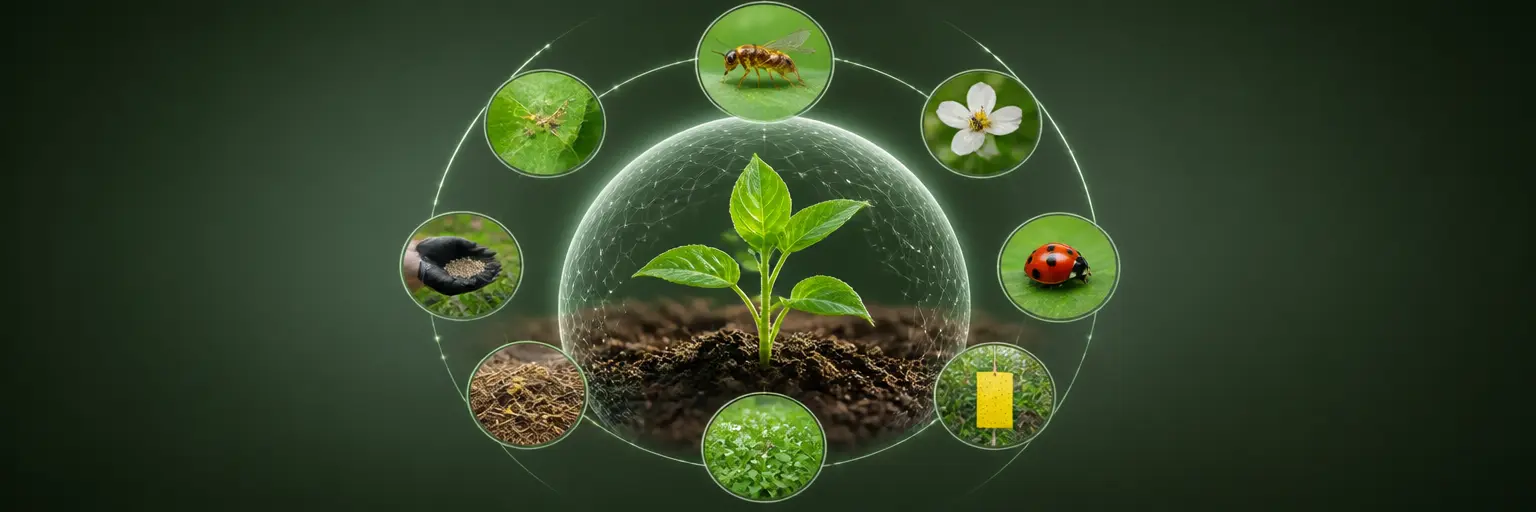
Implementing a Seasonal IPM Plan: A StepbyStep Guide
Discover Integrated Pest Management (IPM) strategies for healthier, more productive home gardens 🌿🐞. Learn how to prevent and manage garden pests through organic, sustainable methods—including crop monitoring, beneficial insects, natural controls, companion planting, and targeted treatments. Build practical pest control knowledge that protects your fruits, vegetables, and herbs while supporting soil health, biodiversity, and an eco-friendly growing environment.
7 articles
Using Physical Barriers for Pest Control: Simple IPM Solutions
Pheromone Traps: Disrupting Pest Mating with IPM Techniques
Organic Pesticides in IPM: When and How to Use Them
IPM and Biodiversity: Protecting Your Garden's Ecosystem
Frogs and Toads: Garden Allies in Your IPM Strategy
IPM for Cucumber Beetles: Strategies for Your Cucurbit Crops
🌿 Integrated Pest Management (IPM) Strategies for Sustainable Home Gardens
Integrated Pest Management (IPM) Strategies combine organic gardening, ecological awareness, prevention, monitoring, and targeted pest control to protect fruits, vegetables, and herbs without relying on unnecessary chemical pesticides. At CultivateYourFood, this subcategory helps home gardeners manage insects, plant diseases, weeds, and other garden pests through practical, sustainable methods that support healthy soil, beneficial insects, biodiversity, and productive harvests.
🔍 Understanding Integrated Pest Management
Integrated Pest Management is a science-based approach to garden pest control that focuses on understanding why pest problems occur before taking action. Readers will learn how to identify common garden pests, recognize plant damage, distinguish pests from beneficial insects, and understand the role of weather, soil health, plant stress, and garden design in pest outbreaks.
Rather than attempting to eliminate every insect, IPM strategies aim to keep pest populations below levels that cause significant economic or cosmetic damage. This subcategory explains how to combine cultural, mechanical, biological, and least-toxic control methods for effective organic pest management.
🌱 Preventing Garden Pest Problems Naturally
Prevention is one of the most important principles of sustainable pest control. Discover how healthy soil, crop rotation, proper spacing, resistant plant varieties, sanitation, mulching, and balanced watering can reduce pest pressure before it becomes a serious problem. These techniques are especially useful for home vegetable gardens, herb gardens, raised beds, containers, and fruit trees.
Readers can also explore how to create growing conditions that help plants withstand insect damage and disease. Strong plants are better able to recover from minor pest activity, making prevention a reliable foundation for chemical-free gardening and long-term garden health.
🐞 Identifying Pests, Diseases, and Beneficial Insects
Accurate identification is essential for choosing the right pest management strategy. Learn how to recognize signs of aphids, caterpillars, beetles, mites, whiteflies, fungus gnats, slugs, snails, and common plant diseases. Articles in this section can help readers connect symptoms such as holes, curling leaves, yellowing, wilting, sticky residue, and leaf spots with likely causes.
Not every insect is harmful. Gardeners will also learn to identify beneficial insects such as ladybugs, lacewings, hoverflies, parasitic wasps, bees, and predatory beetles. Protecting these natural allies can improve pollination and provide biological control against destructive garden pests.
📊 Monitoring and Garden Pest Scouting
Regular monitoring allows gardeners to detect pest problems early, when they are often easier to manage. Explore practical scouting methods, including inspecting the undersides of leaves, checking stems and soil surfaces, using sticky traps, observing plant growth, and recording changes in pest populations.
Readers will discover how to use pest thresholds to decide when intervention is necessary. This prevents unnecessary treatments and supports responsible gardening by focusing effort on problems that genuinely threaten plant health, crop quality, or harvest production.
🦋 Biological Pest Control and Beneficial Organisms
Biological control uses natural predators, parasitoids, beneficial microbes, and other living organisms to manage pest populations. Learn how to attract and protect natural enemies by planting pollinator-friendly flowers, providing shelter, avoiding broad-spectrum pesticides, and maintaining diverse garden habitats.
This section also explains how biological pest control products, such as beneficial nematodes, Bacillus thuringiensis, and microbial insecticides, may be used responsibly. Readers can better understand when these options are appropriate and how to apply them without harming pollinators or other beneficial organisms.
🧤 Mechanical and Physical Pest Control Methods
Mechanical pest control involves physically removing or blocking pests. Home gardeners can explore methods such as hand-picking insects, pruning damaged plant tissue, using row covers, installing insect netting, setting traps, applying barriers, and removing weeds that provide shelter for pests.
These techniques are especially valuable for organic vegetable gardening and small-scale food production because they reduce pesticide use and can be applied precisely. Physical barriers and manual removal are often safe, affordable, and effective when used consistently.
🧼 Organic and Least-Toxic Pest Control Products
When prevention and nonchemical methods are not enough, gardeners may consider organic or least-toxic products. Learn about insecticidal soap, horticultural oil, neem-based products, diatomaceous earth, copper products, sulfur, and other garden treatments, including their appropriate uses and limitations.
Responsible application is essential. Readers will find guidance on reading product labels, protecting pollinators, avoiding plant damage, observing pre-harvest intervals, and applying treatments at the correct time. Organic pesticides still require care, and “natural” does not automatically mean harmless.
🥕 IPM for Vegetables, Fruits, and Herbs
Different crops attract different pests and require different management strategies. This subcategory provides crop-specific insights for tomatoes, peppers, cucumbers, squash, beans, leafy greens, root vegetables, berries, fruit trees, basil, rosemary, mint, parsley, and other commonly grown food plants.
Readers can expect practical recommendations for managing pests throughout the growing season, from seedling protection and transplanting to flowering, fruit development, harvesting, and post-harvest garden cleanup. These strategies support productive crops while preserving soil and ecosystem health.
♻️ Sustainable IPM and Soil Health
Healthy soil is a central part of a resilient garden ecosystem. Discover how composting, organic matter, cover crops, mulching, reduced soil disturbance, and responsible fertilization can improve plant vigor and reduce susceptibility to pests and diseases.
Integrated pest management works best as part of a broader sustainable gardening system. By combining soil care, crop diversity, water conservation, habitat creation, and thoughtful pest monitoring, home gardeners can produce nutritious food while supporting long-term environmental health.
❓ Frequently Asked Questions About Integrated Pest Management
What does Integrated Pest Management mean?
Integrated Pest Management, or IPM, is a structured approach to controlling pests through prevention, monitoring, accurate identification, and a combination of cultural, mechanical, biological, and least-toxic control methods. It aims to manage pests effectively while minimizing risks to people, pets, plants, beneficial insects, and the environment.
Is IPM suitable for organic home gardens?
Yes. IPM is highly compatible with organic gardening because it prioritizes prevention, biodiversity, natural pest control, physical barriers, and low-impact treatments. Gardeners should still verify that any product used is suitable for their chosen organic gardening standards.
When should I treat a garden pest problem?
Treatment is usually recommended when pest numbers or damage reach a level that threatens plant health, crop production, or harvest quality. Monitoring and pest thresholds help prevent unnecessary spraying and allow gardeners to use the least disruptive solution first.
How can I protect beneficial insects while controlling pests?
Identify the pest before treating, use targeted methods, avoid spraying open flowers, apply products during periods of low pollinator activity, and choose selective treatments whenever possible. Planting nectar-rich flowers and avoiding broad-spectrum pesticides can also support ladybugs, bees, lacewings, and other beneficial organisms.
What is the best first step when I find pests on my plants?
Begin by identifying the pest and assessing the level of damage. Inspect the entire plant, look for beneficial insects, remove heavily infested leaves when practical, improve plant care, and monitor the area. Start with prevention and physical controls before considering an organic or chemical treatment.