
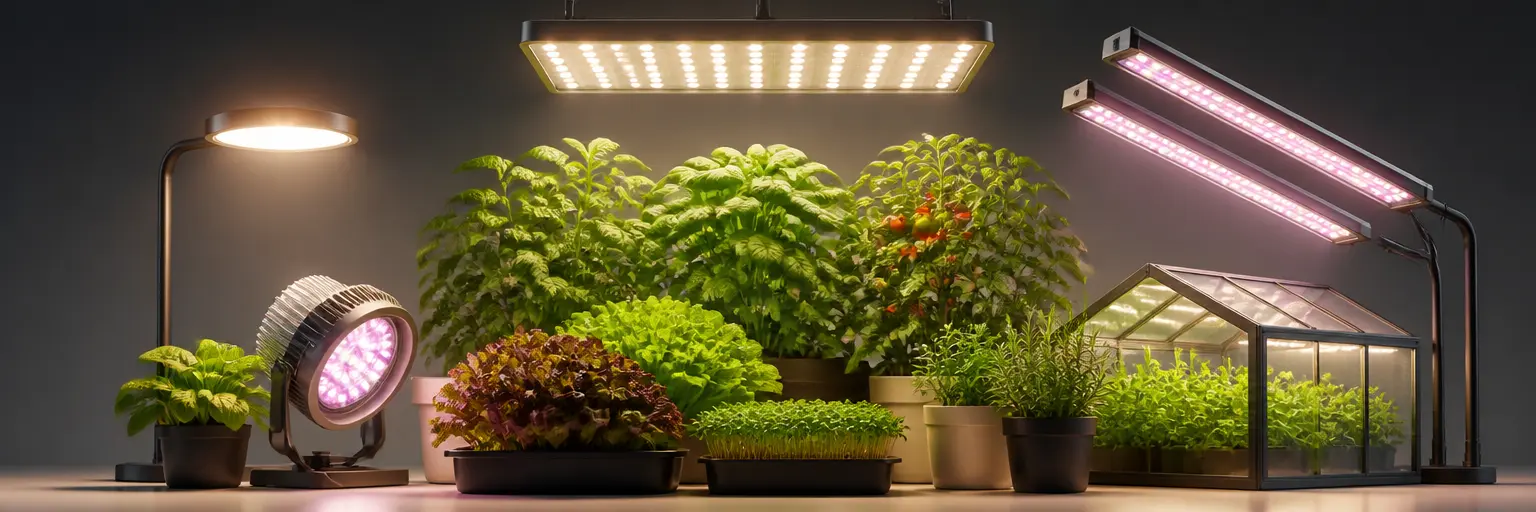
The Ultimate Checklist for Setting Up Your Grow Lights
Discover the best lighting solutions for indoor and greenhouse gardening 🌱💡—from energy-efficient LED grow lights and full-spectrum bulbs to adjustable fixtures designed for seedlings, herbs, vegetables, and fruiting plants. Find practical guidance to improve light coverage, encourage healthy growth, and extend your growing season with sustainable, cost-effective gardening gear from CultivateYourFood.
5 articles
The Importance of Light Distance for Healthy Plant Growth
Best Smart Grow Lights for Automated Indoor Gardening
How to Set Up a DIY Grow Light System on a Budget
LED vs. Fluorescent Grow Lights: Which is Right for Your Indoor Garden?
Best Lighting Solutions for Indoor and Greenhouse Gardening 🌱💡
Discover the best lighting solutions for indoor and greenhouse gardening at CultivateYourFood. The right grow light can help fruits, vegetables, herbs, seedlings, microgreens, and flowering plants receive the energy they need when natural sunlight is limited. This subcategory covers practical, energy-efficient, and sustainable indoor garden lighting options for home growers, greenhouse gardeners, urban gardeners, and anyone cultivating fresh food throughout the year.
🌞 LED Grow Lights for Healthy Plant Growth
Explore modern LED grow lights designed to provide efficient, targeted illumination for indoor plants and greenhouse crops. Readers can learn how full-spectrum LED lights support seedlings, leafy greens, herbs, tomatoes, peppers, and other edible plants through different stages of growth while using less electricity than many traditional lighting systems.
This section explains important features such as light spectrum, wattage, coverage area, hanging height, dimming controls, and heat output. You can compare compact LED panels, strip lights, bulbs, and adjustable fixtures to find a reliable solution for a windowsill garden, grow tent, shelving unit, or large greenhouse.
🌿 Full-Spectrum Lighting for Herbs, Vegetables, and Seedlings
Learn how full-spectrum grow lights imitate useful portions of natural sunlight for indoor food production. These lights are especially helpful for starting seeds, growing basil and other herbs, raising vegetable transplants, and maintaining plants during short winter days or cloudy weather.
Readers can expect practical guidance on choosing lighting for each growth stage, including blue-rich light for compact leafy growth and balanced red and blue wavelengths for mature plants and fruit production. Helpful information about daily light duration, plant distance, and consistent scheduling makes it easier to create a productive indoor garden.
🏡 Greenhouse Lighting for Year-Round Growing
Find greenhouse lighting ideas that extend the growing season and improve plant performance when sunlight is weak. Supplemental lighting can support seedlings, greenhouse vegetables, herbs, and flowering crops during winter, early spring, late autumn, or periods of heavy cloud cover.
This section focuses on choosing durable fixtures for humid environments and larger growing spaces. Expect advice about weather-resistant construction, safe installation, ventilation, electrical protection, light coverage, and automated timers so your greenhouse remains productive without wasting energy or creating unnecessary heat.
⚡ Energy-Efficient and Sustainable Grow Light Options
CultivateYourFood emphasizes energy-efficient gardening equipment that supports sustainable home food production. Compare low-wattage LED fixtures, programmable timers, reflective surfaces, and smart controls that can reduce electricity use while delivering dependable light to your plants.
You will also learn how lighting choices fit into an environmentally responsible gardening system. Using efficient equipment, recycling packaging, selecting durable products, and combining grow lights with natural sunlight can help reduce resource consumption while supporting organic gardening and fresh harvests at home.
⏲️ Grow Light Timers, Controls, and Automation
Consistent lighting is essential for strong and predictable plant growth. Explore grow light timers, smart plugs, dimmers, and automated controllers that help maintain reliable light cycles for seedlings, leafy greens, herbs, and fruiting plants.
These tools can simplify indoor gardening by automatically switching lights on and off at the right times. Readers can discover how to create practical schedules, prevent overexposure, manage multiple growing shelves, and combine lighting automation with watering, ventilation, and temperature monitoring.
🌱 Lighting for Seed Starting and Propagation
Strong lighting helps prevent leggy, weak seedlings when starting plants indoors. This section covers suitable seed-starting lights for vegetable seeds, herb seeds, cuttings, and young transplants, with guidance on positioning fixtures close enough to provide useful light without damaging tender growth.
Expect straightforward recommendations for seedling trays, propagation shelves, heat mats, and small indoor growing stations. You can also learn how proper light intensity, airflow, moisture control, and gradual hardening off work together to create healthy plants ready for the garden or greenhouse.
🔍 How to Choose the Right Indoor and Greenhouse Grow Light
Selecting the best grow light depends on your plant type, growing area, budget, available sunlight, and energy goals. Compare light intensity, spectrum, coverage, heat, installation style, durability, and operating cost before choosing a fixture for your indoor garden or greenhouse.
Our guides are designed to make product research easier for beginners and experienced gardeners alike. Whether you need a small herb light, a shelf-growing system, a grow tent fixture, or supplemental greenhouse lighting, you can find useful information for making a confident and practical decision.
❓ Frequently Asked Questions About Indoor and Greenhouse Gardening Lights
💡 What is the best type of grow light for indoor gardening?
Full-spectrum LED grow lights are often the best all-purpose option for indoor gardening because they are energy efficient, produce relatively little heat, last a long time, and support many plants from seedling to harvest. The ideal model depends on the growing space, plant type, and required light coverage.
🌿 How many hours should grow lights be on each day?
Many herbs, leafy greens, and seedlings perform well with approximately 12 to 16 hours of light per day, followed by a consistent dark period. Fruiting plants may require different schedules. Always consider the specific crop, natural sunlight, light intensity, and manufacturer recommendations.
📏 How far should LED grow lights be from plants?
The correct distance varies according to the fixture’s power and the plant’s growth stage. Start by following the manufacturer’s guidance and monitor your plants. Leggy growth may indicate insufficient light, while bleached leaves, curling, or scorched foliage can suggest that the light is too close or too intense.
🏡 Do greenhouses need grow lights?
Greenhouses do not always need artificial lighting, especially when they receive strong, consistent sunlight. However, supplemental greenhouse lights can extend the growing season, improve winter production, support seedlings, and maintain healthy crops during short days or prolonged cloudy conditions.
⚡ Are LED grow lights energy efficient?
Yes. LED grow lights generally use less electricity and produce less heat than many older lighting technologies while offering effective light output for plant growth. Choosing the correct wattage, using timers, improving reflective coverage, and turning lights off during adequate daylight can further improve energy efficiency.