
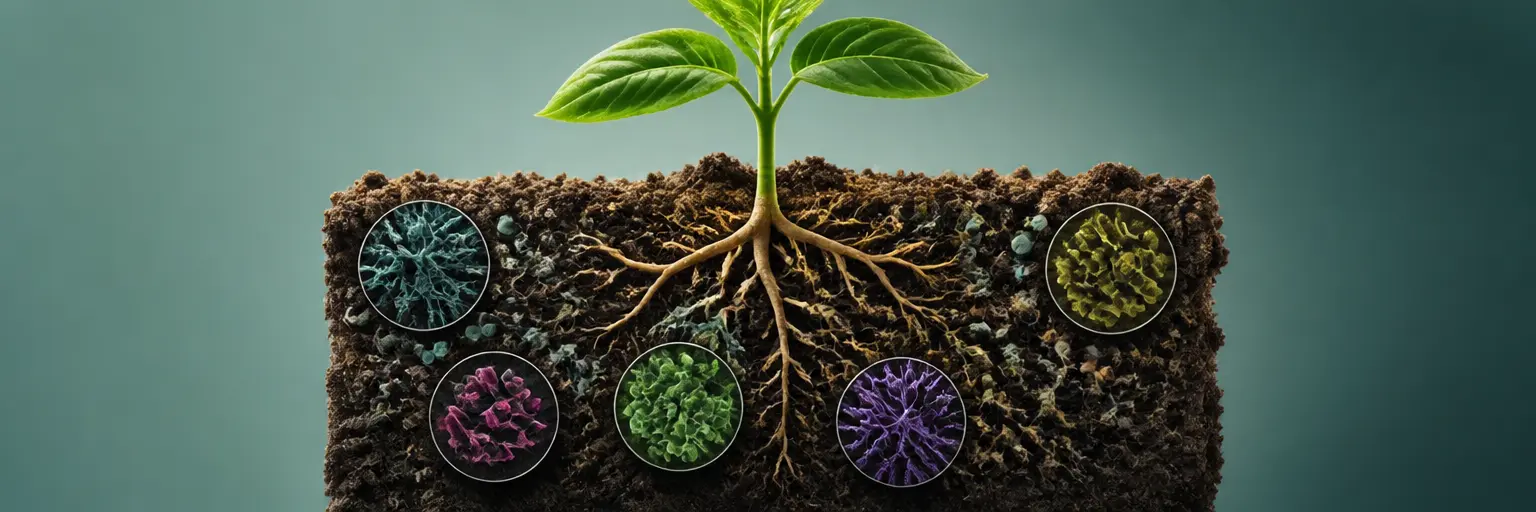
Soil Microbiology in Urban Gardens: Challenges and Solutions
Discover soil microbiology and unlock the hidden science behind thriving organic gardens 🌱 Learn how beneficial bacteria, fungi, and other microorganisms support nutrient cycling, improve soil structure, strengthen plant roots, and naturally enhance fertility. Explore practical, sustainable insights for cultivating healthier fruits, vegetables, and herbs while reducing dependence on synthetic fertilizers. 🦠🌿
5 articles
The Future of Soil Microbiology in Sustainable Agriculture
Bacteria in the Garden: The Unsung Heroes of Soil Fertility
How Plant Roots Shape the Microbial Community in Soil
Understanding Soil Microbes and Water Retention
Understanding Soil Microbiology: The Living Science Beneath Your Garden 🌱
Understanding Soil Microbiology is an essential part of advanced soil science for gardeners, homesteaders, and anyone interested in growing healthy food sustainably. This subcategory explores the microscopic organisms that make soil fertile, resilient, and productive, including beneficial bacteria, fungi, actinomycetes, protozoa, nematodes, and other members of the soil food web. At CultivateYourFood, you will learn how soil microbes support plant nutrition, compost decomposition, organic matter breakdown, disease suppression, and long-term soil health.
🦠 The Soil Food Web and Microbial Diversity
The soil food web describes the complex relationships between microorganisms, plants, organic matter, and larger soil organisms. You can expect practical explanations of how bacteria, fungi, protozoa, and beneficial nematodes interact to cycle nutrients and create a living ecosystem beneath your garden. Understanding these relationships can help you make better decisions about compost, mulch, crop rotation, and organic soil amendments.
This section also examines why microbial diversity is important for resilient garden soil. Healthy populations of beneficial microorganisms can improve soil structure, support plant growth, and help reduce the impact of soil-borne diseases. Readers will discover how sustainable gardening practices encourage a balanced soil food web rather than relying on harsh chemicals that may disrupt microbial communities.
🍄 Beneficial Mycorrhizal Fungi and Plant Partnerships
Mycorrhizal fungi form mutually beneficial relationships with plant roots, extending the effective root system into surrounding soil. These fungi can improve access to phosphorus, water, micronutrients, and hard-to-reach soil resources. This section explains how mycorrhizal associations develop and why they may be valuable for vegetables, herbs, fruit plants, and other crops grown in organic gardens.
You will also learn how soil disturbance, excessive fertilizer, fungicides, and poor growing conditions can affect beneficial fungi. Guidance will cover ways to support mycorrhizal activity through minimal soil disturbance, organic matter management, living roots, and suitable planting practices. The focus is on practical strategies that complement natural soil biology.
🌿 Rhizosphere Microbiology and Plant Health
The rhizosphere is the narrow zone of soil directly influenced by plant roots. It is rich in microbial activity because roots release sugars and other compounds that feed selected microorganisms. Readers can explore how root exudates, beneficial bacteria, and fungal communities influence nutrient availability, root development, and plant vigor.
This section explains how healthy rhizosphere biology can support strong seedlings and productive crops. You will discover why living roots, compost, cover crops, and appropriate moisture levels can encourage beneficial microbial populations. These insights are especially useful for improving vegetable garden soil, container growing media, raised beds, and home orchard planting areas.
♻️ Compost, Decomposition, and Microbial Activity
Microorganisms are the primary decomposers responsible for transforming kitchen scraps, garden waste, leaves, and other organic materials into mature compost. This section explores the role of carbon, nitrogen, oxygen, moisture, temperature, and microbial succession in successful composting. Understanding these processes can help you create nutrient-rich compost for fruits, vegetables, and herbs.
Readers will learn how to recognize active decomposition, troubleshoot slow or smelly compost, and determine when compost is mature enough for garden use. The content also connects compost microbiology with soil fertility, organic matter accumulation, water retention, and improved soil structure, making it easier to use compost responsibly and effectively.
🧪 Nutrient Cycling and Natural Soil Fertility
Soil microorganisms are essential for cycling nutrients such as nitrogen, phosphorus, sulfur, and carbon. Through decomposition and microbial transformations, nutrients become available in forms that plants can absorb. This section explains mineralization, immobilization, nitrogen fixation, nitrification, and nutrient cycling in clear, accessible language.
Understanding microbial nutrient cycling can reduce dependence on synthetic fertilizers and support more sustainable food production at home. You will learn how organic matter, cover crops, compost, and balanced soil conditions influence nutrient availability while also discovering why excessive fertilizer applications may harm soil biology and create nutrient imbalances.
🛡️ Soil Microbes, Disease Suppression, and Pest Management
A diverse microbial community can help protect plants by competing with harmful organisms, producing natural inhibitory compounds, and supporting stronger root systems. This section examines the connection between beneficial soil microbes and natural disease suppression, including how microbial balance may influence common root diseases and plant stress.
Readers will find sustainable approaches to protecting soil biology while managing garden pests and pathogens. Topics may include crop rotation, sanitation, compost quality, biological controls, proper watering, and avoiding unnecessary chemical treatments. These methods support the wider goals of CultivateYourFood: growing healthy food with organic and environmentally responsible practices.
🔬 Testing and Improving Soil Microbiology
Evaluating soil microbiology can involve observation, laboratory testing, soil organic matter analysis, compost assessment, and careful monitoring of plant performance. This section introduces ways to understand microbial activity without assuming that every garden requires expensive testing. You will learn what soil tests can reveal about pH, nutrients, organic matter, and conditions that influence microbial life.
Practical recommendations will help you improve microbial habitat through mulching, compost application, reduced tillage, diverse planting, cover cropping, and responsible irrigation. Whether you garden in raised beds, containers, backyard plots, or an edible landscape, these strategies can help build biologically active soil over time.
❓ Frequently Asked Questions About Soil Microbiology
What is soil microbiology?
Soil microbiology is the study of microscopic organisms living in soil and their interactions with plants, minerals, organic matter, and other organisms. It includes bacteria, fungi, protozoa, microscopic algae, and nematodes. These organisms influence decomposition, nutrient cycling, soil structure, plant growth, and disease suppression.
Why are soil microorganisms important for home gardens?
Beneficial soil microorganisms help release nutrients from organic matter, improve root-zone conditions, and contribute to healthy soil structure. They can also support plant resilience and help limit certain harmful organisms. Encouraging microbial diversity is a valuable part of organic gardening and sustainable food production.
How can I increase beneficial microbes in my garden soil?
You can support beneficial microbes by adding mature compost, keeping soil covered with mulch, growing cover crops, reducing unnecessary tillage, maintaining living roots, and avoiding excessive chemical fertilizers and pesticides. Balanced moisture, suitable pH, and regular additions of organic matter also create a better habitat for soil life.
Does compost add microorganisms to soil?
Mature compost contains a diverse community of microorganisms and provides organic matter that can support microbial activity after application. However, compost quality matters. Well-finished compost should have an earthy smell, a dark crumbly texture, and no obvious food scraps or strong odor. Compost works best as part of a broader soil health strategy.
Can soil microbes help prevent plant diseases?
Some beneficial microorganisms can compete with pathogens, occupy root surfaces, produce protective compounds, or improve plant vigor. They are not a guaranteed cure for every disease, but diverse soil biology can contribute to natural disease suppression. Combining healthy soil practices with crop rotation, proper watering, resistant varieties, and good garden sanitation provides the strongest approach.