
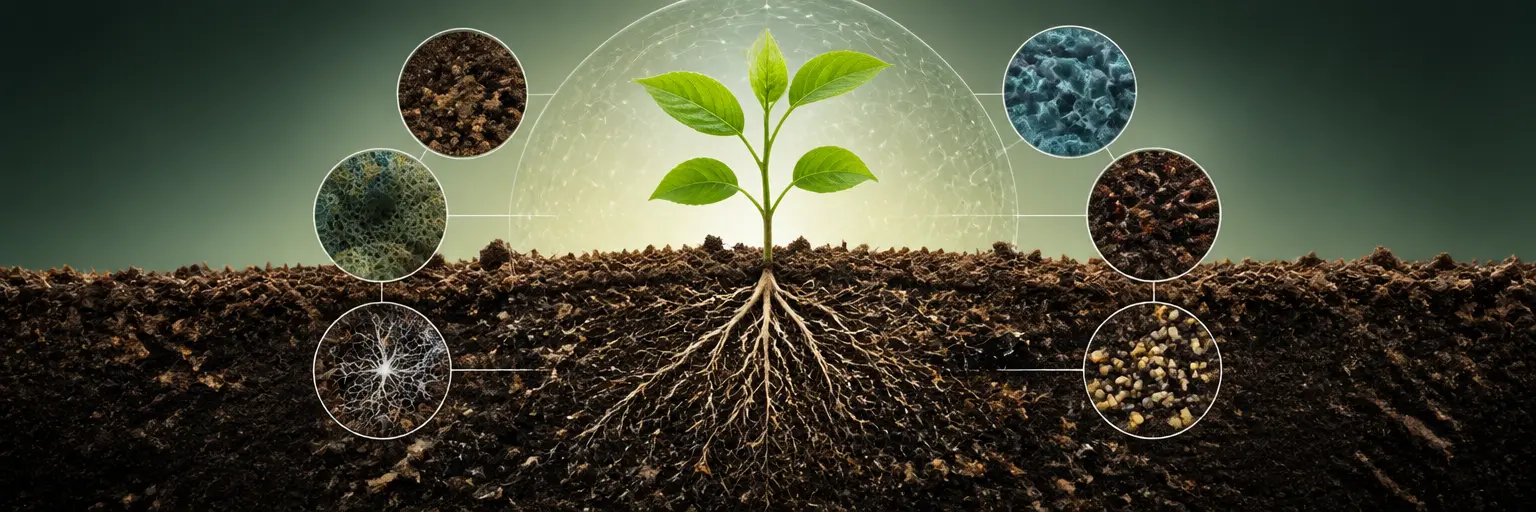
Soil Microbiology in Urban Gardens: Challenges and Solutions
Explore Advanced Topics in Soil Science to unlock healthier, more productive organic gardens 🌱 Learn how soil testing, nutrient interpretation, and soil microbiology work together to improve fertility, strengthen plant growth, support beneficial organisms, and guide sustainable gardening decisions. Discover practical, science-based insights for building living soil, optimizing compost, and cultivating thriving fruits, vegetables, and herbs at home.
20 articles
Soil Testing: The Foundation for Sustainable Gardening Practices
The Future of Soil Microbiology in Sustainable Agriculture
Soil Testing and Biodiversity: Maintaining a Thriving Ecosystem
Unlock Your Garden's Potential: The Ultimate Guide to Soil Testing
Bacteria in the Garden: The Unsung Heroes of Soil Fertility
Soil Testing and Crop Rotation: A Strategy for LongTerm Soil Health
The Secret Language of Soil: How to Interpret Your Soil Test Results
How Plant Roots Shape the Microbial Community in Soil
Understanding Soil Microbes and Water Retention
🌱 Advanced Topics in Soil Science for Productive Organic Gardens
Welcome to Advanced Topics in Soil Science at CultivateYourFood, a practical resource for gardeners who want healthier soil, stronger plants, and more sustainable harvests. Understanding your soil is one of the most important steps in growing fruits, vegetables, and herbs successfully at home. This category explores advanced soil management techniques, including soil testing, nutrient interpretation, pH adjustment, organic matter, beneficial microorganisms, compost, and natural fertility.
Whether you are improving a raised bed, preparing a vegetable garden, growing herbs in containers, or restoring tired garden soil, these guides will help you make informed decisions. Learn how to identify nutrient imbalances, improve soil structure, support microbial activity, and use organic amendments responsibly. By combining accurate soil information with sustainable gardening practices, you can create a productive growing environment while reducing waste, protecting biodiversity, and avoiding unnecessary fertilizers or chemical treatments.
🧪 Soil Testing and Interpretation
The Soil Testing and Interpretation section explains how to collect representative soil samples and understand the results of home soil test kits or professional laboratory reports. Readers can expect guidance on soil pH, nitrogen, phosphorus, potassium, calcium, magnesium, salinity, organic matter, and other indicators that influence plant growth. Clear explanations will help you determine whether your soil is acidic, alkaline, compacted, nutrient-deficient, or excessively fertilized.
You will also learn how to turn test results into practical garden improvements. Discover how to choose compost, lime, sulfur, mineral amendments, and organic fertilizers based on actual soil needs rather than guesswork. Accurate soil interpretation can improve root development, nutrient availability, water retention, and harvest quality while helping prevent nutrient runoff and over-fertilization.
🦠 Understanding Soil Microbiology
The Understanding Soil Microbiology section explores the living ecosystem beneath your garden plants. Soil contains bacteria, fungi, protozoa, nematodes, earthworms, and other organisms that break down organic matter, recycle nutrients, improve soil structure, and support healthy roots. Readers will discover how beneficial soil microbes interact with compost, plant roots, mulch, cover crops, and organic gardening methods.
These resources explain how to encourage biologically active soil without relying on unnecessary products or disruptive practices. Learn why minimizing soil disturbance, keeping soil covered, adding mature compost, using diverse organic matter, and avoiding excessive pesticides can strengthen the soil food web. A thriving microbial community can improve nutrient cycling, water infiltration, disease resistance, and long-term garden fertility.
❓ Frequently Asked Questions About Advanced Soil Science
🌿 Why is soil testing important for a home garden?
Soil testing reveals important information about pH, nutrient levels, organic matter, and possible imbalances. This allows gardeners to choose appropriate amendments and fertilizers instead of applying products blindly. Regular testing is especially useful when plants show poor growth or when a garden has been heavily fertilized.
🧪 How often should garden soil be tested?
Most home gardens benefit from testing every two to three years. Test more frequently after major soil amendments, repeated nutrient problems, unusual plant symptoms, or intensive vegetable production. Always follow the recommendations provided by the testing laboratory or kit manufacturer.
🌱 What is the best way to improve poor garden soil organically?
Begin by adding well-finished compost and maintaining a protective layer of organic mulch. Avoid working wet soil, reduce unnecessary digging, and consider cover crops or deep-rooted plants to improve structure. Soil improvements should be guided by test results so that nutrients are not added in excessive amounts.
🦠 What do beneficial soil microorganisms do?
Beneficial microorganisms decompose organic materials, release nutrients, form partnerships with plant roots, and help create stable soil aggregates. Some microbes also compete with or suppress harmful organisms. Their activity is supported by organic matter, moisture balance, oxygen, plant diversity, and minimal soil disturbance.
🍂 Can compost replace all fertilizers?
Compost is an excellent source of organic matter and provides a gradual supply of several nutrients, but it may not meet every crop’s specific needs. Soil test results can show whether additional organic fertilizer or mineral amendments are required. Use compost carefully and avoid repeated heavy applications that may cause nutrient or salt buildup.