
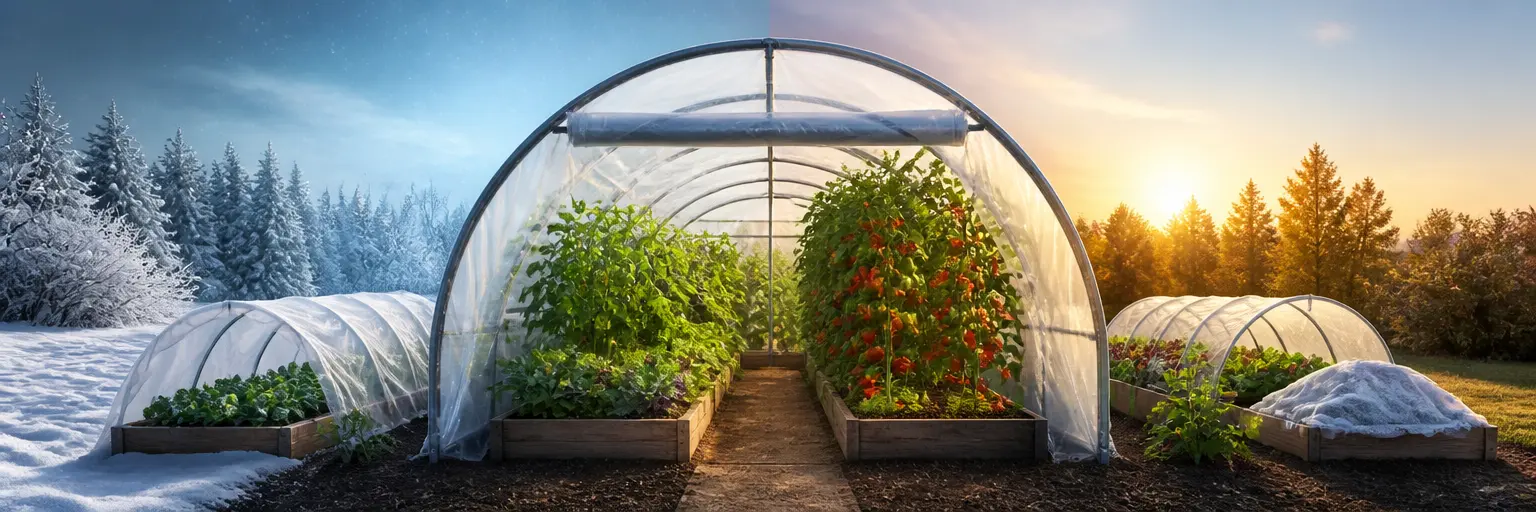
Extending the Season with Floating Row Covers: A Practical Guide
🌱 Extend your growing season naturally with practical protection techniques for cool-weather gardening! Discover how row covers, cold frames, greenhouses, frost cloth, and mulch can shield plants from frost, wind, and temperature swings while supporting healthy growth. These sustainable, organic gardening methods help you start planting earlier, harvest later, and enjoy more homegrown fruits, vegetables, and herbs in changing climates.
6 articles
Troubleshooting Common Season Extension Problems
Extending the Season in Small Spaces: Urban Gardening Tips
Protecting Tomatoes with Season Extension Techniques
High Tunnels: The Ultimate Guide for YearRound Gardening
Cold Frames: A MustHave for Early Spring and Late Fall Harvests
🌱 Extending the Growing Season with Protection
Discover practical, sustainable ways to grow fruits, vegetables, and herbs for longer in challenging weather conditions. The Extending the Growing Season with Protection subcategory at CultivateYourFood explains how to protect plants from frost, cold temperatures, wind, heavy rain, intense sunlight, and unexpected weather changes. Learn how to use row covers, cloches, cold frames, greenhouses, shade cloth, mulch, and other organic gardening methods to create a more stable growing environment in different climates.
🌦️ Season Extension Techniques for Every Climate
Readers will find practical guidance for adapting the garden to short growing seasons, cool springs, early autumn frosts, hot summers, and unpredictable weather. Articles cover how to select suitable protection methods for vegetables, herbs, fruits, seedlings, and container gardens, helping gardeners make the most of every planting window.
Learn how to combine microclimate gardening, strategic planting dates, wind protection, soil improvement, and temperature monitoring to encourage stronger plant growth. These techniques support sustainable food production while reducing crop losses and making home gardening more reliable.
❄️ Frost Protection for Tender Plants
Frost can damage leaves, flowers, roots, and developing fruit, especially on tomatoes, peppers, cucumbers, basil, squash, and young seedlings. This section explains how to identify frost risks, prepare plants before a cold night, and choose effective solutions such as floating row covers, frost blankets, garden fabric, cloches, and temporary tunnels.
Readers will also learn how to protect plants without trapping excessive moisture or restricting airflow. Proper frost protection includes covering plants at the right time, securing materials against wind, removing covers during warm daylight hours, and inspecting plants after freezing temperatures.
🏡 Cold Frames, Hoops, and Mini Greenhouses
Explore affordable structures that create warmer growing conditions without requiring a large greenhouse. Cold frames, hoop houses, low tunnels, and mini greenhouses can help gardeners start seeds earlier, grow greens through winter, and harvest crops later in the season.
Expect helpful information about choosing materials, improving ventilation, managing humidity, and positioning structures for maximum sunlight. These season-extending systems are ideal for small gardens, raised beds, balconies, patios, and urban growing spaces.
🧣 Row Covers, Cloches, and Protective Fabrics
Discover how different garden covers protect crops from cold, insects, wind, and harsh sunlight. Articles explain the differences between lightweight insect netting, medium-weight frost cloth, heavy winter covers, plastic sheeting, individual cloches, and reusable protective fabrics.
Readers will learn how to install covers correctly, prevent plants from being crushed, and maintain sufficient ventilation. Using the right cover at the right stage can improve germination, reduce pest pressure, and provide early-season and late-season crop protection.
🌞 Shade and Heat Protection for Warm Climates
Extending the growing season is not limited to cold weather. In hot climates, excessive heat and intense sunlight can cause bolting, sunscald, wilting, blossom drop, and poor fruit development. This section explores shade cloth, natural shade, reflective materials, mulching, and careful irrigation for heat-sensitive crops.
Learn how to protect lettuce, spinach, cilantro, strawberries, young seedlings, and other cool-season plants during heat waves. Heat management helps maintain soil moisture, reduce plant stress, and support continuous harvests in warm and changing climates.
🌧️ Rain, Wind, and Severe Weather Protection
Heavy rain and strong winds can break stems, erode soil, spread disease, and damage blossoms or ripe produce. Readers will find strategies for staking plants, installing windbreaks, improving drainage, using rain shelters, and protecting containers from sudden storms.
The guidance emphasizes practical and sustainable solutions that can be made with durable, reusable, or repurposed materials. By planning for severe weather, gardeners can reduce crop damage and keep plants productive throughout unpredictable growing seasons.
🌿 Organic Soil and Root Protection
Healthy soil helps plants tolerate temperature changes, drought, excess moisture, and transplant stress. This section explains how compost, leaf mold, aged manure, organic mulch, and cover crops can insulate roots and improve soil structure during seasonal transitions.
Readers will learn how to use mulch responsibly, avoid burying plant stems, and maintain balanced moisture levels. Organic soil care supports stronger root systems and creates a more resilient garden without relying on synthetic products.
📅 Planning Planting Dates and Harvest Windows
Discover how frost dates, soil temperature, local climate patterns, and crop maturity times influence successful planting. Articles help gardeners plan succession sowing, protect young transplants, and choose crops that can thrive before and after the traditional growing season.
Expect practical strategies for creating a personalized seasonal garden calendar. With careful planning and protective tools, you can enjoy earlier spring harvests, longer autumn production, and continuous homegrown food.
❓ Frequently Asked Questions About Extending the Growing Season
What is the easiest way to extend the growing season?
The easiest methods include using floating row covers, organic mulch, cloches, and wind protection. These tools are affordable, simple to install, and effective for protecting plants from light frost and cold temperatures. Start by choosing protection suited to your local climate and the needs of each crop.
Can row covers protect plants from frost?
Yes, row covers can protect many crops from light frost by trapping warmer air around the plants. The level of protection depends on the fabric weight and how securely it is installed. Covers should be supported when necessary and removed or ventilated on warm, sunny days.
How can I protect a garden from extreme heat?
Use shade cloth, apply organic mulch, water deeply at appropriate times, and improve airflow around plants. Planting heat-sensitive crops where they receive morning sun and afternoon shade can also help. Regularly check for wilting, sunscald, bolting, and dry soil.
Are greenhouses necessary for year-round gardening?
No, a greenhouse is helpful but not essential. Cold frames, low tunnels, hoop houses, cloches, and frost blankets can extend the growing season at a lower cost. The best option depends on your available space, climate, budget, and the crops you want to grow.
How do I prevent condensation and plant disease under covers?
Provide ventilation whenever temperatures rise, avoid overwatering, and leave enough space between plants for air circulation. Water the soil rather than wetting foliage, inspect plants regularly, and remove damaged leaves promptly. Good airflow is essential for preventing fungal diseases in protected gardens.