
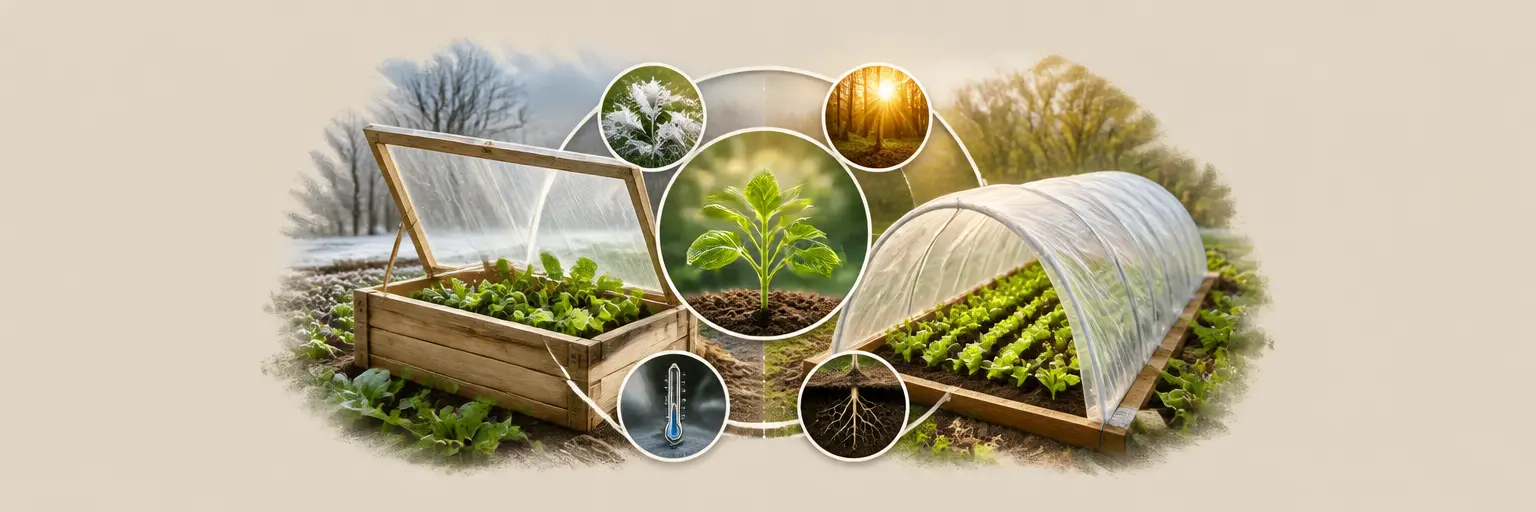
Cold Frames vs. Polytunnels: Which is Best for Your Garden?
Discover how cold frames and politunnels can extend your growing season, protect plants from frost, wind, pests, and unpredictable weather, and create ideal conditions for healthier harvests. 🌱 These practical gardening structures help home growers cultivate vegetables, herbs, and fruits earlier in spring and later into autumn while supporting sustainable, organic gardening. Explore smart ways to improve plant growth, conserve resources, and enjoy fresh produce for longer. 🥕🍅
5 articles
Cold Frame vs. Row Covers: Which is Right for You?
The Benefits of Cold Frame Gardening for Early Spring Harvests
Polytunnel Heating Options: What You Need to Know
Polytunnel DIY Projects: Building Your Own on a Budget
🌱 The Benefits of Cold Frames and Polytunnels for Sustainable Home Gardening
Discover how cold frames and polytunnels can help you extend the growing season, protect plants from unpredictable weather, and cultivate healthier fruits, vegetables, and herbs at home. This subcategory from CultivateYourFood provides practical, organic gardening guidance for choosing, installing, and using protected growing structures efficiently. Whether you are growing lettuce in early spring, ripening tomatoes in autumn, or protecting delicate herbs from frost, you will find ideas for creating a productive and sustainable garden environment.
🌦️ Extend the Growing Season Naturally
Cold frames and polytunnels create a more stable microclimate than an open garden, allowing you to begin planting earlier in spring and continue harvesting later in autumn. These structures help retain warmth, reduce exposure to cold winds, and protect seedlings from light frosts, making them valuable tools for year-round vegetable gardening.
Readers can expect guidance on succession planting, overwintering crops, and selecting vegetables suited to protected cultivation. Learn how to grow salad greens, carrots, radishes, spinach, herbs, and other cool-season crops for longer periods while using natural heat retention rather than energy-intensive heating systems.
🛡️ Protect Plants from Weather and Pests
Severe rain, strong winds, hail, frost, and sudden temperature changes can damage young plants and reduce harvests. A cold frame or polytunnel provides a protective barrier that supports healthier plant growth and improves garden resilience, especially in climates with unpredictable weather.
Protected structures can also reduce exposure to common garden pests, including cabbage white butterflies, slugs, and certain flying insects. You will discover organic strategies such as insect netting, companion planting, ventilation, crop rotation, and regular inspection to maintain a healthy, low-chemical growing environment.
🍅 Grow Heat-Loving Crops More Successfully
Polytunnels are particularly useful for growing crops that need warmth and shelter, including tomatoes, cucumbers, peppers, aubergines, melons, and basil. By raising temperatures and protecting plants from cold nights, they can improve flowering, fruit development, and overall harvest quality.
This subcategory explains how to prepare soil, manage plant spacing, support climbing crops, and maintain suitable humidity. You will also learn why proper ventilation and watering control are essential for preventing fungal diseases while encouraging strong, productive plants.
💧 Improve Water and Resource Efficiency
Cold frames and polytunnels can help gardeners use water more efficiently by reducing exposure to wind and excessive evaporation. When combined with mulching, rainwater collection, drip irrigation, and moisture monitoring, protected growing can support a more water-wise and sustainable garden.
Expect practical advice on reducing waste, reusing containers, choosing durable materials, and designing structures that work with your existing garden. These methods are especially valuable for organic growers who want to conserve resources while producing fresh food close to home.
🌿 Support Organic and Sustainable Gardening
Protected growing structures make it easier to create consistent conditions for healthy plants without relying heavily on synthetic fertilizers or chemical pesticides. With fertile compost, natural soil improvement, beneficial insects, and careful crop planning, gardeners can build a productive ecosystem inside a cold frame or polytunnel.
Readers will find ideas for integrating composting, organic feeding, biological pest control, and crop rotation into protected cultivation. The focus is on long-term soil health, biodiversity, and home food production using practical techniques suitable for beginners and experienced gardeners.
🏡 Choose the Right Structure for Your Garden
Cold frames are compact, affordable, and well suited to seedlings, herbs, salad crops, and small gardens. Polytunnels provide more growing space and greater height, making them ideal for larger harvests and crops that require trellising. Understanding the differences helps you choose a structure that matches your climate, budget, available space, and gardening goals.
This section covers important considerations such as size, orientation, glazing or plastic covering, frame materials, access, ventilation, drainage, and maintenance. You will learn how to compare cold frames, mini greenhouses, and polytunnels before investing in a protected growing solution.
❓ Frequently Asked Questions About Cold Frames and Polytunnels
What is the main benefit of using a cold frame?
A cold frame protects plants from frost, wind, and heavy rain while creating a warmer growing environment. It is especially useful for hardening off seedlings, starting crops early, extending autumn harvests, and growing hardy herbs and leafy greens in a small space.
Are polytunnels suitable for organic gardening?
Yes. Polytunnels can support organic gardening when combined with compost, healthy soil, crop rotation, natural pest control, and organic fertilizers. They provide protection without requiring synthetic chemicals, although good ventilation and careful watering are essential for disease prevention.
Which vegetables grow well in a polytunnel?
Popular polytunnel crops include tomatoes, cucumbers, peppers, aubergines, courgettes, beans, lettuce, spinach, basil, and other herbs. The best choices depend on your climate, tunnel size, ventilation, and planting schedule.
Do cold frames need heating?
Most cold frames do not need artificial heating. Their purpose is to capture sunlight and retain warmth using transparent covers and insulated sides. Positioning the frame in a sunny, sheltered location and adding compost or insulating materials can improve temperature stability.
How can I prevent overheating inside a polytunnel?
Use doors, side vents, roof vents, shade cloth, and regular temperature checks to improve airflow. Open the structure on warm days, avoid overcrowding plants, and water consistently. Good ventilation helps prevent heat stress, condensation, and fungal diseases.