
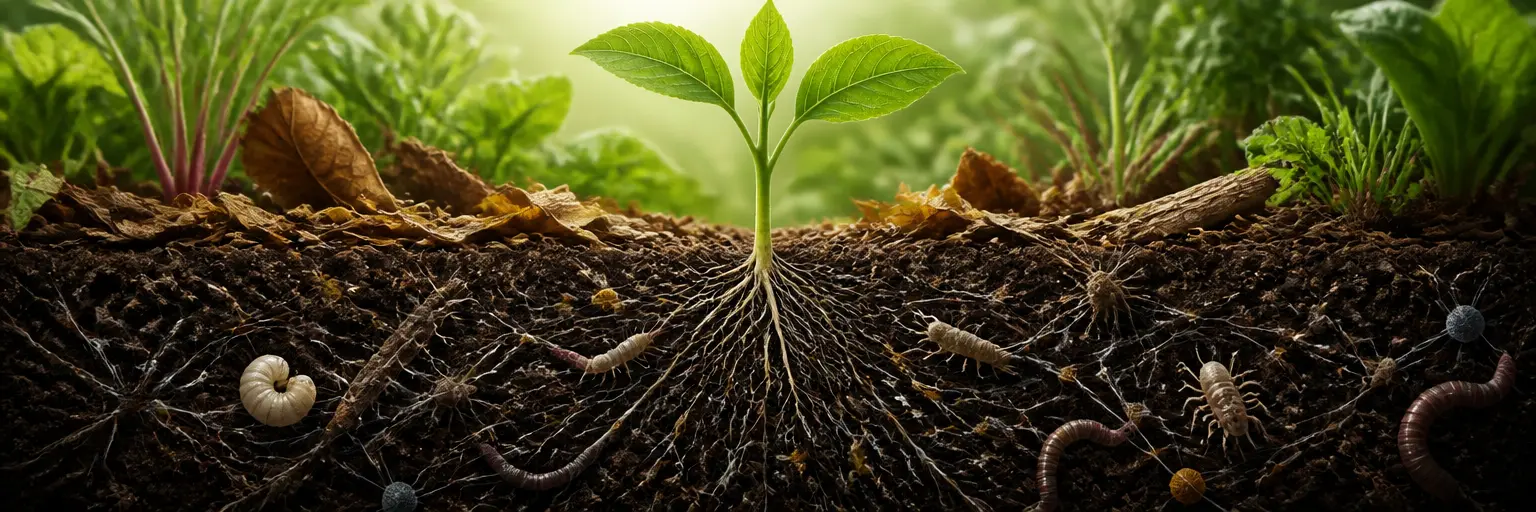
The Hidden World Beneath: Exploring the Intricacies of the Soil Food Web
Discover how to build a healthy soil food web for thriving organic gardens 🌱 Learn how beneficial bacteria, fungi, earthworms, and other soil organisms work together to improve nutrient cycling, soil structure, water retention, and natural plant resilience. Explore sustainable gardening techniques like composting, mulching, cover cropping, and avoiding harmful chemicals to create rich, living soil that supports vibrant fruits, vegetables, and herbs. 🌿 Cultivate stronger plants naturally with practical organic gardening tips from CultivateYourFood.
7 articles
The Soil Food Web and Organic Matter: The Cornerstone of Soil Health
Attracting Beneficial Insects: How a Healthy Soil Food Web Supports Biodiversity
The Soil Food Web and Potassium: Ensuring Strong and Healthy Plants
The Soil Food Web and Nutrient Cycling: How Nutrients Become PlantAvailable
The Soil Food Web and Leaf Health: The Connection Between Soil and Foliage
The Soil Food Web and Vegetable Quality: Growing NutrientDense Food
🌱 Building a Healthy Soil Food Web for Organic Gardening
Discover how to build a healthy soil food web and create living, productive soil for your home garden with CultivateYourFood. The soil food web is the interconnected community of bacteria, fungi, protozoa, nematodes, arthropods, earthworms, plant roots, and organic matter that supports strong plant growth. By learning how these organisms interact, you can improve soil fertility, nutrient cycling, water retention, plant resilience, and long-term garden productivity using sustainable organic gardening practices.
🦠 Understanding the Soil Food Web
The soil food web describes the relationships between living organisms in the soil and the plants they support. Organic matter feeds beneficial bacteria and fungi, which are then consumed by organisms such as protozoa, nematodes, mites, and other decomposers. As these organisms grow and die, nutrients are released into forms that plant roots can absorb.
Readers can expect practical explanations of soil biology, microbial activity, nutrient cycling, decomposition, and plant-soil relationships. This knowledge makes it easier to diagnose poor soil, understand the value of organic amendments, and create healthier growing conditions for fruits, vegetables, herbs, flowers, and beneficial garden plants.
🍂 Feeding Soil Microorganisms with Organic Matter
Organic matter is the foundation of a thriving soil food web. Compost, leaf mold, aged manure, chopped leaves, grass clippings, cover crops, and other natural materials provide food and habitat for beneficial soil organisms. Regularly adding mature compost can improve soil structure while supporting microbial diversity.
Learn how to choose and apply organic amendments without overloading the soil with nutrients. You will find guidance on composting for garden soil, carbon-rich materials, nitrogen-rich materials, compost maturity, mulch, and natural soil conditioners so your plants receive steady support throughout the growing season.
🍄 Supporting Beneficial Fungi and Mycorrhizae
Beneficial fungi are essential members of the soil food web. Mycorrhizal fungi form partnerships with plant roots, extending the root system and helping plants access water and nutrients such as phosphorus. Fungal networks can also contribute to soil aggregation, improved drainage, and greater plant resilience.
This subcategory explains how to protect helpful fungi through reduced soil disturbance, organic mulching, living roots, diverse plantings, and careful fertilizer use. Readers will also learn when fungal inoculants may be useful and why healthy garden practices are often more important than purchasing microbial products.
🪱 Encouraging Earthworms and Soil Decomposers
Earthworms, springtails, beetles, millipedes, and other decomposers help break down organic residues and create channels through the soil. Their activity can improve aeration, water movement, nutrient availability, and soil texture. A garden rich in decomposers is often a sign of active, biologically healthy soil.
Discover how to attract and protect these beneficial organisms by using compost, mulch, moisture management, chemical-free gardening, and gentle cultivation methods. You will also learn why earthworms need suitable habitat and why adding worms to unsuitable soil does not automatically create a healthy soil ecosystem.
🌾 Improving Soil Structure and Plant Health Naturally
A healthy soil food web helps form stable soil aggregates, creating a balanced combination of air spaces, water-holding pores, and pathways for plant roots. Good soil structure supports seed germination, root development, drainage, and nutrient availability while reducing compaction and erosion.
Find practical strategies for improving clay soil, sandy soil, compacted soil, raised beds, containers, and garden plots. Topics include no-dig gardening, sheet mulching, cover crops, crop rotation, compost application, root-friendly soil preparation, and natural soil fertility.
🌿 Using Cover Crops, Mulch, and Living Roots
Living roots provide continuous food for soil organisms and help keep the soil covered between vegetable crops. Cover crops such as clover, vetch, peas, oats, rye, buckwheat, and other suitable plants can reduce erosion, suppress weeds, capture nutrients, and increase organic matter.
Organic mulch performs a similar role by protecting soil from heat, heavy rain, drying winds, and temperature changes. Learn how to select and use cover crops, straw mulch, leaf mulch, wood chips, grass clippings, and green manure according to your climate, crop rotation, and garden goals.
🐛 Balancing Beneficial and Harmful Soil Organisms
A productive soil food web is not free from every pest or pathogen. Instead, it contains a diverse community that can help regulate populations and reduce the opportunity for harmful organisms to dominate. Biodiversity, healthy roots, proper watering, and balanced fertility all contribute to natural soil resilience.
Readers will learn how to avoid practices that damage soil biology, including excessive tilling, overwatering, synthetic chemical misuse, and unnecessary soil sterilization. Explore organic pest control, disease prevention, beneficial insects, biological balance, and integrated garden management for a healthier growing environment.
🧪 Testing and Monitoring Living Soil
Soil testing can reveal pH, nutrient levels, organic matter, salinity, and other conditions that influence the soil food web. However, laboratory results are only part of the picture. Soil color, smell, texture, drainage, earthworm activity, root growth, and plant performance also provide valuable clues.
Learn how to combine soil test results with simple garden observations to make informed decisions. This section covers organic soil testing, soil pH, nutrient deficiencies, compost evaluation, soil compaction, moisture levels, and biological indicators of healthy soil.
🌎 Building Long-Term Soil Fertility Sustainably
Building a healthy soil food web is a gradual process that improves with consistent care. Rather than relying on quick fixes, sustainable gardeners focus on returning organic material to the soil, keeping the ground covered, growing diverse plants, and minimizing disturbance.
CultivateYourFood provides practical, home-garden-friendly advice for creating fertile soil year after year. Use these methods to grow more productive organic vegetables, fruits, herbs, and edible garden crops while conserving resources and supporting a healthier ecosystem.
❓ Frequently Asked Questions About Building a Healthy Soil Food Web
What is the soil food web?
The soil food web is the community of living organisms that interact in soil, including bacteria, fungi, protozoa, nematodes, earthworms, arthropods, plant roots, and decomposers. These organisms break down organic matter and cycle nutrients, helping plants access the resources they need for healthy growth.
How can I improve my soil food web naturally?
Add mature compost and organic mulch, keep soil covered, grow diverse plants, maintain living roots, reduce unnecessary tilling, and avoid harmful chemical applications. Consistent moisture and regular additions of organic matter are also important for supporting beneficial soil organisms.
Does compost help build a healthy soil food web?
Yes. High-quality, mature compost supplies organic matter, microorganisms, and nutrients while improving soil structure. Apply it appropriately for your soil and crops, and avoid using unfinished compost that may contain weed seeds, pathogens, or materials that temporarily compete for nitrogen.
Are earthworms always a sign of healthy soil?
Earthworms are often a positive indicator because they help decompose organic matter and create channels through the soil. However, their presence alone does not guarantee balanced soil fertility. Healthy soil also requires suitable pH, moisture, organic matter, microbial diversity, and good plant growth.
Can I build a soil food web without synthetic fertilizers?
Yes. Many home gardeners build productive soil with compost, aged manure, leaf mold, cover crops, crop rotation, organic mulch, and other natural amendments. Soil testing can help identify nutrient needs so organic fertilizers are used carefully and responsibly rather than applied unnecessarily.