
Troubleshooting Watering Issues: Identifying and Correcting Problems in Organic Gardens
💧 Discover watering techniques for organic gardens that help fruits, vegetables, and herbs thrive naturally. Learn how to conserve water, improve soil moisture, and support healthy plant growth with sustainable methods such as drip irrigation, rainwater harvesting, deep watering, and mulch. 🌱 Grow a productive, eco-friendly garden while reducing waste and nurturing stronger roots—perfect for every home gardener practicing organic gardening.
5 articles
How to Use Soaker Hoses for Efficient Watering in Organic Gardens
Watering Wisely: How to Avoid Overwatering and Underwatering Your Organic Plants
How to Water Hanging Baskets Organically: Ensuring Proper Hydration
Watering Techniques for Clay Soil in Organic Gardens: Improving Drainage
💧 Watering Techniques for Organic Gardens
Discover practical, sustainable watering techniques for organic gardens with CultivateYourFood. This subcategory explains how to provide the right amount of water for fruits, vegetables, herbs, seedlings, raised beds, and container plants while conserving this valuable resource. Learn organic garden irrigation methods, efficient watering schedules, soil-moisture monitoring, rainwater harvesting, and natural ways to keep plants healthy without relying on wasteful or harmful practices.
🌱 Build a Watering Routine for Healthy Organic Plants
Successful organic gardening begins with a consistent watering routine. Explore how soil type, weather, season, plant variety, growth stage, and garden location affect water requirements. You will learn why deep, occasional watering is often more effective than frequent shallow watering and how to identify signs of under-watering or overwatering, including wilted leaves, yellow foliage, slow growth, and root stress.
Our guidance helps home gardeners create practical watering schedules for vegetable gardens, herb gardens, fruit plants, raised beds, and containers. Use soil moisture checks, plant observation, and local weather conditions to decide when watering is truly necessary, reducing water waste while supporting strong roots and productive harvests.
🚿 Efficient Irrigation Methods for Organic Gardens
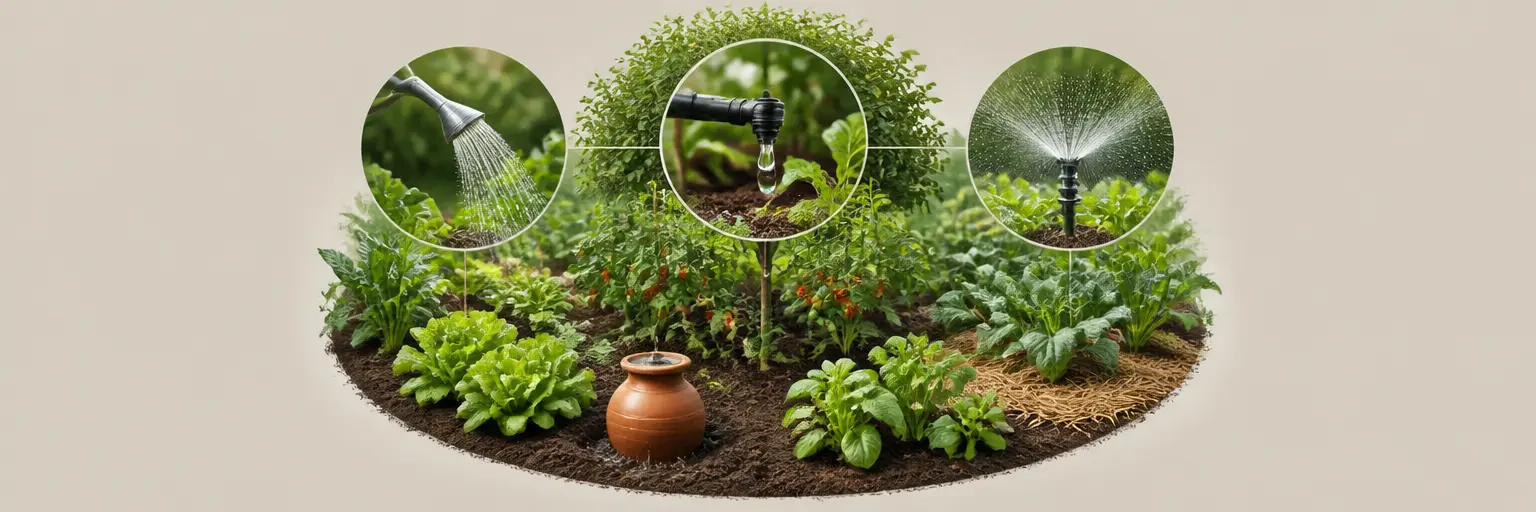
Compare effective organic garden irrigation systems, including drip irrigation, soaker hoses, watering cans, hand watering, olla irrigation, and carefully directed hose watering. Each technique has advantages depending on garden size, plant spacing, soil drainage, and available time. Learn how to deliver water directly to the root zone instead of wetting foliage unnecessarily.
Efficient irrigation can help conserve water, reduce evaporation, and lower the risk of fungal diseases. Discover how to position drip lines, adjust flow rates, inspect connections, and maintain irrigation equipment so your garden receives even moisture. Targeted watering is especially useful for tomatoes, peppers, cucumbers, leafy greens, herbs, and newly planted crops.
🌧️ Rainwater Harvesting and Water Conservation
Rainwater harvesting is a sustainable way to supplement watering in an organic garden. Learn how to collect rainwater from suitable roof surfaces using rain barrels, storage containers, and simple garden collection systems. Properly stored rainwater can provide a soft, plant-friendly source of moisture for ornamental and edible plants.
This section also covers water-saving strategies such as watering early in the morning, grouping plants with similar needs, repairing leaks, selecting drought-tolerant crops, and using mulch to reduce evaporation. Conserving garden water protects local resources and makes home food production more resilient during hot or dry periods.
🍂 Mulching and Soil Care for Better Moisture Retention
Healthy soil plays a central role in efficient garden watering. Learn how compost, aged organic matter, leaf mold, and natural mulch improve soil structure, increase water retention, and support beneficial soil organisms. Organic mulch materials such as straw, shredded leaves, grass clippings, and untreated wood chips can help keep roots cooler and reduce moisture loss.
Find out how to apply mulch correctly without burying plant stems or creating overly damp conditions. You will also learn how soil compaction, poor drainage, and excessive cultivation can interfere with water absorption. Improving soil health allows water to reach plant roots more effectively and supports long-term organic garden productivity.
🌿 Watering Seedlings, Transplants, and Established Crops
Young seedlings and recently transplanted vegetables need attentive watering because their root systems are still developing. Learn how to use gentle watering methods that prevent soil erosion, protect delicate stems, and maintain consistent moisture during germination. Bottom watering, fine-spray watering, and careful hand watering can all be useful when starting plants indoors or outdoors.
Established crops generally benefit from deeper watering that encourages strong root development. This section explains how watering needs change as plants mature, flower, and produce fruit. Get practical advice for watering leafy greens, root vegetables, legumes, tomatoes, cucumbers, squash, berries, and culinary herbs while avoiding common mistakes such as waterlogged soil and irregular moisture.
☀️ Seasonal Watering and Extreme Weather Strategies
Garden watering requirements change throughout the year. Learn how to adapt your approach during spring planting, summer heat, autumn harvests, and winter dormancy. Hot weather may require more frequent soil checks, while cool or rainy conditions often call for reduced irrigation. Understanding seasonal patterns helps prevent both drought stress and unnecessary watering.
Prepare your organic garden for heat waves, drought, heavy rain, wind, and unexpected temperature changes. Discover ways to use shade cloth, wind protection, mulch, temporary covers, and improved drainage to protect plants. Weather-aware watering supports healthier crops and helps gardeners respond effectively to changing climate conditions.
❓ Frequently Asked Questions About Watering Organic Gardens
How often should I water an organic vegetable garden?
Watering frequency depends on soil type, rainfall, temperature, plant maturity, and container size. Instead of following a fixed schedule, check the soil several centimeters below the surface. Water deeply when the soil feels dry at root level, while avoiding constantly saturated conditions.
What is the best time of day to water garden plants?
Early morning is usually the best time to water because temperatures are cooler and plants can absorb moisture before daytime heat increases evaporation. Morning watering also allows foliage to dry more quickly than evening watering, which may help reduce fungal disease risk.
Is drip irrigation suitable for organic gardening?
Yes. Drip irrigation is an excellent organic gardening method because it delivers water slowly and directly to the soil near plant roots. It can reduce evaporation, limit wet foliage, and conserve water when properly installed and maintained.
Can I use rainwater to water edible plants?
Rainwater can often be used for gardens, but collection surfaces and storage containers should be clean and suitable for garden use. Avoid contaminated runoff and keep barrels covered to prevent mosquitoes, debris, and algae. Follow local water-harvesting guidelines where applicable.
How can mulch reduce watering needs?
Organic mulch forms a protective layer over the soil, slowing evaporation, moderating soil temperature, and reducing weed competition. Apply a moderate layer around plants while keeping mulch away from stems and trunks. Straw, shredded leaves, and composted organic materials are common choices for edible gardens.