
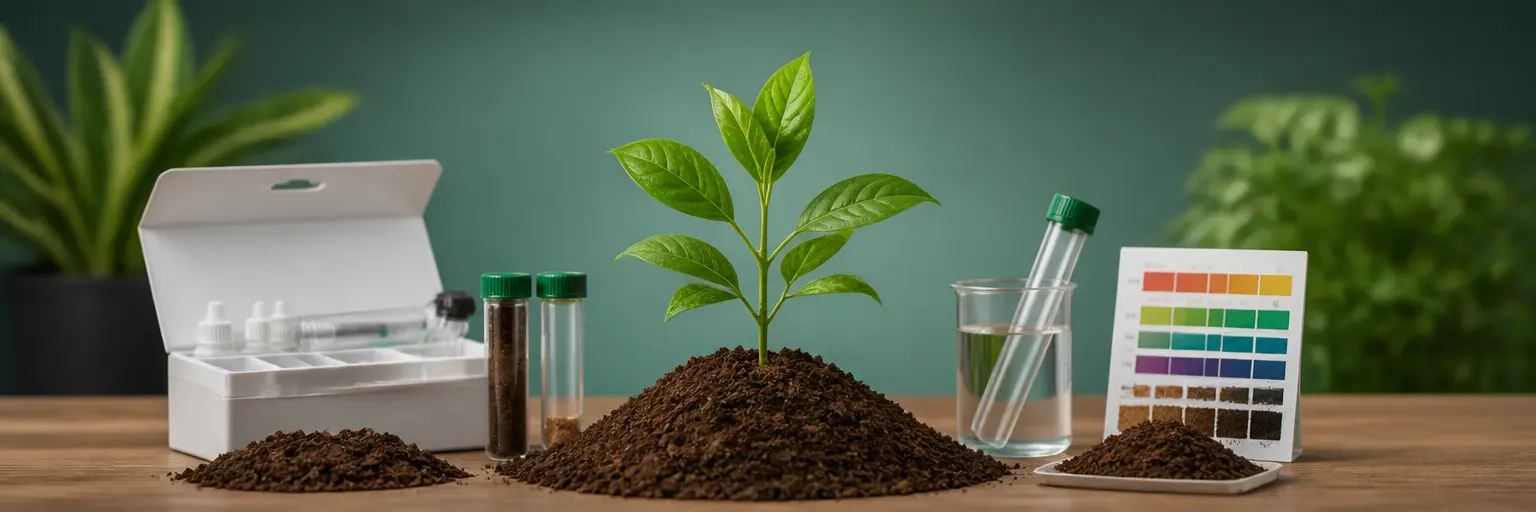
Heavy Metal Soil Testing: Protecting Your Family and Garden from Contamination
Discover the best soil testing kits and services to understand your garden’s pH, nutrients, moisture, and overall soil health 🌱. Make informed decisions about compost, organic fertilizers, and planting with accurate soil analysis designed for home vegetable gardens, herbs, fruits, and sustainable growing. Whether you need a convenient DIY soil test kit or professional laboratory testing, find reliable tools to improve plant health, boost harvests, and cultivate nutrient-rich soil naturally.
5 articles
Soil Testing for Sandy Soil: Techniques for Water Retention and Nutrient Availability
How to Interpret Your Soil Test Results: A StepbyStep Guide
Soil Testing for Beginners: Everything You Need to Know to Get Started
Soil Texture Testing: Determining Your Soil's Composition and Drainage
🌱 The Best Soil Testing Kits and Services for Healthy Home Gardens
Discover the best soil testing kits and professional soil testing services for growing thriving fruits, vegetables, and herbs at home. At CultivateYourFood, we help gardeners understand soil pH, nutrient levels, organic matter, moisture, and drainage so they can make confident, sustainable decisions. Whether you are starting a raised bed, improving vegetable garden soil, or practicing organic gardening, the right soil test can reveal exactly what your plants need for stronger roots, better harvests, and long-term soil health.
🧪 Home Soil Testing Kits for Fast, Practical Results
Home soil testing kits provide a convenient way to check essential growing conditions without sending samples to a laboratory. Many kits measure soil pH, nitrogen, phosphorus, and potassium, while advanced options may also assess moisture, salinity, temperature, and electrical conductivity. These tools are useful for vegetable gardens, herb containers, flower beds, lawns, and raised garden beds.
Readers can expect guidance on choosing reliable soil test kits, interpreting color charts or digital readings, and avoiding common testing mistakes. We highlight easy-to-use options for beginners as well as more detailed soil analysis tools for experienced organic gardeners who want to monitor nutrient availability throughout the growing season.
🔬 Professional Soil Testing Services and Laboratory Reports
Professional soil testing services offer a more comprehensive evaluation than many basic home kits. Laboratory analysis can measure soil pH, macronutrients, micronutrients, organic matter, texture, salinity, and cation exchange capacity. These services are especially helpful when plants repeatedly struggle, harvests remain small, or soil amendments have produced inconsistent results.
Our resources explain how to collect a representative soil sample, complete laboratory forms, and understand a professional soil report. You will also learn how laboratory recommendations can support sustainable fertilization, compost use, crop rotation, and responsible nutrient management without unnecessary chemical applications.
🌿 Soil pH Testing for Fruits, Vegetables, and Herbs
Soil pH affects how easily plants absorb nutrients through their roots. Most garden vegetables prefer slightly acidic to neutral conditions, although individual crops have different requirements. Testing pH can help gardeners determine whether soil is too acidic, too alkaline, or suitable for crops such as tomatoes, peppers, carrots, beans, leafy greens, berries, culinary herbs, and fruit trees.
Expect practical information about adjusting garden soil pH with organic amendments such as agricultural lime, elemental sulfur, compost, and well-aged manure. We emphasize testing before amending, because unnecessary pH corrections may damage soil balance and reduce nutrient availability.
🥕 Nutrient Testing and Organic Soil Improvement
Soil nutrient testing helps identify deficiencies or excesses of nitrogen, phosphorus, potassium, calcium, magnesium, sulfur, and trace elements. A clear nutrient profile allows gardeners to select targeted amendments instead of applying fertilizer blindly. This supports healthier plants while reducing nutrient runoff and protecting beneficial soil organisms.
Readers can learn how to improve soil fertility using compost, worm castings, cover crops, mulch, compost tea, and other organic gardening methods. Our recommendations focus on building living soil over time, improving nutrient cycling, and creating productive growing conditions for sustainable home food production.
💧 Soil Moisture, Drainage, and Texture Testing
Healthy soil must hold enough water for plant roots while allowing excess moisture to drain away. Soil moisture meters, jar tests, infiltration tests, and professional texture analysis can help reveal whether a garden contains too much clay, excessive sand, compacted areas, or insufficient organic matter.
Expect advice for improving drainage and water retention with compost, leaf mold, mulch, raised beds, and appropriate irrigation practices. Understanding soil structure can help prevent root rot, drought stress, nutrient leaching, and uneven plant growth in both outdoor gardens and containers.
🌍 Soil Testing for Organic and Sustainable Gardening
Soil testing is an important part of organic gardening because it helps growers use natural amendments responsibly. Instead of relying on guesswork, gardeners can apply only what their soil needs, protect earthworms and beneficial microbes, and reduce the risk of over-fertilization. Regular testing also supports long-term soil stewardship in home food gardens.
CultivateYourFood connects soil analysis with composting, crop rotation, cover cropping, mulching, and integrated pest management. By understanding the relationship between soil health and plant health, readers can create resilient growing systems that produce nutritious fruits, vegetables, and herbs with fewer synthetic inputs.
❓ Frequently Asked Questions About Soil Testing Kits and Services
🌱 How often should I test my garden soil?
Most home gardeners should test soil every two to three years, or whenever starting a new garden area. More frequent testing may be helpful after major amendments, persistent plant problems, unusual nutrient symptoms, or intensive vegetable production.
🧪 Are home soil testing kits accurate?
Home kits can provide useful general information, especially for soil pH and basic nutrients, but their accuracy varies by brand and testing method. For detailed nutrient recommendations or serious soil problems, a certified laboratory soil test is usually more reliable.
🔬 What is the difference between a soil test kit and a laboratory soil test?
A soil test kit is fast, convenient, and affordable for routine checks. A laboratory soil test generally provides a broader analysis, more precise measurements, and professional amendment recommendations. Many gardeners use home kits for monitoring and laboratory testing for comprehensive evaluations.
🥕 Should I test soil before adding compost or fertilizer?
Yes. Testing before adding compost, fertilizer, lime, or other amendments helps prevent over-application. Although compost is beneficial, repeated heavy applications can increase phosphorus, salts, or other nutrients beyond healthy levels.
💧 Can soil testing help diagnose poor plant growth?
Soil testing can identify pH imbalance, nutrient deficiencies, salinity, and other conditions that contribute to poor growth. However, gardeners should also check sunlight, watering, drainage, pests, diseases, planting depth, and temperature, since soil is only one part of plant health.