
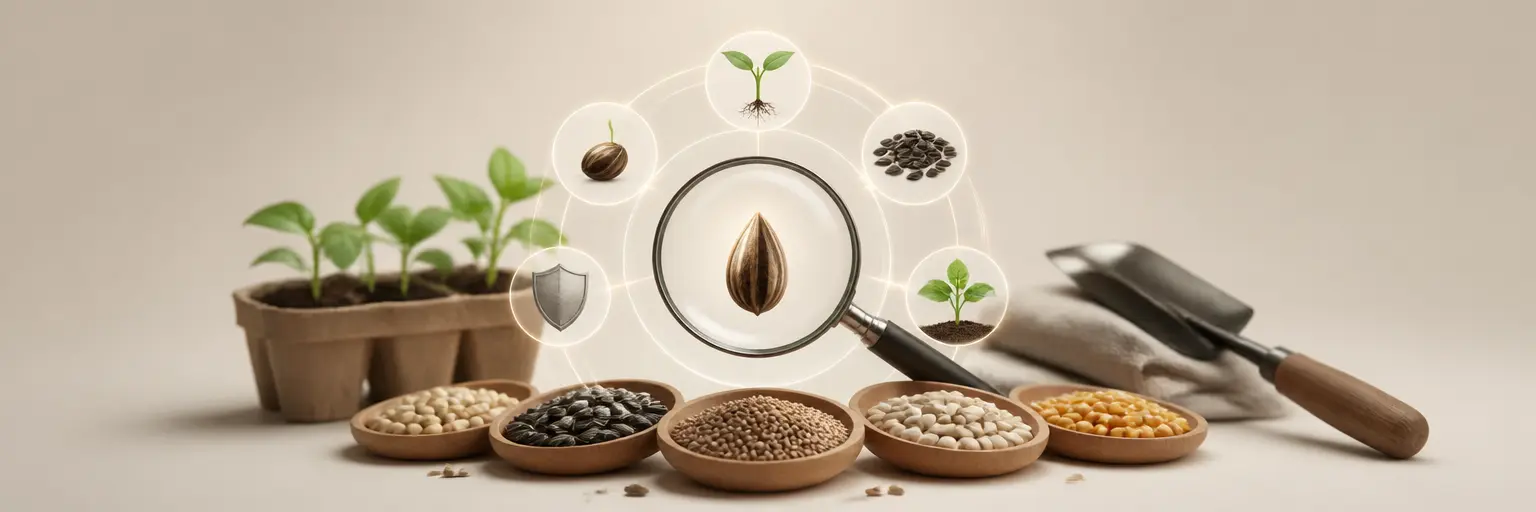
Identifying HighQuality Seeds: What to Look For Before You Buy
🌱 Discover how to choose high-quality seeds for a thriving home garden! Learn what to look for in seed freshness, germination rates, organic certification, climate suitability, and disease resistance. With practical tips for selecting reliable vegetable, fruit, and herb seeds, you can grow healthier plants, improve harvests, and support sustainable gardening from the very beginning.
7 articles
Saving Your Own Seeds: A Beginner's Guide to Seed Collection
Choosing Seeds for Succession Planting: Enjoying Continuous Harvests
Choosing DiseaseResistant Seeds: A Proactive Approach to Garden Health
Understanding Seed Longevity: How Long Seeds Remain Viable
Selecting Seeds for Sprouting: Growing Nutritious Sprouts at Home
Understanding Seed Hardening Off: Preparing Seedlings for the Outdoors
🌱 Ultimate Guide to Selecting High-Quality Seeds
Choosing the right seeds is one of the most important steps in creating a productive, sustainable, and organic home garden. This subcategory on CultivateYourFood helps gardeners compare vegetable seeds, herb seeds, fruit seeds, heirloom varieties, organic seeds, and open-pollinated options with confidence. Discover how to evaluate seed quality, germination rates, freshness, climate suitability, disease resistance, and growing conditions before making a purchase.
🌿 Understanding Seed Quality and Viability
High-quality seeds have the potential to germinate quickly, establish strong roots, and develop into healthy plants. Learn how to check seed packets for expiration dates, lot numbers, germination information, storage recommendations, and reputable suppliers. These details can help you avoid old, poorly stored, or low-viability seeds.
Our guides explain practical ways to assess seed freshness, including germination tests using paper towels, moisture control, and proper planting depth. Whether you are growing tomatoes, lettuce, carrots, peppers, basil, or other garden favorites, selecting viable seeds gives your garden a stronger start.
🌾 Organic, Heirloom, and Open-Pollinated Seeds
Gardeners interested in sustainable food production can learn the differences between organic seeds, heirloom seeds, hybrid seeds, and open-pollinated seeds. Organic seeds are produced according to approved organic standards, while heirloom varieties are valued for their history, flavor, and genetic diversity.
Open-pollinated seeds can often be saved and replanted from year to year, making them a useful choice for self-sufficient gardening. Our resources help you select seeds that match your values, whether your goal is preserving biodiversity, reducing chemical inputs, saving money, or cultivating naturally grown food at home.
☀️ Choosing Seeds for Your Climate and Growing Season
The best seeds for your garden depend on local temperature, sunlight, rainfall, soil type, and growing-season length. Explore how to use plant hardiness zones, days to maturity, frost dates, and seasonal planting calendars when selecting seeds for outdoor beds, containers, raised gardens, or indoor growing.
Choosing climate-appropriate seeds can improve germination, plant health, harvest timing, and overall garden productivity. You will find guidance for selecting cool-season vegetables, warm-season crops, drought-tolerant plants, shade-friendly herbs, and varieties suited to short or long growing seasons.
🍅 Selecting Seeds for Flavor, Yield, and Garden Goals
Seed selection should reflect what you want to harvest and how you plan to use it. Compare varieties based on flavor, size, color, productivity, harvest period, storage life, and culinary purpose. For example, some tomato seeds are ideal for sauces, while others are better for salads, sandwiches, or fresh eating.
Our in-depth articles also cover seeds for small-space gardens, family gardens, pollinator-friendly plots, kitchen herb gardens, succession planting, and food preservation. Selecting varieties that suit your household and available space can make home gardening more rewarding and efficient.
🛡️ Disease Resistance and Reliable Plant Growth
Healthy seeds can help reduce common gardening problems, but variety selection also matters. Learn how to identify seed descriptions mentioning resistance to diseases, pests, drought, heat, cold, bolting, or splitting. These traits may support more reliable growth, especially for beginners and gardeners facing challenging conditions.
Discover how to combine quality seeds with healthy soil, crop rotation, compost, proper spacing, organic pest control, and consistent watering. A complete growing strategy helps plants remain vigorous while reducing reliance on synthetic chemicals and unnecessary treatments.
📦 Reading Seed Packets and Buying from Trusted Sources
Seed packets contain valuable information about planting depth, spacing, sunlight, maturity dates, thinning, and harvesting. Our guides show you how to interpret this information and compare seed labels before purchasing. Pay close attention to germination guarantees, production methods, regional suitability, and storage conditions.
Buying from reputable seed companies, local growers, community seed exchanges, and trusted garden suppliers can improve your chances of receiving fresh, accurately labeled seeds. We also discuss how to avoid misleading claims and how to organize seed purchases for a productive planting season.
❓ Frequently Asked Questions About Choosing High-Quality Seeds
What makes a seed high quality?
A high-quality seed is fresh, properly stored, accurately labeled, and capable of producing a healthy plant. Look for strong germination information, clear planting instructions, a reliable supplier, and a variety suited to your climate and growing conditions.
Are organic seeds better for a home garden?
Organic seeds are a valuable option for gardeners who want to support organic growing practices. They are produced under organic standards and can be especially suitable for gardens focused on sustainable food production, natural soil care, and reducing synthetic inputs.
How can I tell whether old seeds will still germinate?
You can perform a simple germination test by placing several seeds between damp paper towels, sealing them in a labeled container or bag, and checking them after the recommended period. The percentage that sprouts provides an estimate of their viability.
Should I choose heirloom, hybrid, or open-pollinated seeds?
The best choice depends on your goals. Heirloom seeds offer distinctive history and flavor, open-pollinated seeds are useful for seed saving, and hybrid seeds may provide uniform growth, strong yields, or disease resistance. Compare each variety’s characteristics before deciding.
Where is the best place to buy vegetable and herb seeds?
Purchase seeds from reputable seed companies, local nurseries, agricultural organizations, or trusted community exchanges. Choose suppliers that provide clear variety descriptions, recent seed information, germination details, and proper packaging to protect seeds from heat and moisture.