
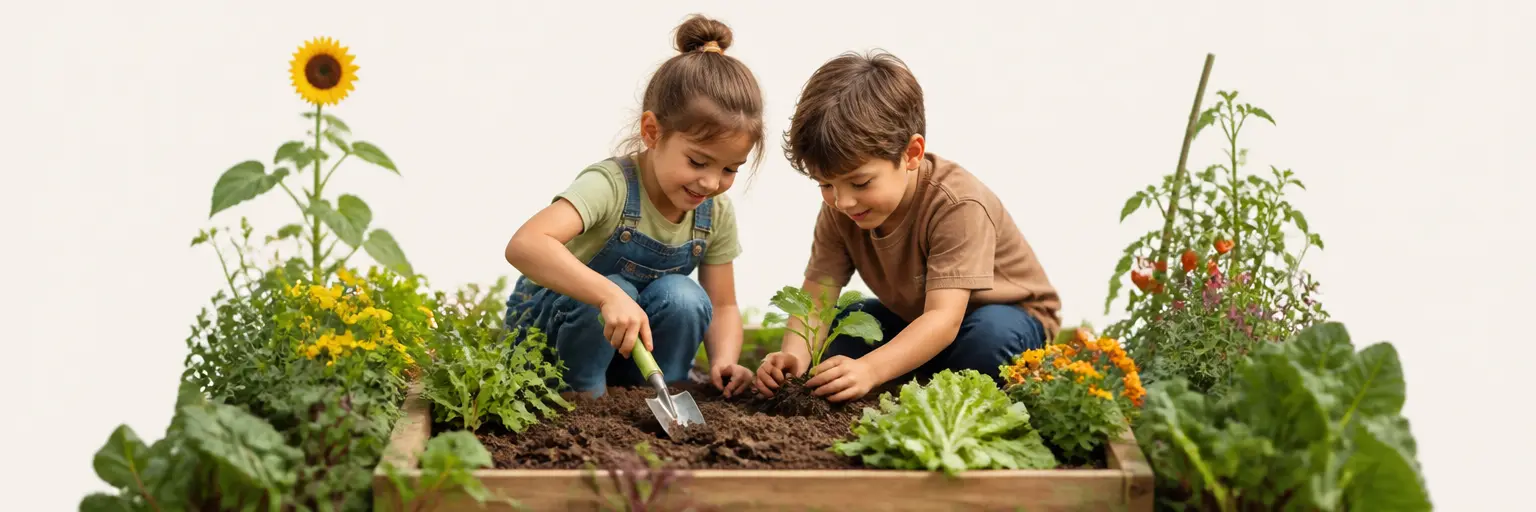
Harvesting with Children: Making the Most of Garden Bounty
Create a magical children’s garden space where young growers can explore nature, plant vegetables, and enjoy hands-on learning 🌱👩🌾👨🌾. Discover fun, safe, and sustainable gardening ideas—from colorful container gardens and easy-to-grow herbs to sensory plants and creative garden decorations. Encourage curiosity, healthy eating, and environmental awareness while building lasting family memories through organic home gardening.
4 articles
Gardening Safety Tips for Kids: Keeping Little Ones Safe
Composting with Kids: Turning Kitchen Scraps into Garden Gold
Engaging SchoolAge Children in the Garden: Advanced Projects
🌱 Creating a Children’s Garden Space: Fun, Safe, and Sustainable Gardening for Kids
Welcome to Creating a Children’s Garden Space on CultivateYourFood, your practical resource for designing a garden where children can explore nature, grow healthy food, and learn sustainable gardening skills. This subcategory focuses on child-friendly garden design, organic growing methods, sensory activities, safe garden tools, easy vegetables, herbs, fruits, composting, pollinators, and creative outdoor learning. Discover how to transform a backyard, balcony, patio, or community plot into an engaging children’s garden that encourages curiosity, responsibility, and a lasting connection with fresh, homegrown food.
🌼 Designing a Safe and Child-Friendly Garden
A successful children’s garden begins with a layout that is easy to access, supervise, and maintain. Learn how to create wide pathways, raised garden beds, low planting areas, shaded spaces, and clearly defined activity zones that suit young gardeners. Helpful guidance can also cover non-toxic materials, secure fencing, child-safe storage, and ways to reduce hazards such as sharp tools, poisonous plants, slippery surfaces, and standing water.
Whether you have a large backyard or a small container garden, you can create a welcoming space for children. Explore practical ideas for garden planning with kids, including colorful signs, stepping stones, recycled planters, garden seating, and accessible containers that allow children to plant, water, observe, and harvest independently.
🥕 Easy Fruits, Vegetables, and Herbs for Kids to Grow
Children are more likely to enjoy gardening when they can see quick and rewarding results. Find recommendations for easy-to-grow crops for children, such as radishes, lettuce, peas, beans, cherry tomatoes, strawberries, carrots, cucumbers, basil, mint, and sunflowers. These plants offer interesting colors, textures, scents, and flavors while introducing children to the complete journey from seed to harvest.
Learn how to choose crops according to your climate, growing season, garden size, and the child’s age. Step-by-step planting advice can help young gardeners understand seed spacing, sunlight, watering, organic soil, harvesting, and saving seeds. Growing edible plants also makes it easier to encourage healthy eating and appreciation for fresh vegetables.
🪴 Container Gardening and Small-Space Garden Ideas
Children can enjoy gardening even without a traditional yard. Discover how to use pots, grow bags, window boxes, vertical planters, and recycled containers to grow herbs, salad greens, strawberries, and compact vegetables on balconies, patios, porches, and windowsills. Container gardening is especially useful for families who want a flexible, affordable, and manageable children’s gardening project.
These small-space ideas help children observe plant growth closely and take responsibility for daily care. Learn how to select containers with drainage, choose organic potting soil, position plants for adequate sunlight, and create simple watering routines that reduce waste while keeping plants healthy.
🦋 Wildlife, Pollinators, and Nature Discovery
A children’s garden can become a miniature habitat for butterflies, bees, birds, ladybugs, earthworms, and other beneficial wildlife. Explore ways to add pollinator-friendly flowers, native plants, shallow water sources, natural shelter, and organic pest management without using harmful pesticides. These features help children understand biodiversity and the important role insects and animals play in food production.
Encourage young gardeners to keep nature journals, identify insects, observe birds, and record changes throughout the seasons. Simple wildlife activities make gardening more educational and help children learn about ecosystems, pollination, food chains, soil health, and sustainable gardening through direct observation.
♻️ Composting and Eco-Friendly Gardening for Children
Composting is an engaging way to teach children how food scraps and garden waste can become valuable soil nutrients. Learn how to introduce kids to kitchen composting, worm composting, leaf collection, and garden recycling using age-appropriate tasks. Children can help collect fruit and vegetable scraps, add dry leaves, observe decomposition, and use finished compost around garden plants.
Discover sustainable gardening habits that make a children’s garden more environmentally responsible. Topics may include saving rainwater, reusing containers, choosing organic seeds, avoiding synthetic chemicals, conserving soil moisture, and planting native species. These simple practices show children how small actions can support a healthier planet.
🧤 Gardening Tools, Activities, and Learning Projects
Age-appropriate tools can make gardening safer, easier, and more enjoyable. Explore recommendations for child-sized gloves, hand trowels, watering cans, seed trays, measuring sticks, labels, and garden journals. Children can take part in planting, weeding, watering, mulching, harvesting, and cleaning tools while developing coordination, patience, and responsibility.
Find creative garden activities that turn outdoor time into meaningful learning. Ideas may include seed-starting experiments, sensory gardens, vegetable investigations, garden art, plant measurement charts, scavenger hunts, and simple cooking projects using harvested produce. These activities connect gardening with science, nutrition, creativity, and family time.
❓ Frequently Asked Questions About Creating a Children’s Garden Space
🌿 What is the best age for children to start gardening?
Children of almost any age can participate in gardening with suitable supervision and tasks. Toddlers may enjoy scooping soil, watering with a small can, or collecting leaves, while older children can plant seeds, identify pests, compost, and harvest vegetables. Choose activities that match the child’s ability and attention span.
☀️ What are the easiest plants for a children’s garden?
Fast-growing and visually interesting plants are often the best choices. Radishes, lettuce, peas, beans, cherry tomatoes, strawberries, sunflowers, basil, mint, and marigolds are popular options. Select plants suited to your local climate and provide children with crops they enjoy eating.
🛡️ How can I make a garden safe for children?
Use non-toxic plants and materials, store tools securely, avoid chemical pesticides and fertilizers, provide stable paths, and supervise young children around water and unfamiliar wildlife. Check plants carefully before adding them and teach children not to eat anything unless an adult has identified it as safe.
🏡 Can I create a children’s garden without a backyard?
Yes. A balcony, patio, windowsill, or sunny doorstep can support a productive children’s garden. Use containers, grow bags, vertical planters, and window boxes with good drainage. Herbs, salad greens, strawberries, dwarf tomatoes, and compact peppers are well suited to small spaces.
♻️ Why is organic gardening important for children?
Organic gardening helps children learn how healthy soil, compost, beneficial insects, and natural pest control support plant growth. Avoiding synthetic pesticides and unnecessary chemicals creates a safer learning environment while teaching sustainable habits that protect people, wildlife, and the wider ecosystem.