
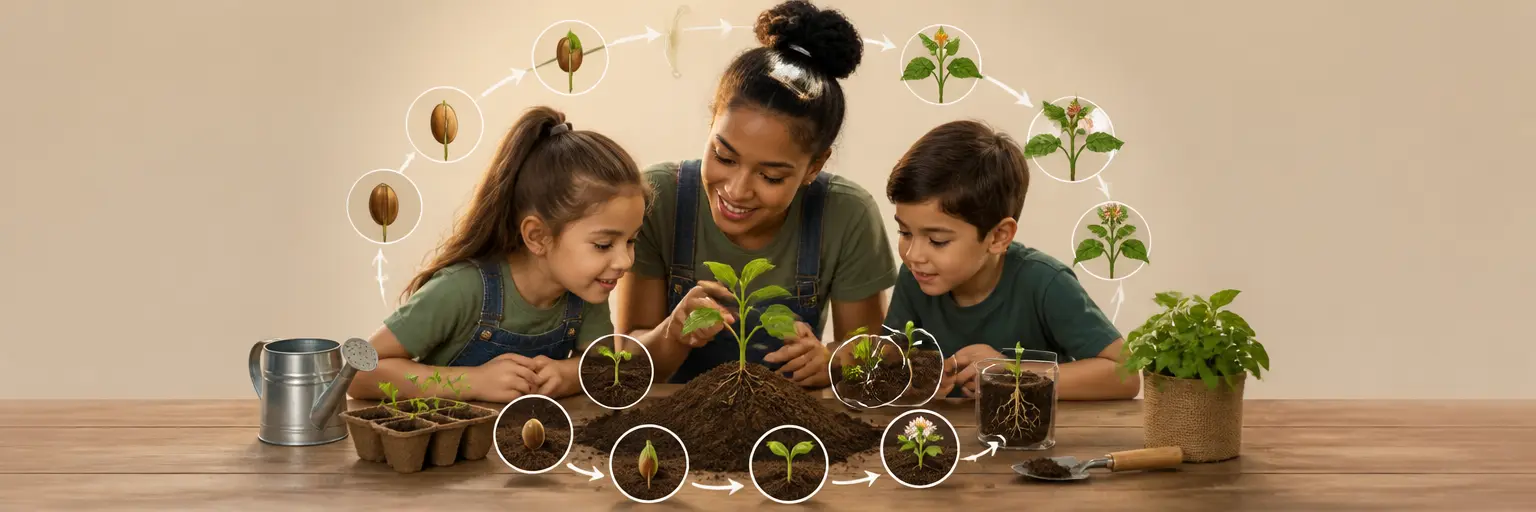
The Plant Life Cycle: Inspiring a Love for Nature in Children
🌱 Discover engaging ways to teach children about the life cycle of plants—from tiny seeds and sprouting roots to blooming, fruiting, and new growth. Explore hands-on gardening activities, simple science lessons, and sustainable growing tips that help kids understand nature while cultivating fruits, vegetables, and herbs at home. Encourage curiosity, responsibility, and a love of organic gardening with fun, family-friendly ideas from CultivateYourFood!
5 articles
The Plant Life Cycle in Your Garden: A Child's Guide to Observation
The Plant Life Cycle: A StepbyStep Guide for Young Learners
The Plant Life Cycle: Exploring Plant Diversity with Children
The Plant Life Cycle: Fun and Engaging Projects for Children
🌱 Teaching Children About the Life Cycle of Plants
Help children discover how seeds become healthy plants with fun, practical, and educational gardening activities. This subcategory from CultivateYourFood explains the plant life cycle for kids in a simple, engaging way, from seed germination and root development to flowering, fruit production, seed saving, and natural plant reproduction. Families, teachers, and homeschool educators can find ideas for creating a child-friendly garden while introducing sustainable gardening, organic growing, composting, pollinators, and responsible plant care.
🌰 Understanding Seeds and Germination
Children can learn that every plant begins with a seed containing the potential for new growth. Age-appropriate explanations and hands-on experiments make it easier to understand how water, warmth, air, and sunlight support germination. Simple activities, such as growing beans in a transparent jar or planting herb seeds in small containers, allow children to observe roots and shoots developing day by day.
Readers can explore safe, low-cost ways to teach seed science at home or in the classroom. These activities encourage observation, measurement, drawing, and nature journaling while introducing important gardening vocabulary such as seed coat, embryo, root, stem, and sprout. Children also learn why healthy soil, organic compost, and gentle watering help young plants grow successfully.
🌿 Exploring Roots, Stems, and Leaves
Once a seedling appears, children can investigate how each plant part supports growth. Roots anchor the plant and absorb water and nutrients, stems transport resources, and leaves use sunlight to produce energy through photosynthesis. Clear explanations of plant anatomy for children make complex science concepts easier to understand through real garden observations.
Fun projects may include examining roots after carefully removing a seedling, comparing leaf shapes, or observing how stems respond to light. These lessons help children understand why plants need space, sunlight, water, and nutrient-rich soil. They also encourage gentle handling and responsible care for living organisms in an organic home garden.
☀️ Learning About Photosynthesis and Plant Growth
Photosynthesis is one of the most important stages in the plant life cycle. Children can learn that green leaves use sunlight, water, and carbon dioxide to make food for the plant while releasing oxygen. Simple demonstrations and illustrated explanations help make photosynthesis for kids understandable, memorable, and connected to everyday gardening.
Young gardeners can track plant growth by measuring height, counting leaves, and recording changes in a garden journal. These observations show how plants respond to sunlight, watering schedules, soil quality, and seasonal changes. Families can also discuss how growing vegetables, fruits, and herbs at home supports healthy eating and sustainable living.
🌼 Discovering Flowers, Pollination, and Seeds
Flowering is a fascinating part of the plant life cycle because flowers help many plants reproduce. Children can learn how bees, butterflies, birds, and other pollinators transfer pollen between flowers. By exploring pollination activities for children, readers can explain how flowers eventually develop into fruits containing new seeds.
Pollinator-friendly gardening creates opportunities for children to observe nature while supporting biodiversity. Planting organic flowers, avoiding harmful pesticides, and providing water or shelter for beneficial insects can turn a family garden into a living classroom. Children also discover why pollinators are essential for many fruits and vegetables grown in home gardens.
🍅 Following Plants From Flower to Fruit
After pollination, many plants produce fruits that protect and carry their seeds. Children can follow this transformation by growing tomatoes, peppers, peas, strawberries, squash, or beans. These examples make the plant life cycle easy to see and help children understand the connection between flowers, fruits, seeds, and future crops.
Readers can learn how to identify signs of healthy fruit development and how to harvest produce carefully. Gardening with children also provides a practical introduction to food cultivation, seasonal eating, and the importance of patience. Harvesting homegrown food can make children more interested in fresh vegetables, herbs, and sustainable nutrition.
♻️ Saving Seeds and Continuing the Life Cycle
Seed saving shows children that the plant life cycle continues from one growing season to the next. They can collect mature seeds from suitable fruits, dry them properly, label them, and store them in a cool, dry place. These activities introduce seed saving for beginners, plant diversity, and the value of preserving locally adapted garden varieties.
Families can also connect seed saving with composting and organic gardening. Plants that cannot be saved for seed may return to the soil through a well-managed compost system, creating nutrients for future crops. This circular approach helps children understand sustainability, reduce garden waste, and appreciate how natural systems support new growth.
👩🌾 Fun Plant Life Cycle Activities for Kids
Interactive projects make plant science exciting and accessible. Children can create life cycle posters, build a seed-to-plant timeline, grow fast-sprouting seeds, compare plants grown in different conditions, or act out the stages of germination, growth, flowering, fruiting, and seed production. These gardening activities for children support creativity, scientific thinking, and outdoor learning.
Adults can adapt each activity to a child’s age and attention span. Younger children may focus on watering and identifying plant parts, while older children can record data, investigate soil health, or design a pollinator garden. The goal is to encourage curiosity, patience, and respect for nature without making gardening feel like a chore.
❓ Frequently Asked Questions About Teaching Children the Plant Life Cycle
🌱 What is the plant life cycle for children?
The plant life cycle describes how a plant begins as a seed, germinates, grows roots, stems, and leaves, develops flowers, produces fruit and seeds, and begins the process again. Using simple examples such as beans, sunflowers, tomatoes, or peas helps children understand each stage.
💧 What is the easiest plant for children to grow?
Beans, peas, radishes, sunflowers, lettuce, and herbs are excellent choices for beginners. Beans are especially useful because children can observe roots and shoots through a clear container. Choose seeds that grow quickly and provide safe supervision during planting and watering.
☀️ What do plants need to grow?
Most plants need light, water, air, suitable temperatures, space, and nutrients from healthy soil. Children can learn that too much water may damage roots, while too little water can cause wilting. Organic compost and gentle care can help create a healthy growing environment.
🐝 How can children learn about pollination?
Plant flowers that attract bees and butterflies, then observe pollinators visiting without disturbing them. Children can also use a clean cotton swab to demonstrate how pollen moves between flowers. Explain that pollination helps many plants produce fruits and seeds.
♻️ How can gardening teach children about sustainability?
Gardening teaches sustainability through composting, saving seeds, conserving water, avoiding harmful chemicals, and protecting pollinators. Children can see how food scraps become compost, how seeds create new plants, and how careful gardening supports a healthier ecosystem.