
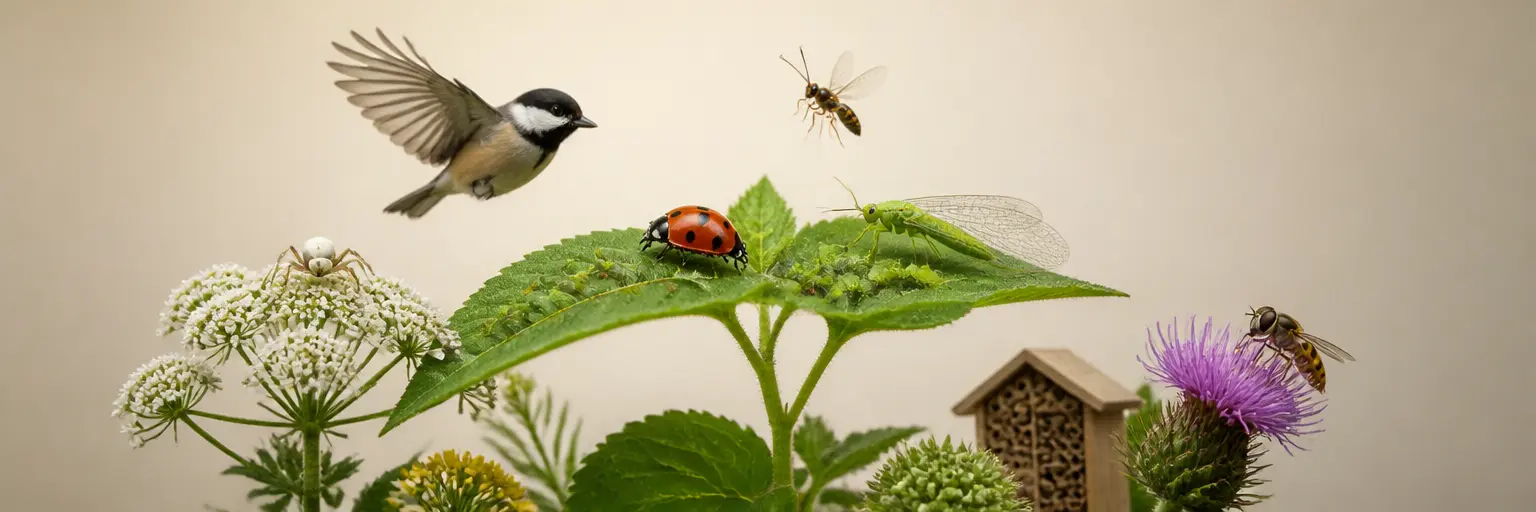
How to Encourage Natural Pest Control Through Observation
Invite nature’s best helpers into your garden! 🐞 Discover how to attract natural predators such as ladybugs, lacewings, birds, frogs, and beneficial insects to manage pests naturally and reduce reliance on chemical pesticides. Learn sustainable, organic strategies—including habitat planting, water sources, and shelter—to protect fruits, vegetables, and herbs while supporting a healthier, more balanced garden ecosystem. 🌿
6 articles
Understanding the Food Web: How Predators Control Pests
Natural Pest Control: A ChemicalFree Approach
The Secret World of Beneficial Garden Insects
Natural Pest Control: A Sustainable Approach to Gardening
How to Identify Beneficial Insects in Your Garden
Natural Predators and How to Attract Them 🐞
Welcome to CultivateYourFood, your practical resource for growing healthy fruits, vegetables, and herbs with sustainable, organic methods. In this subcategory, discover how beneficial insects, birds, amphibians, and other natural predators can help control common garden pests without relying on harsh chemical pesticides. Learn how to create a balanced garden ecosystem that supports biodiversity, protects pollinators, and provides effective natural pest control for home gardens.
🐞 Beneficial Insects for Organic Pest Control
Beneficial insects are among the most effective allies in an organic garden. Ladybugs, lacewings, hoverflies, praying mantises, and predatory beetles feed on aphids, mites, caterpillars, thrips, and other destructive pests. Our guides explain how to identify these helpful insects and distinguish them from garden pests.
You can expect practical advice on planting nectar-rich flowers, providing shelter, and avoiding broad-spectrum insecticides that harm both pests and predators. Discover how beneficial insects for vegetable gardens support healthier plants while reducing the need for chemical pest control.
🌼 Plants That Attract Natural Garden Predators
The right companion plants can transform your garden into a welcoming habitat for beneficial predators. Explore how herbs and flowers such as dill, fennel, yarrow, alyssum, calendula, cosmos, lavender, and native wildflowers provide nectar, pollen, cover, and breeding areas for helpful wildlife.
Our content covers plants that attract ladybugs and lacewings, pollinator-friendly garden design, flowering borders, and companion planting for fruits, vegetables, and herbs. Learn how to select plants suited to your climate, soil, growing space, and organic gardening goals.
🕷️ Natural Predators for Common Garden Pests
Different predators target different pests, so understanding these natural relationships is essential for successful biological pest control. Learn how ladybugs manage aphids, lacewing larvae consume soft-bodied insects, ground beetles hunt caterpillars and slugs, and predatory mites help control spider mites.
These guides help you match natural pest predators to specific garden problems. You will also learn how to monitor pest populations, recognize signs of predator activity, and give beneficial organisms time to restore balance instead of immediately reaching for synthetic sprays.
🐦 Attracting Birds, Frogs, and Toads
Birds, frogs, and toads provide valuable pest control in gardens, especially against caterpillars, beetles, slugs, snails, and flying insects. Learn how to create safe habitats with birdhouses, native shrubs, shallow water sources, log piles, leaf litter, and sheltered areas.
Discover responsible ways to encourage wildlife while protecting young seedlings and harvested crops. Our advice focuses on wildlife-friendly gardening, pesticide-free habitats, clean water, and natural shelter that supports long-term biodiversity in an edible garden.
🌿 Building a Balanced Garden Ecosystem
Effective natural pest control depends on prevention, observation, and habitat management. Explore how soil health, composting, crop rotation, diverse planting, mulch, and proper watering can reduce plant stress and make crops less vulnerable to pest outbreaks.
You will find sustainable strategies for creating a resilient garden ecosystem rather than eliminating every insect. By encouraging predator-prey relationships and protecting beneficial organisms, you can grow productive crops with fewer pesticides and more environmentally responsible gardening practices.
🔍 Identifying Beneficial Insects and Garden Pests
Correct identification is one of the most important steps in organic pest management. Our resources explain how to recognize aphids, whiteflies, caterpillars, spider mites, and other harmful insects, as well as the eggs, larvae, and adults of beneficial predators.
Learn how to inspect leaves, stems, flowers, and soil for clues before taking action. Clear identification helps prevent accidental harm to helpful species and supports integrated pest management for home gardeners.
❓ Frequently Asked Questions About Natural Predators
What are natural predators in a garden?
Natural predators are organisms that feed on garden pests. They include ladybugs, lacewings, praying mantises, predatory beetles, birds, frogs, toads, and beneficial spiders. These organisms can help control pests naturally as part of an organic gardening system.
How can I attract beneficial insects to my vegetable garden?
Plant a variety of nectar- and pollen-rich flowers, provide shallow water and shelter, and avoid broad-spectrum pesticides. Native flowering plants, herbs such as dill and fennel, and continuous blooms throughout the growing season are especially helpful for attracting beneficial insects.
Which natural predators control aphids?
Ladybugs, lacewing larvae, hoverfly larvae, damsel bugs, and some birds commonly feed on aphids. Planting small-flowered plants and avoiding insecticides can help these predators establish themselves in your garden.
Should I buy and release ladybugs in my garden?
Purchased ladybugs may leave if the garden lacks food, water, or shelter. It is usually more effective to create a habitat that attracts and supports local beneficial insects naturally. If you release them, choose reputable sources and address the conditions that caused the pest problem.
Can natural predators eliminate all garden pests?
Natural predators rarely eliminate every pest, and they do not need to. Their purpose is to keep pest populations below damaging levels while maintaining ecological balance. Combine predator-friendly gardening with healthy soil, crop rotation, hand removal, barriers, and regular monitoring for the best results.