
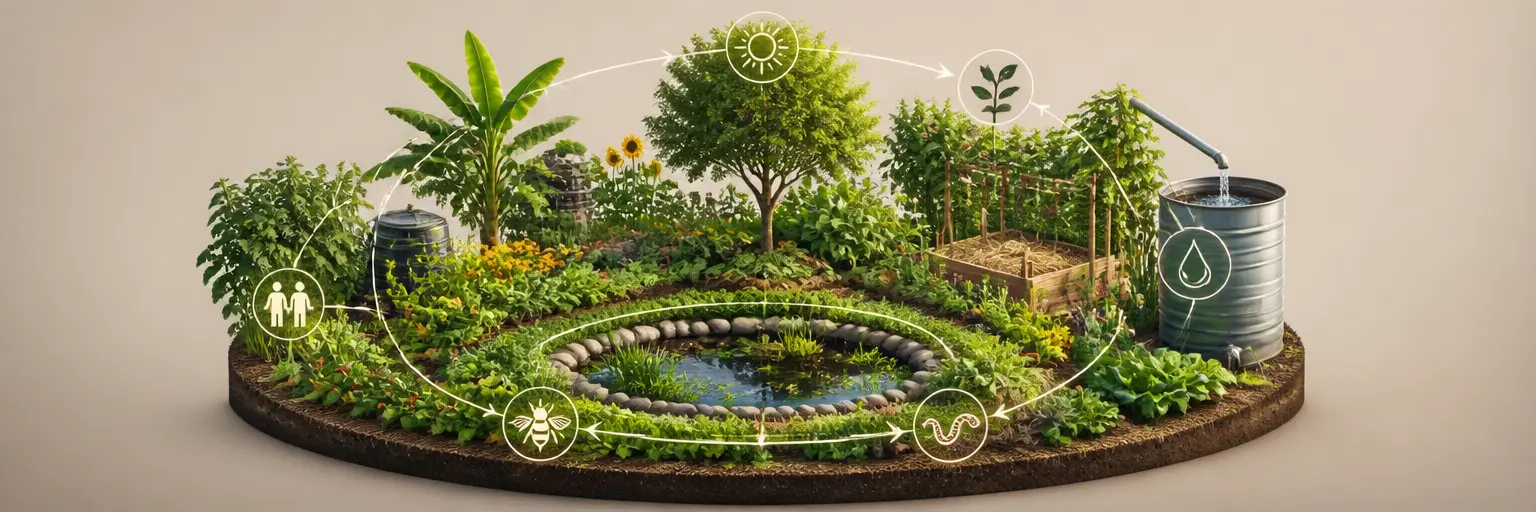
Building a Permaculture Community: Sharing Knowledge and Resources
🌱 Discover permaculture principles for the home garden and create a thriving, sustainable ecosystem right in your backyard. Learn how to design resilient garden spaces, build healthy soil, conserve water, attract beneficial wildlife, and grow abundant fruits, vegetables, and herbs using nature-inspired methods. From companion planting and efficient resource cycling to composting and organic pest control, these advanced gardening techniques help you cultivate food responsibly while reducing waste and maintenance. 🌿 Start growing smarter with permaculture gardening on CultivateYourFood!
7 articles
Zone 5: The Wild Zone and Natural Ecosystems
The Importance of Biodiversity: Creating a Resilient Garden
Permaculture Principles: Designing Your Home Garden for Sustainability
The Spiritual Side of Permaculture: Connecting with Nature
Vertical Gardening: Maximizing Space with Permaculture Principles
Growing Food in Small Spaces: Permaculture Solutions for Urban Gardens
🌱 Permaculture Principles in the Home Garden
Discover how to apply permaculture principles in a home garden to grow healthy fruits, vegetables, and herbs while working with nature instead of against it. This advanced gardening subcategory from CultivateYourFood explores sustainable garden design, organic soil improvement, biodiversity, natural pest control, water conservation, composting, companion planting, and low-maintenance food production. Whether you are planning a backyard food forest or improving a small urban garden, you will find practical strategies for creating a resilient, productive, and environmentally friendly growing space.
🌿 Designing a Productive Permaculture Garden
Learn how to design a permaculture garden by observing sunlight, wind, water movement, soil conditions, and existing plants. Articles in this section explain how to place vegetables, herbs, fruit trees, compost areas, paths, ponds, and wildlife habitats so that each element supports the others. Good garden design reduces waste, saves time, and improves long-term productivity.
Readers can expect guidance on permaculture zones, garden mapping, vertical growing, keyhole beds, guild planting, and small-space food gardens. These methods help gardeners make efficient use of available land while creating a practical layout that supports harvesting, maintenance, pollination, and natural soil fertility.
🌎 Building Healthy Living Soil Naturally
Healthy soil is the foundation of a successful organic garden. Explore permaculture approaches to soil improvement, including composting, mulching, cover crops, sheet mulching, worm composting, and the use of natural organic amendments. Living soil supports strong roots, beneficial microorganisms, better water retention, and nutrient-rich harvests.
This subcategory also explains how to protect soil structure by minimizing digging, preventing erosion, and keeping the ground covered. You will learn how to increase soil fertility without relying on synthetic fertilizers while creating a regenerative growing environment for vegetables, herbs, berries, and fruit trees.
💧 Conserving Water with Smart Garden Systems
Permaculture gardening emphasizes careful water management and efficient use of natural resources. Find practical ideas for rainwater harvesting, swales, ollas, drip irrigation, mulch, greywater systems, and drought-tolerant planting. These techniques help reduce water waste and keep plants hydrated during hot or dry periods.
Readers will also discover how to observe natural drainage patterns and design garden beds that capture and store moisture. By improving soil organic matter and choosing plants suited to local conditions, home gardeners can maintain productive crops with less frequent watering and lower environmental impact.
🐝 Increasing Biodiversity and Natural Pollination
A diverse garden is more resilient, productive, and welcoming to beneficial wildlife. Learn how to attract bees, butterflies, birds, predatory insects, and other pollinators by planting native flowers, flowering herbs, hedgerows, and habitat plants. Increased biodiversity supports pollination and helps create a balanced garden ecosystem.
Expect practical advice on combining edible crops with ornamental plants, maintaining bloom periods throughout the growing season, and providing shelter and water for beneficial organisms. These strategies can improve fruit set, vegetable yields, and overall garden health while reducing dependence on artificial pest-control products.
🐞 Managing Pests with Natural Permaculture Methods
Permaculture pest control focuses on prevention, observation, and ecological balance rather than eliminating every insect. Explore companion planting, crop rotation, physical barriers, trap crops, beneficial insects, bird habitats, and healthy soil practices. Natural pest management protects crops while preserving the organisms that make an organic garden thrive.
This section helps readers identify common garden pests and understand the conditions that attract them. You will learn how to respond responsibly to infestations, encourage natural predators, and use gentle organic solutions when necessary, keeping fruits, vegetables, and herbs safer for household consumption.
♻️ Composting, Recycling, and Closed-Loop Gardening
Turn kitchen scraps, garden waste, leaves, grass clippings, and other organic materials into valuable compost. Articles explain hot composting, cold composting, vermicomposting, compost troubleshooting, and how to use finished compost in garden beds. Composting returns nutrients to the soil and reduces household waste.
Readers can also learn how permaculture gardens create closed-loop systems where water, nutrients, mulch, seeds, and organic matter are reused whenever possible. These methods lower gardening costs, improve soil fertility, and support a more self-sufficient home food-growing system.
🍅 Growing Food in Layers and Plant Guilds
Discover how to grow more food by using the natural layers found in forests and diverse ecosystems. Permaculture planting may combine canopy trees, smaller fruit trees, shrubs, herbs, ground covers, root crops, climbers, and soil-building plants. Layered planting maximizes space while encouraging beneficial relationships between crops.
Plant guilds can be designed around fruit trees, berry bushes, or vegetable beds to provide mulch, nitrogen fixation, pollination, pest reduction, and ground protection. This approach is especially useful for backyard food forests, edible landscapes, raised beds, and productive gardens with limited space.
❓ Frequently Asked Questions About Home Garden Permaculture
What are permaculture principles in a home garden?
Permaculture principles are practical guidelines for designing sustainable gardens that imitate natural ecosystems. They include observing and interacting with nature, catching and storing energy, building healthy soil, using renewable resources, increasing biodiversity, and creating low-waste food production systems.
Can permaculture be used in a small backyard or balcony garden?
Yes. Permaculture works in gardens of every size, including balconies, patios, raised beds, and urban yards. Containers, vertical gardens, companion planting, composting, water-saving methods, and multi-purpose plants can help small spaces produce herbs, vegetables, fruits, and pollinator habitat.
Does permaculture gardening require a lot of maintenance?
Permaculture gardens require observation and thoughtful planning, but they can become easier to maintain over time. Mulch, perennial plants, soil-building crops, efficient irrigation, and natural pest control help reduce watering, weeding, fertilizing, and repeated replanting.
How does permaculture control garden pests?
Permaculture uses prevention and ecosystem balance through crop diversity, companion planting, healthy soil, beneficial insects, wildlife habitats, barriers, and crop rotation. The goal is not to remove every insect, but to prevent damaging outbreaks while protecting pollinators and other helpful organisms.
What is the best first step for starting a permaculture garden?
Begin by observing your site before planting. Record sunlight, shade, wind, drainage, soil type, existing vegetation, water access, and the crops your household wants to grow. Then start with manageable improvements such as composting, mulching, adding pollinator plants, and creating a simple water-efficient garden layout.