
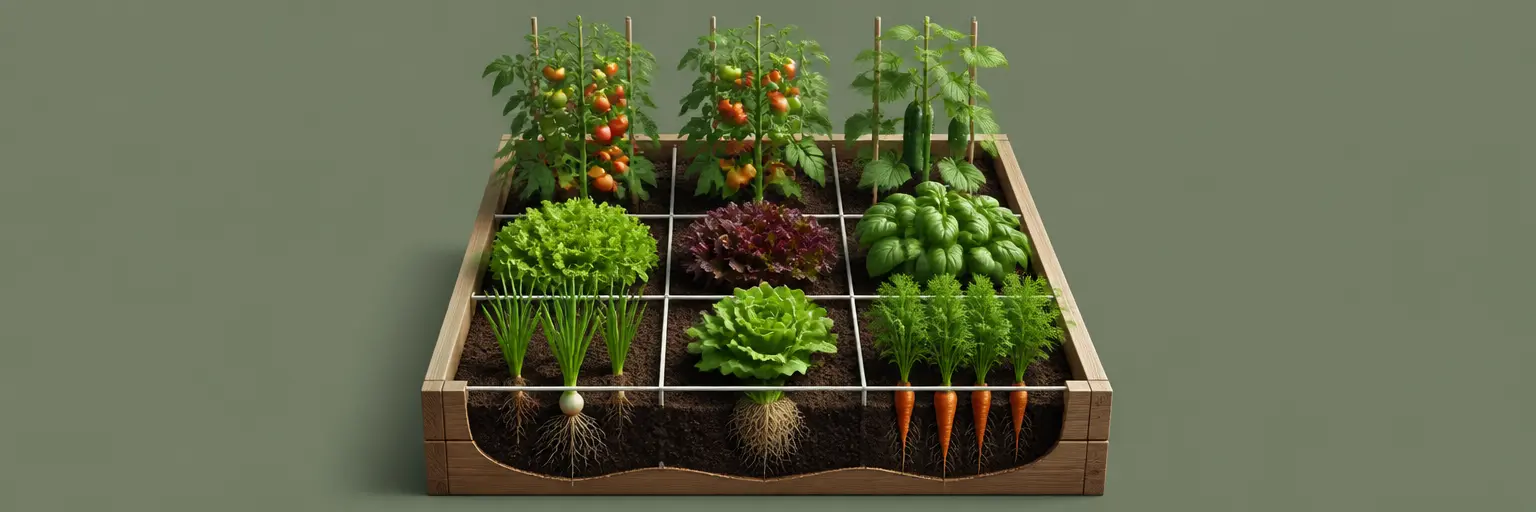
Composting for Square Foot Gardens: Enriching Your Soil Naturally
Discover square foot gardening—an efficient, sustainable way to grow more fruits, vegetables, and herbs in less space! 🌱 Learn how to plan productive garden beds, maximize every square foot, improve soil health, and practice organic pest control for abundant harvests. Perfect for beginners and experienced home gardeners, these smart techniques make growing fresh, nutritious food easier, more organized, and eco-friendly. 🍅🥕🌿
8 articles
Companion Planting in Square Foot Gardens: Maximize Space and Protect Your Plants
The Joy of Square Foot Gardening: Discover the Rewards of Growing Your Own Food
Succession Planting in Square Foot Gardens: Continuous Harvests Throughout the Season
Advanced Techniques for Square Foot Gardening: Elevate Your Gardening Game
Square Foot Gardening: From Seed to Harvest, A Complete Guide
Choosing the Right Plants for Your Square Foot Garden: Consider Climate and Space
Square Foot Gardening vs. Traditional Gardening: Which Method Is Right for You?
🌱 Square Foot Gardening: Grow More in Less Space
Discover the practical benefits of square foot gardening with CultivateYourFood. This advanced gardening technique divides a growing area into organized square-foot sections, helping home gardeners produce vegetables, herbs, and edible flowers efficiently—even in small backyards, patios, balconies, and urban gardens. Learn how to plan intensive plant spacing, improve soil health, conserve water, and maintain a productive garden using sustainable and organic gardening practices.
📐 Master Intensive Garden Planning
Square foot gardening makes it easier to create a productive garden layout by dividing raised beds into clearly marked one-square-foot planting sections. You will learn how to measure garden space, position crops according to sunlight requirements, and design pathways that make planting, watering, harvesting, and maintenance more convenient.
This subcategory covers square foot garden layouts, raised bed dimensions, companion planting arrangements, and crop rotation strategies. Whether you are growing leafy greens, root vegetables, tomatoes, peppers, or culinary herbs, thoughtful planning helps maximize yields while reducing wasted space.
🥕 Choose the Right Crops and Plant Spacing
Successful square foot gardening depends on selecting crops that suit your climate, growing season, available sunlight, and container or raised-bed depth. Expect helpful guidance for growing lettuce, spinach, radishes, carrots, onions, beans, peas, herbs, and other high-value crops in compact spaces.
You will also learn how to apply correct plant spacing for different crop sizes. Proper spacing improves airflow, reduces competition for nutrients, and supports healthier plants. Detailed planting recommendations can help you avoid overcrowding while still achieving intensive vegetable production.
🌿 Build Healthy Organic Soil
Rich, well-draining soil is essential for square foot gardening because plants grow close together and depend on a concentrated growing area. Explore ways to improve garden soil with mature compost, aged organic matter, natural amendments, and sustainable soil-building methods.
CultivateYourFood explains how to maintain soil fertility without relying on unnecessary synthetic chemicals. Learn about compost applications, mulch, beneficial microorganisms, soil testing, and organic fertilization so your square foot garden can remain productive season after season.
💧 Use Water and Resources Efficiently
Compact raised beds can be highly water-efficient when they are designed and maintained correctly. This section provides practical advice on deep watering, drip irrigation, rainwater collection, moisture retention, and choosing mulch for vegetable and herb gardens.
Efficient watering also helps prevent common problems such as root rot, fungal disease, and dry soil. By applying water-wise gardening techniques, you can reduce waste, support strong root development, and maintain healthy plants during hot or dry weather.
🐞 Manage Pests Naturally and Sustainably
Dense planting can sometimes attract insects and create conditions that encourage disease, making natural pest control an important part of square foot gardening. Learn how to identify common garden pests, inspect plants regularly, and respond early with environmentally responsible solutions.
Helpful strategies include companion planting, physical barriers, hand-picking pests, encouraging beneficial insects, and using organic treatments when necessary. Integrated pest management helps protect crops while supporting pollinators, soil organisms, and the wider garden ecosystem.
🌾 Extend the Harvest Through Every Season
Square foot gardening supports succession planting, allowing you to replant harvested sections with new crops throughout the growing season. Discover how to schedule fast-growing vegetables, cool-season crops, warm-season plants, and fall harvests for a continuous supply of fresh food.
You can also explore season extension methods such as row covers, cold frames, frost protection, and careful crop selection. These techniques help make the most of every square foot and encourage a longer, more reliable harvest from your home garden.
❓ Frequently Asked Questions About Square Foot Gardening
What is square foot gardening?
Square foot gardening is an intensive growing method that divides a garden bed into one-square-foot sections. Each section is planted with a specific number of crops based on mature plant size, making it easier to organize vegetables, herbs, and flowers in a small space.
What size raised bed is best for square foot gardening?
A raised bed measuring 4 feet by 4 feet is a popular choice because it provides 16 square-foot sections and can usually be reached from all sides. Bed length can vary, but keeping the width near 4 feet helps prevent stepping on the soil and makes maintenance easier.
How many plants can grow in one square foot?
The number depends on the mature size of the plant. Large crops may require one plant per square foot, while smaller crops such as radishes or carrots can be planted more densely. Always follow crop-specific spacing recommendations and allow enough room for airflow and root development.
Can square foot gardening be organic?
Yes. Square foot gardening works very well with organic methods, including compost, natural soil amendments, organic mulch, crop rotation, companion planting, and nonchemical pest control. These practices help maintain soil health and support sustainable home food production.
Is square foot gardening suitable for beginners?
Yes. Its organized layout makes it easier to plan, plant, and maintain a garden compared with traditional row gardening. Beginners can start with a small raised bed, choose easy crops such as lettuce, herbs, radishes, and beans, and gradually expand as their confidence grows.