
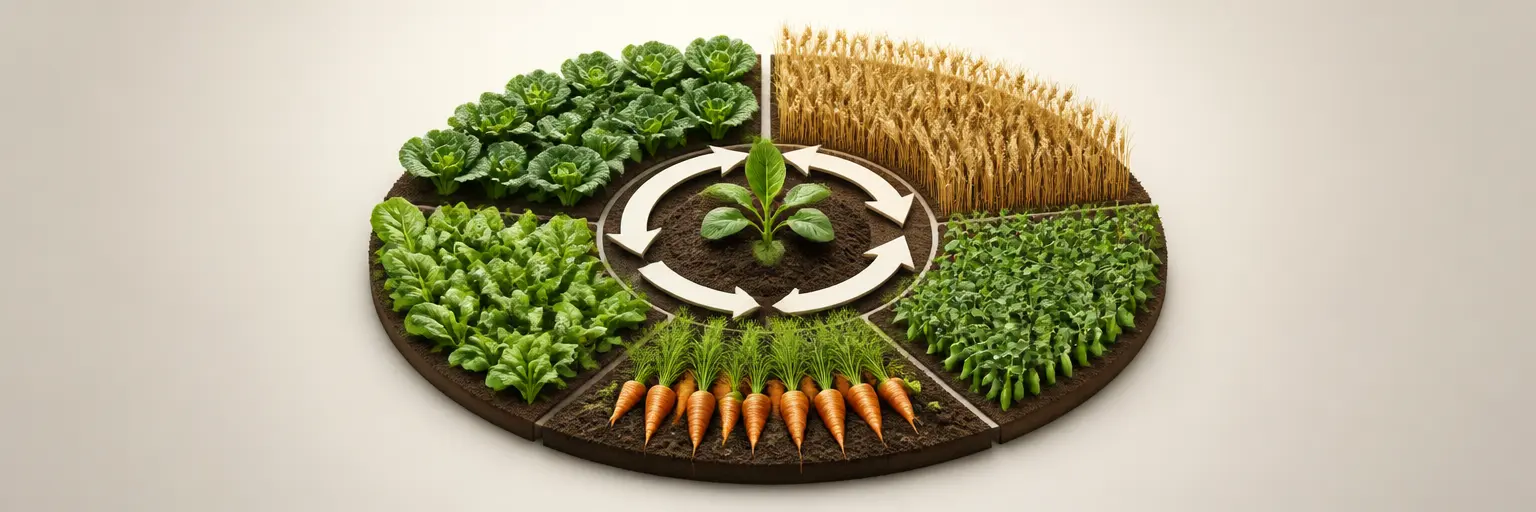
Crop Rotation for Beginners: The Science Behind a Healthy Garden
Discover the benefits of crop rotation for beginners 🌱—a simple, sustainable gardening technique that improves soil health, reduces pests and diseases, and supports stronger harvests. Learn how to rotate vegetables, herbs, and fruits across garden beds using easy seasonal plans, organic methods, and practical tips from CultivateYourFood. 🥕 Grow healthier plants, protect your soil, and build a more productive home garden naturally!
7 articles
Beginner's Guide to Legumes in Crop Rotation: Natural Fertilizers
Crop Rotation for Beginners: Getting Started with a 3Year Plan
Crop Rotation for Beginners: A Guide to Understanding Plant Needs
Crop Rotation for Beginners: A Practical Guide to Garden Planning
Simple Crop Rotation: A StepbyStep Plan for Home Gardens
Easy Crop Rotation Systems: Boosting Your Garden's Productivity
🌱 Crop Rotation for Beginners: Build Healthier, More Productive Organic Gardens
Crop rotation for beginners is a simple, sustainable gardening technique that helps improve soil health, reduce garden pests, prevent plant diseases, and support reliable harvests year after year. On CultivateYourFood, you will learn how to plan a practical rotation for vegetables, fruits, and herbs using organic gardening methods, even if you have a small backyard garden, raised beds, containers, or an allotment. This beginner-friendly guide explains what crop rotation is, why it matters, and how to choose plant families, rotation schedules, cover crops, compost, and companion strategies for a more resilient home garden.
🌿 What Is Crop Rotation?
Crop rotation means growing different types of plants in a planned sequence rather than planting the same crop in the same location every season. For example, you might grow tomatoes in one raised bed one year, followed by beans, leafy greens, and root vegetables in later seasons. This approach is especially useful for organic vegetable gardening because it reduces reliance on chemical fertilizers and pesticides.
Beginners can start with a simple rotation based on plant families instead of memorizing every individual crop. Tomatoes, peppers, eggplants, and potatoes belong to the nightshade family, while cabbage, kale, broccoli, and Brussels sprouts are brassicas. Understanding these groups makes it easier to prevent recurring soil problems and create a manageable crop rotation plan.
🪴 Why Crop Rotation Matters for Home Gardeners
Growing the same plant family repeatedly in one area can encourage pests, soil-borne diseases, and nutrient depletion. Crop rotation interrupts pest life cycles and reduces the buildup of pathogens that may affect tomatoes, cucumbers, onions, potatoes, and other popular garden crops. It can also help maintain balanced soil fertility throughout the growing season.
A well-planned rotation supports healthy soil, stronger roots, better plant growth, and more consistent harvests. When combined with composting, mulching, organic pest control, and responsible watering, crop rotation becomes one of the most effective advanced gardening techniques for sustainable food production at home.
📅 How to Create a Simple Crop Rotation Plan
To create a beginner crop rotation schedule, divide your garden into sections and record which crops are planted in each area. A basic three-year or four-year plan can move plant families through different beds each season. If you have limited space, rotate crops by season or replace soil in containers when necessary.
Start by grouping plants according to their main growing families and needs. A simple sequence may include leaf crops, fruiting crops, root crops, and legumes. Keep a garden journal with planting dates, varieties, pest problems, harvest results, and soil amendments so you can improve your rotation plan each year.
🥕 Crop Families to Include in Your Rotation
Understanding crop families is essential for effective vegetable garden crop rotation. The nightshade family includes tomatoes, peppers, eggplants, and potatoes. Brassicas include cabbage, broccoli, kale, cauliflower, and radishes. Cucumbers, squash, pumpkins, and melons belong to the cucurbit family, while carrots, parsnips, and some other root crops form another useful rotation group.
Legumes such as peas and beans are particularly valuable because they can help add nitrogen to the soil through their relationship with beneficial bacteria. Leafy greens, onions, garlic, corn, and herbs can also be incorporated into a rotation. Rotating families rather than individual varieties helps protect crops from common garden diseases and family-specific pests.
🌾 Using Cover Crops and Green Manure
Cover crops are plants grown primarily to protect and improve soil rather than to harvest for food. Beginners may use clover, peas, beans, oats, rye, buckwheat, or other suitable cover crops during empty periods. These plants help reduce erosion, suppress weeds, support beneficial insects, and increase organic matter when cut and incorporated into the soil.
Green manure is especially useful in sustainable crop rotation because it returns nutrients and plant material to the garden. Before planting your next vegetable crop, follow local growing guidance for terminating cover crops and allow enough time for decomposition. Cover crops and compost work together to create fertile, well-structured soil without depending heavily on synthetic inputs.
🌻 Crop Rotation in Raised Beds and Containers
Crop rotation is possible in raised beds, small gardens, balconies, and containers. In raised beds, label each section and move plant families between beds every season. For container gardening, rotate crops by replacing or refreshing growing media and avoiding the same plant family in the same pot repeatedly.
Space limitations do not make rotation pointless. Even a simple two-year plan can reduce disease pressure and improve plant performance. If a container previously held tomatoes, consider growing herbs, lettuce, beans, or carrots next, while using fresh compost and clean containers to reduce the risk of lingering pathogens.
🌱 Combining Crop Rotation with Compost and Organic Soil Care
Crop rotation works best when supported by regular compost application, mulch, balanced organic fertilizers, and careful soil observation. Mature compost improves soil structure, moisture retention, drainage, and microbial activity. However, compost should complement rotation rather than replace it, because healthy soil alone may not prevent every crop-specific pest or disease.
Test your soil when possible and avoid adding nutrients without a clear reason. Excess fertilizer can cause weak growth, nutrient imbalances, and environmental runoff. A thoughtful plan that combines crop rotation, composting, mulching, and organic soil management helps create a productive garden with fewer inputs.
🐞 Crop Rotation for Natural Pest and Disease Control
Many pests and diseases become more difficult to manage when the same host plants remain in one location year after year. Moving related crops can make it harder for insects, fungal pathogens, and soil-borne diseases to find their preferred host. This is particularly helpful for recurring problems affecting tomatoes, potatoes, cucumbers, squash, cabbage, and onions.
Crop rotation should be combined with other organic pest control practices, including inspecting leaves, removing infected plant material, encouraging beneficial insects, using physical barriers, and choosing disease-resistant varieties. Rotation reduces risk but does not guarantee a pest-free garden, so regular monitoring remains essential.
✅ Common Beginner Crop Rotation Mistakes to Avoid
One common mistake is rotating individual plants while keeping the same plant family in the same bed. Moving tomatoes from one variety to another does not provide a meaningful break if both are nightshades. Another mistake is using a rotation schedule that is too complicated to maintain, leading to forgotten planting records and inconsistent results.
Beginners should also avoid planting heavy-feeding crops repeatedly without replenishing organic matter. Keep your plan realistic, mark beds clearly, and adapt the schedule to your climate, available space, and seasonal growing conditions. A simple rotation followed consistently is more effective than an elaborate plan that is difficult to manage.
❓ Frequently Asked Questions About Crop Rotation for Beginners
🌱 How long should I wait before planting the same crop family in the same place?
Many home gardeners aim for a three- or four-year rotation before returning the same plant family to a bed. However, the ideal interval depends on the crop, disease history, climate, and available space. When a full rotation is not possible, use compost, resistant varieties, clean tools, and careful sanitation to reduce risk.
🥕 Do I need to rotate crops in a small garden?
Yes, even a small garden can benefit from crop rotation. You can divide the space into sections, rotate families each season, or alternate crops in containers. A simple two-year rotation is better than planting the same vegetables in the same soil continuously.
🍅 Can I plant tomatoes in the same bed every year?
It is usually better to avoid planting tomatoes in the same bed every year because tomatoes share diseases and nutrient demands with peppers, eggplants, and potatoes. Rotate nightshades with legumes, leafy greens, root crops, or other unrelated plant families whenever possible.
🌾 Are cover crops necessary for crop rotation?
Cover crops are not required, but they can greatly improve a rotation plan. They protect bare soil, suppress weeds, add organic matter, support beneficial organisms, and may contribute nitrogen depending on the species. Choose cover crops suitable for your climate and the amount of time available between food crops.
📝 What is the easiest way to track my crop rotation?
Use a notebook, spreadsheet, garden-planning app, or simple map of your raised beds. Record the location and plant family of each crop, planting dates, harvests, pest issues, and soil amendments. Consistent garden records make future crop rotation planning faster, more accurate, and more productive.