
Compact Tomato Varieties: Ideal Choices for Small Gardens
Discover how to choose the best plants for small spaces and create a thriving home garden 🌱 From compact vegetables and container-friendly herbs to vertical-growing fruits, find smart solutions for balconies, patios, windowsills, and urban gardens. Learn which plants suit your light, space, and growing goals while using sustainable, organic methods for a productive harvest. 🪴 Grow more in less space with practical small-space gardening tips from CultivateYourFood!
6 articles
Choosing the Best Soil for Container Gardening: Success Starts with the Right Mix
Planning Your Small Space Garden Layout: Make the Most of Limited Space
Understanding Plant Labels for Small Space Gardening: Choose the Right Plants
SelfPollinating Fruits for Small Gardens: Easy Growing for Beginners
Watering Strategies for Small Container Gardens: Avoid Over or Under Watering
🌿 Choosing the Right Plants for Small Spaces
Discover how to choose the best plants for balconies, patios, windowsills, containers, raised beds, and other compact growing areas with CultivateYourFood. This guide to small space gardening focuses on productive fruits, vegetables, herbs, and edible flowers that thrive in limited room. Learn how to match plants to available sunlight, container size, watering needs, and growing conditions while using sustainable and organic gardening practices to cultivate fresh food at home.
☀️ Match Plants to Your Available Sunlight
Understanding sunlight is one of the most important steps when choosing plants for a small garden. Before buying seeds or seedlings, observe whether your balcony, patio, windowsill, or indoor growing area receives full sun, partial shade, or low light. Full-sun vegetables such as tomatoes, peppers, cucumbers, and basil generally need at least six hours of direct sunlight, while leafy greens, mint, parsley, and chives can often tolerate partial shade.
Readers can expect practical guidance for selecting plants based on light conditions and seasonal changes. Choosing shade-tolerant herbs and vegetables for darker spaces helps prevent weak growth, while placing sun-loving crops in the brightest location can improve harvests. Reflective walls, vertical planters, grow lights, and light-colored containers may also help maximize available light in compact gardens.
🪴 Choose Compact Plants for Containers
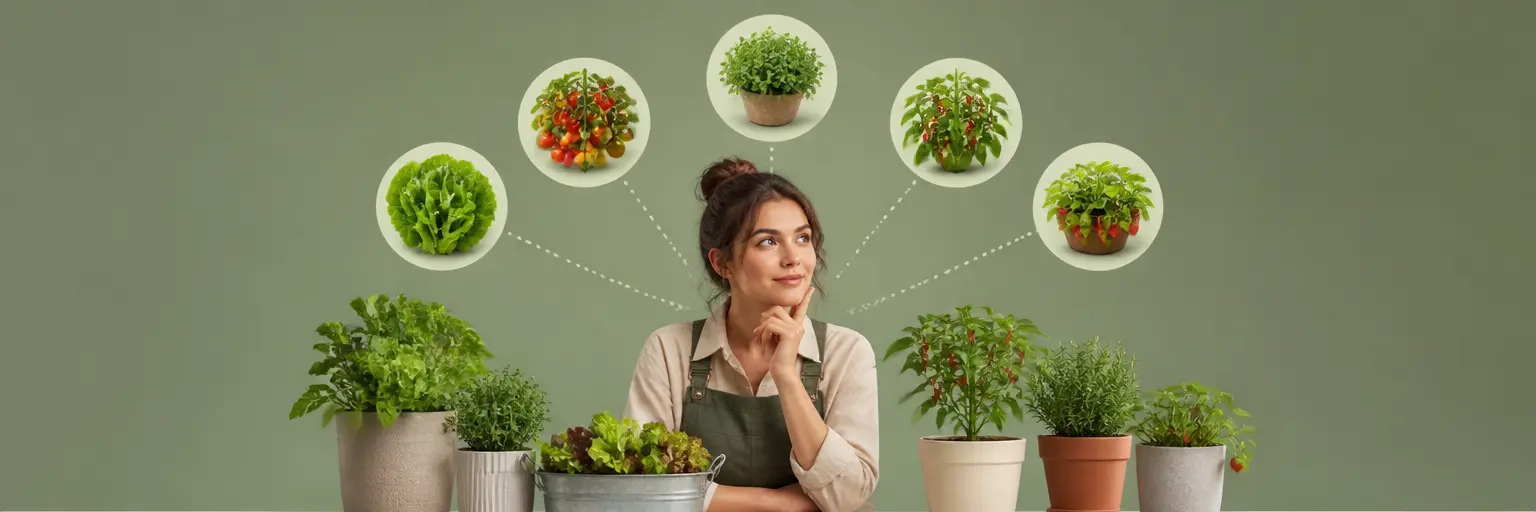
Small-space gardeners should prioritize compact, dwarf, bush, patio, and determinate varieties that produce well without spreading excessively. Patio tomatoes, dwarf peppers, bush beans, baby carrots, radishes, lettuce, spinach, and compact zucchini varieties are excellent choices for container gardening. Herbs such as thyme, oregano, basil, cilantro, and rosemary are especially useful because they provide continuous harvests while requiring minimal space.
This subcategory explains how mature plant size, root depth, and growth habit affect container success. Look for seed packets and plant labels that mention terms such as “container-friendly,” “compact,” “miniature,” or “dwarf.” Selecting the right variety reduces overcrowding, improves airflow, and makes watering, harvesting, organic feeding, and pest inspection easier.
🌱 Grow Productive Herbs in Tiny Areas
Herbs are among the best plants for small spaces because they grow successfully in pots, hanging baskets, window boxes, and vertical planters. Fresh basil, parsley, cilantro, chives, mint, sage, thyme, and oregano can provide flavorful ingredients throughout the growing season. Perennial herbs, including rosemary, thyme, sage, and mint, can offer long-term value when grown in suitable containers.
Readers will learn how to group herbs according to similar sunlight, soil, and watering requirements. For example, thyme, rosemary, and oregano prefer well-drained soil and less frequent watering, while basil and parsley generally appreciate more consistent moisture. Growing herbs organically with compost, natural fertilizers, and responsible watering makes it easier to produce healthy food in a small footprint.
🥕 Select Fast-Growing Vegetables for Quick Harvests
Fast-growing vegetables are ideal for gardeners who want visible results from a balcony garden, patio garden, or small raised bed. Radishes, baby lettuce, arugula, mustard greens, spinach, green onions, microgreens, and some varieties of bush beans can be harvested quickly. These crops are also suitable for succession planting, allowing gardeners to sow new seeds every few weeks for a steady supply of fresh produce.
This section helps readers plan harvests around available space and growing time. Leafy greens can often be harvested a few leaves at a time, while radishes and green onions provide efficient production in shallow containers. By combining quick crops with longer-season plants, small gardens can remain productive from spring through fall without requiring a large growing area.
🍅 Grow Fruits and Vegetables Vertically
Vertical gardening makes it possible to grow more food by using walls, trellises, railings, hanging baskets, and tiered plant stands. Climbing peas, pole beans, cucumbers, compact squash, strawberries, and some tomatoes can grow upward rather than spreading across the ground. Vertical support also improves air circulation, makes harvesting easier, and helps organize a small edible garden.
Readers can expect ideas for choosing plants that naturally climb, trail, or benefit from support. Always consider the mature weight of the plant and use sturdy, weather-resistant structures secured safely to balconies or walls. Vertical growing should never block walkways or create unsafe loads, particularly in apartment gardens and elevated containers.
♻️ Choose Plants for Sustainable Organic Gardening
Choosing the right plants is also an opportunity to reduce waste and support a healthier growing system. Select disease-resistant varieties, locally adapted plants, open-pollinated seeds, and crops that can be harvested repeatedly. Plants that grow well in your climate usually require less water, fewer interventions, and fewer synthetic inputs, making them excellent choices for organic small space gardening.
CultivateYourFood encourages gardeners to enrich containers with homemade compost, worm castings, aged organic matter, and natural soil amendments. Companion planting, crop rotation, hand-picking pests, insect netting, and beneficial flowers can help manage common garden problems without harsh chemicals. Choosing resilient plants supports pollinators, reduces resource use, and creates a productive home food garden.
❓ Frequently Asked Questions About Choosing Plants for Small Spaces
🌞 What are the best plants for a small balcony garden?
Some of the best balcony plants include compact tomatoes, peppers, lettuce, spinach, radishes, bush beans, strawberries, basil, parsley, chives, and thyme. Choose varieties based on the balcony’s sunlight, wind exposure, container size, and weight limitations. Container-friendly and dwarf varieties are usually the most reliable choices.
🪴 How do I know which plants will grow well in containers?
Check seed packets and plant labels for terms such as compact, dwarf, patio, bush, determinate, or container variety. Also consider the plant’s mature height, root depth, and watering requirements. Plants with manageable roots and a compact growth habit are generally easier to grow successfully in pots and window boxes.
☀️ Can I grow vegetables in a space with only partial shade?
Yes. Leafy greens such as lettuce, spinach, kale, arugula, and Swiss chard can often grow with partial shade, as can herbs including parsley, mint, cilantro, and chives. Root crops such as radishes may also perform well. Fruiting plants like tomatoes and peppers usually require more direct sunlight to produce abundant harvests.
🌿 Which herbs are easiest for beginners in small spaces?
Basil, chives, parsley, thyme, oregano, and mint are beginner-friendly options. Grow mint in its own container because it spreads aggressively. Use well-draining soil, provide suitable sunlight, and harvest herbs regularly to encourage bushier growth and a continuous supply of fresh flavor.
♻️ How can I grow plants organically in a small garden?
Start with quality organic potting mix, homemade compost, or worm castings, and choose disease-resistant plants suited to your climate. Water deeply but avoid constantly saturated soil, inspect plants regularly for pests, and use natural methods such as hand-picking, insect netting, companion planting, and beneficial flowers. These practices support healthy soil and productive harvests without relying on synthetic pesticides.