
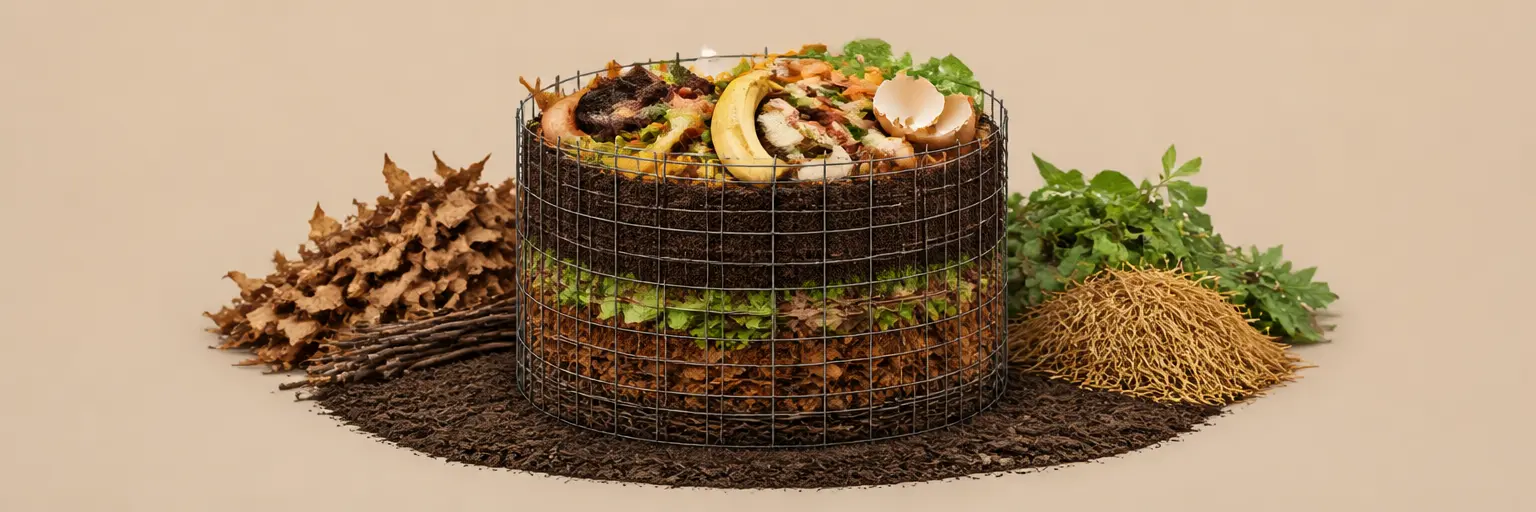
Compost Material Cheat Sheet: What Can and Can't Go in Your Pile
🌱 Learn how to start a compost pile and transform kitchen scraps and garden waste into nutrient-rich organic compost for healthier soil and thriving plants. Discover simple, sustainable composting methods, what materials to add or avoid, and how to maintain the ideal balance of greens and browns. ♻️ Build a natural soil amendment that supports eco-friendly gardening, reduces household waste, and helps your homegrown fruits, vegetables, and herbs flourish.
7 articles
How to Start a Compost Pile: A Beginner's Guide for Sustainable Gardening
Common Composting Mistakes: How to Avoid Pitfalls in Your Pile
Compost Pile Problems: Solutions for a Thriving Compost
Maintaining Moisture: The Key to a Healthy Compost Pile
How to Start a Compost Pile: Choosing Between Hot and Cold Composting
Kickstart Your Compost: A StepbyStep Guide for Beginners
🌱 How to Start a Compost Pile: Create Rich, Organic Soil at Home
Welcome to the How to Start a Compost Pile subcategory at CultivateYourFood, your practical resource for turning kitchen scraps and garden waste into nutrient-rich compost. Learn how to build a compost pile, choose the best composting location, balance green and brown materials, control moisture, and produce natural soil amendments for fruits, vegetables, and herbs. Whether you are a beginner gardener or an experienced organic grower, these guides make home composting simple, affordable, and environmentally friendly.
♻️ Composting Basics for Beginners
Discover the essential principles of starting a compost pile, including the difference between green compost materials and brown compost materials. Learn how food scraps, grass clippings, leaves, cardboard, and small garden trimmings work together to create the ideal carbon-to-nitrogen balance.
Our beginner-friendly information explains how compost decomposes, which materials belong in a compost bin, and how composting can reduce household waste. You will also learn practical ways to begin composting in a backyard, garden, apartment, or small outdoor space.
📍 Choosing the Best Location for a Compost Pile
The right location helps your compost pile remain active, accessible, and easy to maintain. Learn how to select a spot with suitable sunlight, drainage, airflow, and convenient access from both your kitchen and garden.
Explore options for traditional compost piles, compost bins, tumblers, and enclosed containers. These guides can help you choose a composting system that fits your available space while preventing excess moisture, unpleasant odors, and unwanted pests.
🥬 What to Put in a Compost Pile
Learn which organic materials can be composted safely and effectively. Recommended materials include fruit and vegetable scraps, coffee grounds, tea leaves, eggshells, untreated paper, dry leaves, straw, grass clippings, and healthy plant debris.
You will also discover which items should be avoided, such as meat, dairy products, oily foods, pet waste, diseased plants, chemically treated wood, and invasive weeds with mature seeds. Following these guidelines helps create clean, healthy compost for vegetable gardens.
⚖️ Balancing Green and Brown Compost Materials
A successful compost pile needs a healthy balance of nitrogen-rich green materials and carbon-rich brown materials. Green ingredients provide energy for microorganisms, while brown ingredients improve structure, airflow, and decomposition.
Learn how to adjust your compost mix when the pile smells bad, stays too wet, dries out, or decomposes slowly. Simple layering techniques and regular observation can help you maintain an efficient compost pile without complicated equipment.
💧 Managing Compost Moisture and Aeration
Moisture and oxygen are essential for active composting. Your compost pile should feel similar to a wrung-out sponge—damp but not saturated. Learn how to add water during dry weather and incorporate dry materials when the pile becomes too wet.
Regularly turning compost with a garden fork or compost aerator introduces oxygen and helps materials decompose evenly. Proper aeration supports beneficial microorganisms and reduces compacted layers, odors, and slow decomposition.
🌡️ Understanding Compost Temperature and Decomposition
Compost temperature provides useful clues about what is happening inside the pile. A warm or hot center usually indicates that microorganisms are actively breaking down organic matter, while a cool pile may need more moisture, nitrogen, oxygen, or fresh material.
Explore the difference between hot composting and cold composting. Hot composting can produce finished compost more quickly, while cold composting requires less maintenance and is suitable for gardeners who prefer a slower, low-effort method.
🌿 Using Finished Compost in Your Garden
Finished compost is dark, crumbly, earthy-smelling, and no longer recognizable as its original ingredients. Learn how to identify mature compost and use it as a soil amendment, mulch, seed-starting ingredient, or natural fertilizer for garden plants.
Adding compost to garden soil can improve moisture retention, drainage, soil structure, and microbial activity. Use it around fruit trees, vegetable beds, herb gardens, containers, and flower plants to support healthy organic growth.
🐛 Troubleshooting Common Composting Problems
Find practical solutions for common compost problems, including foul odors, fruit flies, rodents, mold, excess moisture, dry materials, and slow decomposition. Understanding the cause of each issue makes it easier to restore balance and keep your compost pile working.
These guides provide sustainable composting advice for different climates, seasons, and garden sizes. With simple adjustments to the material mix, moisture level, airflow, and pile size, most composting challenges can be resolved naturally.
❓ Frequently Asked Questions About Starting a Compost Pile
What is the easiest way to start a compost pile?
Choose a well-drained location and create alternating layers of brown materials, such as dry leaves and cardboard, with green materials, such as fruit scraps and grass clippings. Keep the pile slightly moist and turn it occasionally to add oxygen.
How long does it take to make compost?
Compost can be ready in a few months under ideal hot-composting conditions. A cold compost pile may take six months to two years, depending on the materials, pile size, moisture, temperature, and how often it is turned.
Can I compost kitchen scraps?
Yes. Fruit and vegetable scraps, coffee grounds, tea leaves, and crushed eggshells are excellent compost materials. Bury fresh food scraps beneath a layer of brown material to help reduce odors and discourage insects.
Why does my compost pile smell bad?
A bad smell usually means the pile is too wet, compacted, or rich in nitrogen-heavy green materials. Add dry leaves, shredded cardboard, or straw and turn the pile to improve airflow and restore the carbon balance.
How do I know when compost is ready to use?
Finished compost is dark brown or nearly black, crumbly, and has a pleasant earthy smell. The original ingredients should be mostly broken down. Allow immature compost to finish decomposing before mixing it into soil around plants.