
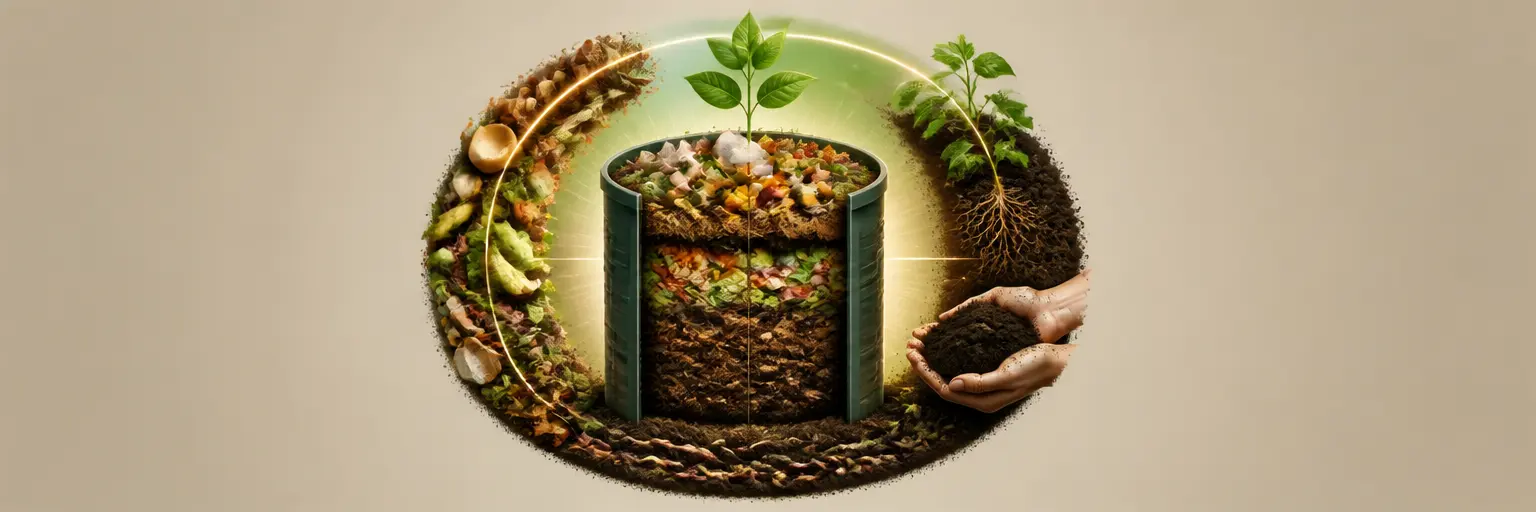
Composting: The Secret to Healthier Plants and a More Vibrant Garden
Discover the benefits of composting 🌱 and transform kitchen scraps and yard waste into nutrient-rich organic matter for healthier soil and thriving home gardens. Composting reduces landfill waste, supports sustainable gardening, improves moisture retention, and naturally nourishes fruits, vegetables, and herbs—helping you cultivate more abundant, eco-friendly harvests at home. ♻️✨
8 articles
Composting: A Guide to Understanding Its Role in the Nutrient Cycle
The Power of Composting: A Natural Way to Enhance Plant Growth
The Surprising Benefits of Composting for Pest and Disease Control
Composting for a Greener Planet: Why it's Essential for Environmental Health
Composting: A Simple Way to Reduce Your Household Waste and Benefit Your Garden
The Benefits of Composting: How It Improves Soil Structure and Health
The EcoFriendly Gardener: Why Composting is Essential for a Sustainable Lifestyle
🌱 The Benefits of Composting for a Healthier, More Productive Garden
Discover how composting can transform kitchen scraps, garden waste, and other organic materials into nutrient-rich compost for your home garden. This guide from CultivateYourFood explores the many benefits of composting, including healthier soil, stronger plants, improved moisture retention, and reduced household waste. Whether you grow vegetables, fruits, herbs, flowers, or container plants, learning how compost supports sustainable gardening can help you cultivate fresh food naturally and responsibly.
♻️ Reduce Food Waste and Support a Sustainable Lifestyle
One of the most practical benefits of composting is its ability to reduce the amount of organic waste sent to landfills. Fruit and vegetable scraps, coffee grounds, tea leaves, eggshells, grass clippings, fallen leaves, and other compostable materials can be recycled at home instead of discarded. This helps reduce landfill volume while giving everyday waste a useful purpose in the garden.
Home composting is an accessible step toward zero-waste gardening and a more sustainable lifestyle. By composting regularly, gardeners can lower their environmental impact, conserve resources, and create a natural soil amendment without relying entirely on commercially packaged products.
🌿 Improve Soil Health Naturally
Compost improves soil structure by adding stable organic matter that benefits both sandy and clay-heavy soils. In loose, sandy soil, compost helps retain moisture and nutrients. In compacted clay soil, it encourages better drainage, aeration, and root growth. These improvements create a healthier growing environment for vegetables, fruits, herbs, and ornamental plants.
Healthy soil is the foundation of productive organic gardening. Compost supports beneficial microorganisms, earthworms, and other soil life that help break down nutrients and make them more available to plants. Adding mature compost can gradually improve fertility while reducing the need for synthetic fertilizers.
💧 Increase Moisture Retention and Improve Drainage
Compost acts like a natural moisture manager in the garden. Its organic matter helps soil hold water around plant roots during dry periods, which can reduce the frequency of watering. This is especially helpful for raised beds, container gardens, vegetable plots, and areas affected by hot or unpredictable weather.
At the same time, compost can improve drainage in heavy soils by creating spaces for excess water and air to move through. Better drainage helps prevent waterlogged roots, while improved moisture retention helps plants remain hydrated. The result is a more balanced soil environment and more efficient garden watering.
🥕 Encourage Stronger Plant Growth and Better Harvests
Compost supplies a broad range of nutrients and organic matter that support steady plant development. When incorporated into garden soil or used as a top dressing, finished compost can help plants establish strong roots, produce healthy foliage, and develop flowers, fruits, and vegetables more successfully.
Although compost is not a quick-release fertilizer, its long-term benefits can contribute to consistent garden productivity. Gardeners may notice improved plant vigor, better harvest quality, and increased resilience when compost is combined with proper sunlight, watering, crop rotation, and organic pest control practices.
🐛 Support Beneficial Soil Life and Natural Pest Resistance
Compost creates a welcoming habitat for beneficial microorganisms, fungi, earthworms, and other decomposers. These organisms help cycle nutrients, break down organic matter, and maintain a living soil ecosystem. A biologically active soil can support healthier roots and more efficient nutrient availability.
Strong, well-nourished plants are often better prepared to tolerate environmental stress and recover from minor pest damage. Compost should not be viewed as a standalone pest control solution, but it can form an important part of an integrated organic gardening strategy alongside crop diversity, physical barriers, companion planting, and regular plant inspection.
🌍 Conserve Resources and Lower Gardening Costs
Making compost at home can reduce the need to purchase soil conditioners, mulch, and some commercial fertilizers. Gardeners can use materials already available from the kitchen and yard, turning leaves, grass clippings, and plant debris into a valuable resource. This makes composting an economical choice for both beginner gardeners and experienced growers.
Compost also supports resource conservation by returning nutrients to the soil instead of removing them from the natural cycle. Using homemade compost can help build a self-sustaining garden system, particularly when paired with seed saving, rainwater collection, natural mulching, and other sustainable gardening techniques.
🏡 Choose the Best Composting Method for Your Garden
There are several ways to compost, including traditional compost bins, tumblers, open piles, worm composting, and bokashi systems. The best method depends on available space, the type of organic waste produced, local climate, and how quickly finished compost is needed. Even small-space gardeners can compost using a compact bin or vermicomposting setup.
A successful compost pile generally needs a balance of green materials, such as food scraps and fresh grass clippings, and brown materials, such as dry leaves, cardboard, and small branches. Adequate moisture, airflow, and occasional turning help decomposition progress and produce dark, crumbly, earthy-smelling compost.
❓ Frequently Asked Questions About the Benefits of Composting
What are the main benefits of composting?
The main benefits of composting include reducing food waste, improving soil structure, increasing moisture retention, supporting beneficial soil organisms, and supplying organic matter for healthier plant growth. Compost can also reduce gardening costs and support more sustainable home food production.
Can compost replace fertilizer in an organic garden?
Compost can provide valuable nutrients and improve soil health, but it does not always replace every fertilizer need. Nutrient requirements vary by crop and soil condition. A soil test can help determine whether additional organic amendments are needed alongside finished compost.
What can be added to a home compost pile?
Common compostable materials include fruit and vegetable scraps, coffee grounds, tea leaves, crushed eggshells, grass clippings, dry leaves, untreated paper, cardboard, and small amounts of untreated plant material. Avoid meat, dairy products, oily foods, pet waste, diseased plants, and chemically treated materials in a standard backyard compost pile.
How long does compost take to become ready?
Compost may take several months to a year to mature, depending on the materials, moisture, temperature, airflow, and how often the pile is turned. Finished compost is usually dark, crumbly, and earthy-smelling, with most original materials no longer recognizable.
How should finished compost be used in the garden?
Finished compost can be mixed into garden beds before planting, added to potting mixes, spread around established plants as a top dressing, or used as a component of raised-bed soil. Apply it in moderation and avoid placing large amounts directly against plant stems or trunks.