
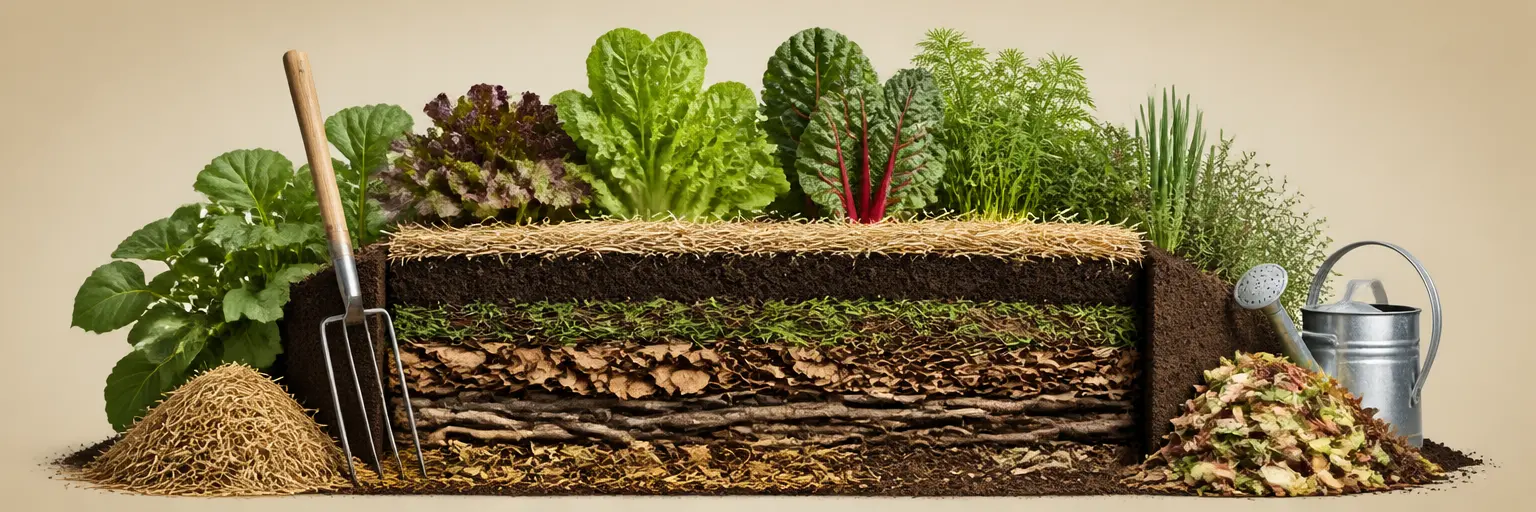
StepbyStep Guide: Creating Your First NoDig Garden Bed
Discover no-dig gardening techniques for healthier soil, abundant harvests, and sustainable home growing 🌱 Build fertile garden beds with compost, mulch, and organic matter—without disruptive digging. These soil-friendly methods help protect beneficial organisms, improve moisture retention, suppress weeds, and support thriving fruits, vegetables, and herbs naturally. ♻️ Perfect for beginner and experienced gardeners seeking low-maintenance, eco-friendly ways to cultivate nutritious food at home.
6 articles
Troubleshooting Common NoDig Garden Problems: Solutions for Success
NoDig Gardening for Small Spaces: Maximizing Yield in Limited Areas
Transform Your Garden with NoDig: A Simple and Effective Method
NoDig Gardening and Mycorrhizal Fungi: Enhancing Nutrient Uptake Naturally
NoDig vs. Traditional Gardening: Which Method Reigns Supreme?
🌱 No-Dig Gardening Techniques for Healthy, Productive Soil
Discover practical no-dig gardening techniques for growing fruits, vegetables, and herbs while protecting soil structure and supporting sustainable home cultivation. This subcategory from CultivateYourFood explains how to create productive garden beds with minimal soil disturbance, organic mulches, compost, and natural soil-building methods. Whether you are starting a backyard garden, converting a lawn, improving raised beds, or gardening in a small space, you will find clear guidance for organic no-dig gardening, soil health, weed control, moisture retention, and long-term fertility.
🌿 Build Healthy Soil Without Digging
No-dig gardening focuses on protecting soil life instead of turning the ground over. Articles in this section explain how earthworms, fungi, bacteria, and other beneficial organisms improve soil structure naturally. You can learn how to layer compost, aged manure, leaves, straw, and other organic materials directly on the soil surface.
Readers can expect practical advice for improving compacted, poor, sandy, or clay-heavy soil without damaging underground habitats. These methods help create loose, fertile growing conditions while reducing erosion, preserving nutrients, and encouraging stronger root development for vegetables, fruits, and herbs.
🍂 Sheet Mulching and Lasagna Gardening
Learn how sheet mulching and lasagna gardening transform grass, weeds, and unused ground into productive planting areas. These no-dig methods use layers of cardboard, compost, organic matter, and mulch to suppress weeds and gradually build rich garden soil.
Detailed guidance can help you choose safe materials, calculate suitable layer depths, and prepare beds for seasonal planting. You will also discover how sheet mulch supports moisture retention, reduces garden maintenance, and provides a sustainable alternative to chemical weed killers and intensive tilling.
🌾 Organic Mulching for Weed and Moisture Control
Organic mulch is central to successful no-dig gardening. Explore the benefits of straw, shredded leaves, wood chips, grass clippings, compost, and other natural materials for weed suppression, temperature regulation, and water conservation.
Our content explains how to apply mulch correctly around vegetables, herbs, fruit plants, and pathways while avoiding common problems such as excessive moisture, pests, nitrogen competition, or plant stem rot. Proper mulching can reduce watering needs and create a more resilient organic garden.
🥕 No-Dig Vegetable and Herb Growing
Find practical strategies for growing popular crops in no-dig beds, including tomatoes, potatoes, carrots, lettuce, onions, beans, squash, basil, parsley, and other garden favorites. You will learn how to plant into compost-rich layers while minimizing soil disturbance.
Articles cover crop spacing, succession planting, companion planting, seasonal preparation, and harvesting in a no-dig system. These techniques are suitable for beginners and experienced gardeners seeking productive, low-maintenance, and environmentally friendly ways to cultivate food at home.
♻️ Compost, Soil Fertility, and Natural Nutrients
Compost is one of the most valuable materials in a no-dig garden. Learn how to use homemade compost, worm castings, leaf mold, aged manure, and other organic soil amendments to provide steady nutrients and improve the soil food web.
You can expect advice on compost maturity, application rates, top-dressing, and nutrient management for different crops. By combining composting with no-dig methods, gardeners can recycle household and garden waste while creating fertile soil naturally and reducing dependence on synthetic fertilizers.
🐛 Pest Control and Biodiversity in No-Dig Gardens
Healthy, undisturbed soil supports stronger plants and a diverse ecosystem that can help manage garden pests naturally. This section explores organic pest control, beneficial insects, wildlife habitats, companion plants, and prevention techniques suitable for no-dig gardens.
Readers will learn how to identify common pests, protect young plants, and encourage predators such as ladybirds, lacewings, birds, frogs, and ground beetles. The emphasis is on balanced garden ecosystems rather than harmful chemicals, helping protect pollinators and food-growing areas.
❓ Frequently Asked Questions About No-Dig Gardening
What is no-dig gardening?
No-dig gardening is a method of growing plants without regularly turning or digging the soil. Instead, gardeners add compost and organic mulch to the surface, allowing soil organisms and roots to improve soil structure naturally.
Can I start a no-dig garden over grass?
Yes. A common approach is to cover grass with overlapping, plain cardboard and add layers of compost and mulch on top. The cardboard blocks light, while the organic layers gradually break down and create a fertile planting area.
Does no-dig gardening prevent weeds?
No-dig gardening can greatly reduce weeds when combined with cardboard, thick mulch, and regular hand removal. It does not eliminate every weed, but it minimizes soil disturbance, which can prevent dormant weed seeds from being brought to the surface.
How much compost should I add to a no-dig bed?
A layer of approximately 5 to 10 centimeters of finished compost is commonly used on the surface of an established bed. The ideal amount depends on soil condition, crop requirements, compost quality, and whether the bed is new or already productive.
Is no-dig gardening suitable for beginners?
Yes. No-dig gardening is beginner-friendly because it reduces heavy digging, supports natural soil improvement, and simplifies weed and moisture management. Start with a small bed, use fully finished compost, apply suitable mulch, and observe how the soil and plants respond.