
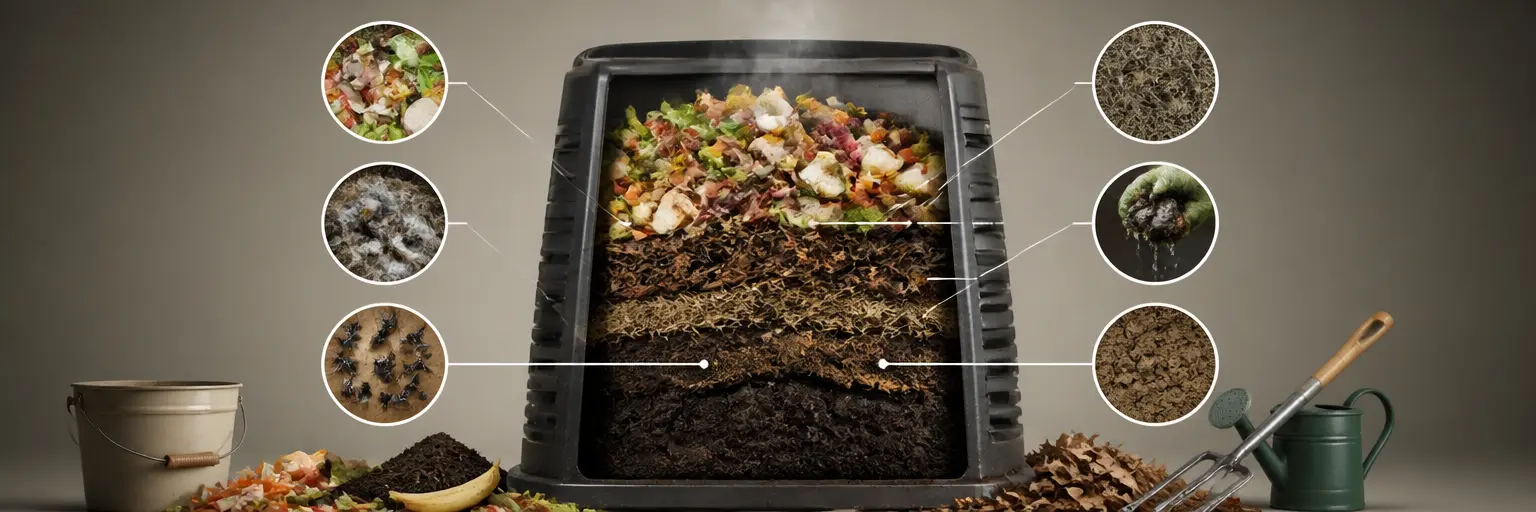
Slow Decomposition in Compost? Speeding Up the Process Naturally
Revive your compost and grow healthier soil 🌱 with practical solutions for common compost problems, from unpleasant odors and excess moisture to slow decomposition, pests, and poor balance. Discover organic composting tips, easy troubleshooting steps, and sustainable techniques to create rich, nutrient-dense compost for thriving home gardens.
5 articles
Troubleshooting a Smelly Compost: Identifying and Fixing the Causes
Compost is Generating Too Much Heat: How to Cool it Down Safely
Compost is Covered in Ants: Natural Ways to Control Them
Troubleshooting a Cold Compost Pile: How to Increase Temperature
🌱 Troubleshooting Compost Problems: Expert Solutions for Healthy, Organic Compost
Welcome to CultivateYourFood’s Troubleshooting Compost Problems subcategory, your practical resource for fixing common composting issues and creating rich, fertile compost at home. Whether your compost pile smells bad, stays too wet, dries out, attracts pests, or refuses to break down, you’ll find clear, sustainable solutions for balanced decomposition. Our guides support gardeners who want to improve soil health, reduce kitchen waste, and grow fruits, vegetables, and herbs using organic gardening methods.
♻️ Fixing Slow or Non-Decomposing Compost
When compost materials are not breaking down, the pile may lack moisture, oxygen, nitrogen-rich materials, or sufficient warmth. Learn how to balance green compost materials, such as fruit scraps and grass clippings, with brown compost materials, including dry leaves, cardboard, and straw. You’ll also discover how chopping large items, turning the pile, and maintaining the right moisture level can accelerate decomposition.
Our compost troubleshooting advice explains how temperature, particle size, airflow, and compost volume affect microbial activity. With simple adjustments, you can transform a slow compost pile into an active source of homemade compost for vegetable gardens, herb containers, raised beds, and fruit plants.
💧 Solving Wet, Soggy, or Smelly Compost
A wet compost bin often contains too many food scraps, grass clippings, or other high-moisture green materials. This can reduce airflow and create anaerobic conditions, leading to unpleasant odors. Find effective ways to dry a soggy compost pile by adding shredded cardboard, dry leaves, straw, or untreated paper while regularly turning the mixture.
You’ll also learn how to prevent compost odors by maintaining a healthy carbon-to-nitrogen balance and avoiding excessive amounts of meat, dairy, oils, and cooked food. These organic composting techniques help create a cleaner, better-aerated compost system suitable for backyards, balconies, tumblers, and indoor compost containers.
🌬️ Improving Compost Aeration and Moisture Balance
Successful composting requires the right combination of moisture and oxygen. Compost should feel similar to a wrung-out sponge: damp but not saturated. Our guides show you how to identify dry compost, compacted compost, and poorly aerated piles, then correct each problem using watering, turning, layering, and the addition of bulky carbon materials.
Learn how compost aeration supports beneficial microorganisms and prevents foul smells, slimy textures, and slow decomposition. These practical methods are useful for compost bins, compost tumblers, worm composting systems, and traditional outdoor piles.
🐜 Managing Compost Pests, Flies, and Unwanted Animals
Fruit flies, ants, rodents, raccoons, and other pests can appear when compost contains exposed food scraps or an unbalanced mixture. Discover how to bury fresh kitchen waste beneath brown materials, cover food scraps with finished compost, and maintain a secure compost bin. You’ll also learn which compost ingredients are most likely to attract unwanted visitors.
Our sustainable pest control recommendations focus on prevention rather than harmful chemicals. Find humane, organic solutions for keeping compost systems clean and productive while protecting nearby vegetable beds, beneficial insects, pets, and local wildlife.
🌡️ Understanding Compost Temperature and Decomposition
Temperature provides important clues about compost activity. A hot compost pile can break down organic waste quickly and help reduce weed seeds and some pathogens, while a cool pile may decompose more slowly. Learn how compost size, moisture, oxygen, and the green-to-brown ratio influence internal temperature.
These guides explain how to revive a cold compost pile and maintain efficient decomposition without relying on synthetic additives. Whether you use a cold composting method or aim for hot compost, you’ll gain practical knowledge for producing nutrient-rich compost for sustainable home gardening.
🍂 Choosing the Right Compost Ingredients
Healthy compost begins with suitable organic materials. Learn which kitchen scraps, garden waste, leaves, weeds, paper products, and plant residues can be composted safely. You’ll also find guidance on balancing nitrogen-rich greens with carbon-rich browns for effective compost decomposition.
We explain which materials should be avoided or used carefully, including diseased plants, invasive weeds, glossy paper, pet waste, treated wood, meat, dairy, and oily foods. Following these recommendations helps you produce cleaner compost and protect soil quality in organic gardens.
🌿 Using Finished Compost in Your Garden
Once compost has decomposed, it can improve soil structure, drainage, moisture retention, and nutrient availability. Learn how to recognize finished compost by its dark color, earthy smell, crumbly texture, and lack of recognizable food scraps. Our advice helps you determine when compost is ready for use.
Discover how to apply finished compost to vegetable gardens, fruit trees, herb gardens, seed-starting mixes, containers, and raised beds. Used correctly, homemade compost supports healthy roots, beneficial soil organisms, and productive plants while reducing dependence on commercial fertilizers.
❓ Frequently Asked Questions About Troubleshooting Compost Problems
Why does my compost smell like rotten eggs?
A rotten-egg smell usually means the compost pile is too wet and lacks oxygen. Add dry brown materials such as shredded cardboard, dry leaves, or straw, then turn the pile thoroughly to improve airflow. Avoid adding large amounts of wet food scraps at once.
Why is my compost pile not heating up?
A compost pile may stay cool if it is too small, too dry, poorly aerated, or low in nitrogen-rich materials. Add green materials such as fresh grass clippings or vegetable scraps, moisten the pile lightly, and turn it to distribute air and moisture. A pile generally needs sufficient volume to retain heat.
How can I stop fruit flies from gathering around my compost?
Fruit flies are attracted to exposed fruit and vegetable scraps. Bury fresh food waste beneath several inches of finished compost, dry leaves, or shredded cardboard. Keeping the compost covered and maintaining a balanced green-to-brown ratio can also reduce fruit fly activity.
Can I add moldy food to my compost?
Many moldy fruits, vegetables, bread products, and plant-based foods can be composted. Mix them into the center of the pile and cover them with brown materials. Avoid adding moldy foods containing meat, dairy, oils, or excessive sauces unless your composting system is specifically designed to process them.
How do I know when compost is ready to use?
Finished compost is typically dark brown, crumbly, and earthy-smelling. Most original materials should no longer be recognizable, and the pile should no longer heat up after turning. Use mature compost as a soil amendment, mulch, or ingredient in potting and seed-starting mixes.