
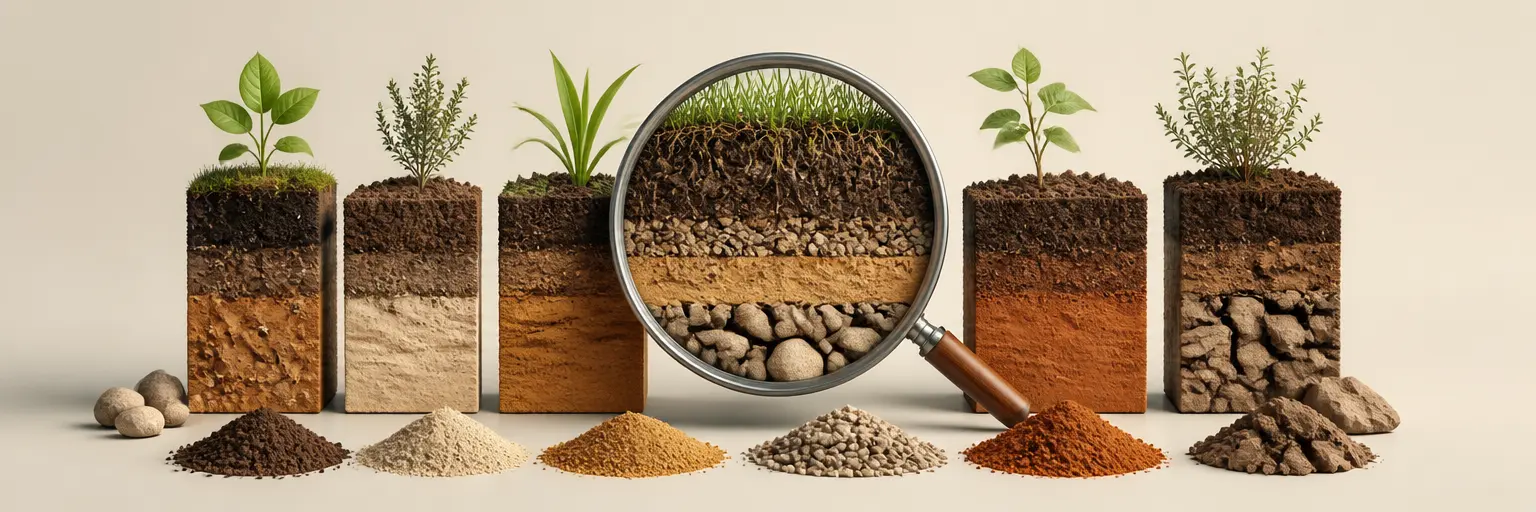
Beyond the Basics: Identifying Specific Soil Types in Your Backyard
Discover how understanding soil types can transform your garden! 🌱 Learn to identify sandy, clay, loamy, and silty soils, assess drainage and fertility, and choose the best amendments for healthier fruits, vegetables, and herbs. With practical organic soil improvement tips—from composting to sustainable soil care—you can create the ideal growing environment and cultivate thriving plants at home. 🥕🌿
6 articles
Soil Horizons: Exploring the Layers of Your Garden's Foundation
The Impact of Soil Types on Plant Growth: What You Need to Know
The Importance of Soil Structure: Creating a Healthy Root Environment
The Best Soil for Herbs: Creating the Ideal Environment for Aromatic Plants
Soil Testing 101: Simple Methods for Analyzing Your Soil at Home
🌱 Understanding Soil Types for a Healthy Organic Garden
Choosing the right soil is one of the most important steps in growing productive fruits, vegetables, and herbs at home. In the Understanding Soil Types subcategory on CultivateYourFood, you will learn how soil texture, drainage, fertility, pH, and organic matter influence plant health. Discover how to identify sandy soil, clay soil, loamy soil, silty soil, chalky soil, and nutrient-poor garden soil, along with practical ways to improve each type using sustainable and organic gardening methods.
🔍 How to Identify Different Soil Types
Learn how to examine your garden soil by looking at its texture, color, moisture retention, drainage, and structure. Simple home tests, including the jar test and hand-feel test, can help you determine whether your soil contains mostly sand, silt, or clay. Understanding your soil composition makes it easier to choose suitable crops and plan effective soil improvements.
This section explains the key characteristics of common soil types and how they affect root growth, seed germination, watering, and nutrient availability. You will discover why loamy soil is often ideal for vegetable gardening and how less suitable soil can be transformed with compost, leaf mold, mulch, and other natural amendments.
🏖️ Sandy Soil: Improving Drainage and Fertility
Sandy soil has large particles, drains quickly, and warms up early in spring, but it may struggle to retain water and nutrients. Explore how sandy garden soil affects crops such as tomatoes, carrots, herbs, and drought-tolerant plants, and learn to recognize signs of moisture stress and nutrient deficiency.
Find organic ways to improve sandy soil by adding mature compost, well-rotted manure, cover crops, and organic mulch. These practices help increase moisture retention, build soil structure, and support beneficial soil organisms without relying on synthetic fertilizers.
🧱 Clay Soil: Enhancing Structure and Drainage
Clay soil contains very fine particles that hold water and nutrients but may become compacted, sticky when wet, and hard when dry. Learn how heavy clay soil can restrict oxygen, drainage, and root development, especially for vegetables that require loose, well-aerated growing conditions.
Discover sustainable methods for improving clay soil, including regular compost applications, deep-rooted cover crops, surface mulching, and avoiding soil work when it is excessively wet. These techniques gradually create a more crumbly structure and improve drainage while protecting soil life.
🌾 Loamy Soil: Creating Ideal Growing Conditions
Loamy soil is a balanced combination of sand, silt, clay, organic matter, air, and water. It commonly provides excellent drainage while retaining enough moisture and nutrients for a wide range of crops, making it a preferred soil type for home vegetable gardens and raised beds.
Even productive loam needs ongoing care. Learn how to preserve fertile soil with compost, crop rotation, living roots, cover crops, reduced digging, and organic mulch. These practices support long-term fertility and help cultivate healthy fruits, vegetables, and herbs year after year.
⚖️ Soil pH, Nutrients, and Plant Health
Soil pH determines how easily plants can absorb essential nutrients such as nitrogen, phosphorus, potassium, calcium, magnesium, and iron. This section explains how acidic, neutral, and alkaline soil affect different crops, including blueberries, potatoes, brassicas, tomatoes, peppers, and culinary herbs.
Learn why a soil test is the best starting point before adding lime, sulfur, fertilizers, or other amendments. You will also find guidance on interpreting soil test results and improving fertility naturally through compost, balanced organic amendments, and responsible nutrient management.
♻️ Improving Soil with Compost and Organic Matter
Organic matter is essential for building healthy soil, supporting microorganisms, and improving both drainage and water retention. Discover how homemade compost, worm castings, aged manure, shredded leaves, grass clippings, and composted plant material can improve different soil types.
Learn how to apply amendments safely and effectively without overfeeding your garden or creating nutrient imbalances. CultivateYourFood focuses on sustainable soil care that reduces waste, protects beneficial organisms, and creates a resilient growing environment for organic plants.
🌿 Choosing Crops for Your Soil Type
Different plants perform better in different soil conditions. Explore crop recommendations for sandy, clay, loamy, silty, acidic, alkaline, compacted, and poorly drained soils. Understanding these preferences can help you select vegetables, fruits, and herbs that are more likely to thrive in your garden.
You will also learn how to adapt growing conditions with raised beds, containers, organic mulch, compost, and appropriate watering schedules. Matching plants to soil type can reduce disease, improve harvests, and make home gardening more efficient and rewarding.
❓ Frequently Asked Questions About Understanding Soil Types
What are the main types of garden soil?
The main soil types are sandy, silty, clay, loamy, chalky, and peaty soil. Most gardens contain a combination of these textures. A soil test and simple home texture tests can help identify your soil type and reveal how it manages water, nutrients, and air.
What is the best soil type for growing vegetables?
Loamy soil is generally the best soil for vegetables because it offers balanced drainage, moisture retention, aeration, and nutrient availability. However, sandy or clay soil can also produce excellent crops when improved with compost, mulch, cover crops, and careful watering.
How can I improve poor garden soil naturally?
Add mature compost, leaf mold, organic mulch, worm castings, and well-rotted manure to improve soil structure and fertility. Avoid working wet soil, keep the ground covered, and grow cover crops where possible. These methods build organic matter gradually and support healthy soil biology.
How do I test my soil at home?
You can perform a jar test by mixing soil with water, shaking it, and allowing the particles to settle in layers. A hand-feel test can also help distinguish sand, silt, and clay. For accurate pH and nutrient information, send a soil sample to a reliable soil testing laboratory.
How often should I add compost to garden soil?
Many home gardens benefit from adding a thin layer of mature compost once or twice a year, often before planting or after harvest. The correct amount depends on your soil condition, crop needs, and compost quality. Regular soil testing helps prevent excessive nutrient buildup.