
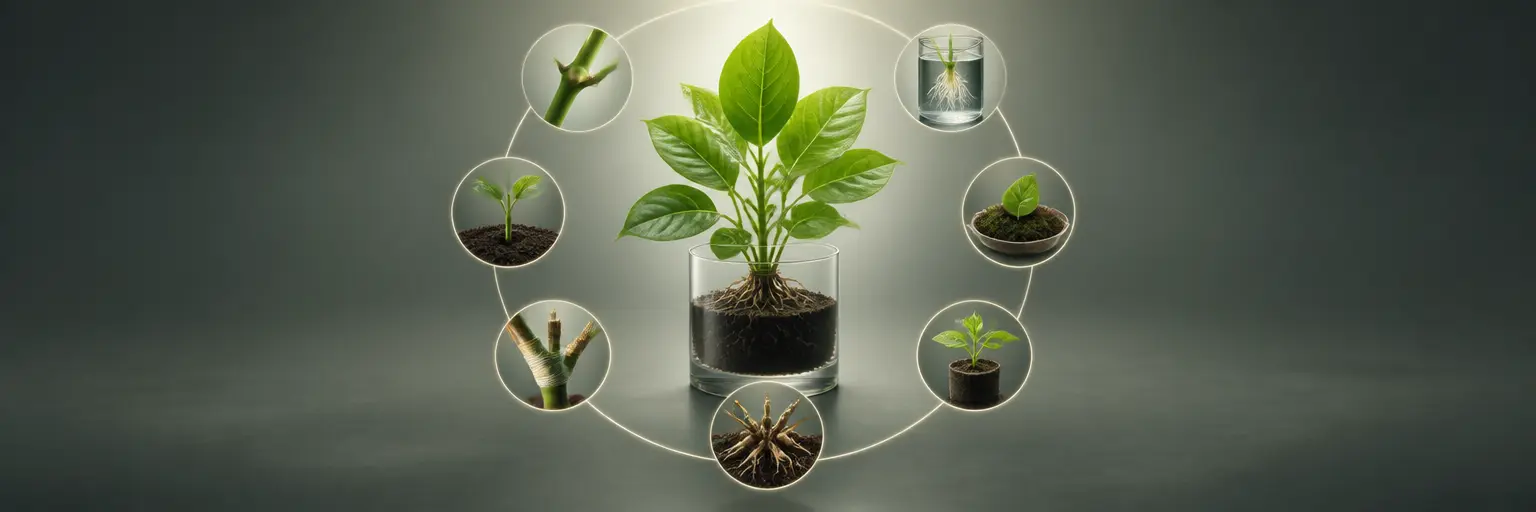
Temperature and Humidity Control: Creating the Perfect Propagation Environment
Discover the science behind plant propagation and learn how to grow healthy fruits, vegetables, and herbs from seeds, cuttings, divisions, and more 🌱. Explore practical, sustainable techniques for organic home gardening, improve germination and rooting success, and expand your garden affordably while cultivating resilient plants naturally.
6 articles
Unlocking the Secrets: A Deep Dive into Plant Propagation Methods
Understanding Plant Life Cycles: How it Affects Propagation
Propagating Plants in Small Spaces: Vertical and Container Gardening
The Impact of Propagation on Plant Health and Longevity
Common Mistakes to Avoid in Plant Propagation: A Beginner's Guide
🌱 Understanding Plant Propagation Techniques
Welcome to Understanding Plant Propagation Techniques on CultivateYourFood, your practical resource for learning how to grow new plants from seeds, cuttings, roots, leaves, and other plant materials. Within The Science of Gardening, this subcategory explains the biology and methods behind successful propagation so home gardeners can expand their vegetable, fruit, herb, and ornamental collections naturally. Discover how to multiply healthy plants, preserve favorite varieties, reduce gardening costs, and create a productive garden using sustainable and organic propagation practices.
🌿 Explore the Science Behind Plant Propagation
Plant propagation is the process of creating new plants from seeds or parts of an existing plant. Our guides explain the difference between sexual propagation, which uses seeds and encourages genetic diversity, and asexual propagation, which produces genetically identical clones through cuttings, division, layering, or grafting.
Readers can expect clear explanations of root development, plant hormones, moisture balance, light requirements, temperature, and humidity. Understanding these fundamentals helps gardeners choose the best propagation method for herbs, vegetables, fruit plants, houseplants, and perennial garden crops.
🌰 Learn How to Grow Plants from Seeds
Seed propagation is an affordable and accessible way to grow vegetables, herbs, flowers, and fruit plants at home. Learn how to select high-quality seeds, prepare organic seed-starting mixes, determine planting depth, maintain moisture, and provide suitable warmth and light for healthy germination.
Our content also covers seed stratification, scarification, transplanting seedlings, hardening off, and saving seeds from mature plants. These techniques help gardeners build resilient crops while supporting organic gardening, biodiversity, and long-term food production.
✂️ Master Plant Cutting Techniques
Growing plants from cuttings allows gardeners to create new plants quickly from stems, leaves, or roots. Discover how to take softwood, semi-hardwood, hardwood, leaf, and root cuttings from suitable plants such as mint, basil, rosemary, tomatoes, figs, grapes, and many ornamental species.
Learn how to prepare cuttings, encourage root growth, choose a well-draining propagation medium, and maintain appropriate humidity. The guides emphasize clean tools, healthy parent plants, proper sanitation, and natural rooting methods to improve propagation success and prevent disease.
🌱 Discover Division, Layering, and Grafting
Some plants are best propagated by dividing established roots, rhizomes, bulbs, or crowns. This technique is useful for herbs and perennials such as chives, oregano, strawberries, asparagus, hostas, and many productive garden plants. Step-by-step guidance can help you divide plants safely without excessive root damage.
Layering and grafting offer additional ways to reproduce plants that may be difficult to root from cuttings. Learn how to encourage roots on attached stems, combine compatible plant varieties, and use grafting for fruit trees. These methods can improve plant vigor, disease resistance, fruit quality, and garden productivity.
💧 Create the Ideal Propagation Environment
Successful propagation depends on more than placing a cutting or seed in soil. Explore how propagation trays, humidity domes, seed-starting containers, sterile growing media, grow lights, heat mats, and greenhouse conditions can support healthy development.
Our resources explain how to balance water, airflow, light, temperature, and humidity while avoiding common problems such as damping-off, root rot, mold, wilting, and transplant shock. You will also find practical ideas for low-cost, reusable, and eco-friendly propagation setups suitable for small spaces.
🐞 Prevent Diseases and Support Healthy Growth
Young seedlings and newly rooted cuttings are vulnerable to fungal diseases, pests, dehydration, and nutrient stress. Learn how to inspect parent plants, sterilize pruning tools, reuse containers safely, and provide proper ventilation to create a cleaner propagation environment.
Guidance on organic pest control, compost-based soil improvement, natural fertilizers, and beneficial garden practices helps protect developing plants without relying on harsh chemicals. These methods align with CultivateYourFood’s commitment to sustainable home food gardening and responsible plant care.
❓ Frequently Asked Questions About Plant Propagation
🌱 What is the easiest plant propagation method for beginners?
Seed starting and stem cuttings are often the easiest methods for beginners. Fast-rooting herbs such as mint, basil, oregano, and rosemary can be propagated from healthy cuttings, while vegetables and flowers can be grown from seeds. Choose a method suited to the plant species and follow basic requirements for moisture, light, warmth, and airflow.
✂️ Can I propagate plants without rooting hormone?
Yes. Many plants root successfully without commercial rooting hormone when cuttings are taken from healthy growth and placed in a suitable medium. Consistent moisture, high humidity, indirect light, and warm temperatures are often more important. Willow water, aloe vera, and other natural approaches may be used, although results vary by plant.
💧 How often should newly propagated plants be watered?
Watering frequency depends on the propagation method, container, growing medium, temperature, and plant species. Keep the medium evenly moist but never waterlogged. Check the surface regularly, provide drainage, and increase airflow if you notice mold, algae, or soft stems.
🌿 How long does it take for plant cuttings to grow roots?
Rooting time can range from several days to many weeks. Soft herbaceous cuttings may root quickly, while woody cuttings and difficult species often require more time. Warm temperatures, healthy plant material, clean tools, suitable humidity, and indirect light can improve the chances of successful rooting.
🌰 What is the difference between growing plants from seeds and cuttings?
Plants grown from seeds usually have genetic variation, which can support biodiversity and adaptation. Plants grown from cuttings are clones of the parent plant and generally retain its characteristics, such as flavor, flower color, growth habit, or fruit quality. Seed propagation is useful for diversity, while cuttings are valuable for preserving reliable traits.