
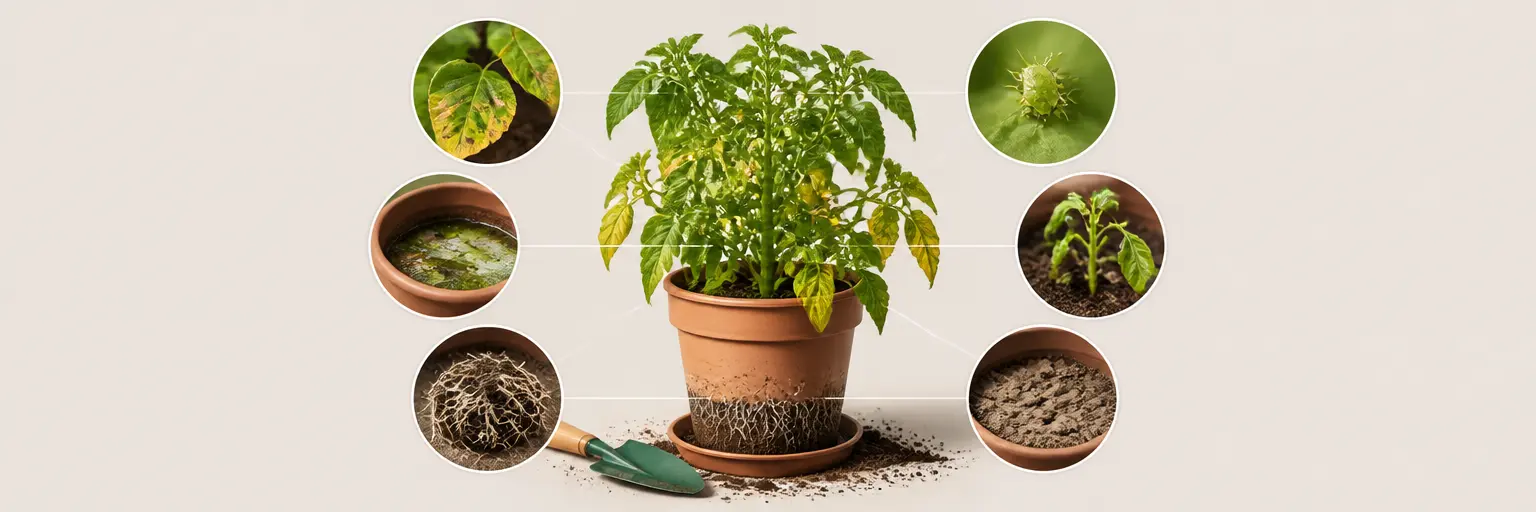
Container Plants with Holes in Leaves: Identifying the Pests and Solutions
Discover practical solutions for common container gardening issues and keep your potted plants healthy, productive, and thriving 🌱 From watering problems and poor drainage to nutrient deficiencies, pests, diseases, and limited space, find sustainable, organic tips tailored to growing fruits, vegetables, and herbs at home. Learn how to identify problems early, improve soil and container conditions, and cultivate a flourishing garden with confidence. 🪴
6 articles
Container Plants with Slow Growth: Identifying the Causes and Solutions
Blossom End Rot in Container Gardens: Understanding Calcium Deficiency and Solutions
Leggy Container Plants: Causes and How to Encourage Bushier Growth
Nutrient Deficiencies in Container Gardens: Spotting Symptoms and Organic Solutions
Container Plants with Seedling Damping Off: Preventing and Treating This Issue
🌿 Dealing with Common Container Gardening Issues
Welcome to CultivateYourFood’s guide to dealing with common container gardening issues. Growing fruits, vegetables, and herbs in pots is practical and rewarding, but container plants can face challenges such as poor drainage, overwatering, nutrient deficiencies, pests, diseases, weak growth, and extreme temperatures. This subcategory provides clear, organic, and sustainable solutions to help you maintain healthy container plants and enjoy a productive harvest at home.
💧 Fixing Overwatering, Underwatering, and Drainage Problems
Water management is one of the most important parts of successful container gardening. Readers will learn how to identify signs of overwatering and underwatering, including yellow leaves, wilting, root damage, dry potting mix, and stunted growth. Practical advice will explain how often to water vegetables, herbs, and fruit plants based on container size, weather, plant variety, and growing medium.
This section also covers how to improve container drainage using pots with drainage holes, high-quality organic potting mix, compost, and suitable amendments. You will discover why standing water can cause root rot and how to create a healthier root environment without relying on harmful chemicals.
🌱 Solving Poor Growth and Nutrient Deficiencies
Slow growth, pale foliage, small leaves, and low yields may indicate that container plants are lacking essential nutrients. Readers can learn how to recognize common deficiencies involving nitrogen, phosphorus, potassium, magnesium, and iron. The guidance focuses on organic container gardening solutions, including mature compost, worm castings, compost tea, and natural fertilizers.
Because nutrients wash out of containers more quickly than garden soil, this section explains how to establish a practical feeding schedule for potted tomatoes, peppers, leafy greens, herbs, strawberries, and other edible plants. You will also learn how to avoid overfertilizing, which can damage roots and reduce fruit and vegetable production.
🐛 Managing Common Container Garden Pests Organically
Container plants can attract aphids, whiteflies, spider mites, fungus gnats, caterpillars, and other common garden pests. Readers will learn how to inspect leaves, stems, soil, and growing tips for early signs of infestation. Special attention is given to natural pest control for container vegetables and herbs, helping you protect edible crops safely.
Recommended methods may include hand removal, water sprays, insect netting, sticky traps, beneficial insects, neem-based products, and insecticidal soap when appropriate. The focus is on integrated pest management, encouraging prevention and monitoring before using any treatment that could harm pollinators or beneficial organisms.
🍃 Preventing and Treating Container Plant Diseases
Fungal diseases, bacterial infections, and root problems can spread quickly in a confined container environment. This section explains how to identify common symptoms such as powdery mildew, leaf spots, damping-off, blight, and root rot. Readers will learn why good air circulation, clean containers, proper watering, and healthy potting soil are essential for disease prevention.
You will also find sustainable steps for managing affected plants, including removing damaged foliage, isolating infected containers, improving drainage, and sanitizing tools. These practices can reduce disease pressure while supporting a healthier organic container garden without unnecessary chemical treatments.
☀️ Managing Sunlight, Heat, Cold, and Weather Stress
Container plants are more exposed to changing temperatures than plants grown in the ground. Readers will learn how to recognize sunscald, heat stress, frost damage, wind damage, and cold-related growth problems. Advice will help you choose the best placement for containers based on full sun, partial shade, seasonal temperature, and local growing conditions.
This section covers practical ways to protect potted plants, including using shade cloth, moving containers, grouping pots, adding organic mulch, insulating containers, and providing wind protection. These strategies are useful for maintaining productive herbs, vegetables, and fruit plants throughout changing weather.
🪴 Choosing the Right Containers and Potting Mix
The wrong container can lead to crowded roots, unstable plants, poor moisture control, or limited harvests. Readers will learn how to select the correct pot size and material for different crops, including tomatoes, carrots, potatoes, basil, mint, strawberries, and leafy greens. Important considerations include container depth, width, drainage holes, root space, and portability.
You will also discover how to build or select a sustainable potting mix that supports drainage, moisture retention, aeration, and nutrient availability. Guidance may include compost, coconut coir, perlite, bark, and other organic ingredients, along with tips for refreshing or reusing container soil safely between growing seasons.
🌾 Troubleshooting Root-Bound and Crowded Plants
Root-bound plants may dry out rapidly, wilt even after watering, produce limited foliage, or stop flowering and fruiting. This section helps readers identify tightly circling roots, compacted soil, and containers that are too small. You will learn when to transplant, prune damaged roots, divide herbs, or move a plant into a larger container.
Proper spacing is also essential for preventing competition for sunlight, water, and nutrients. These recommendations can help gardeners maintain stronger plants, improve air circulation, and achieve better yields from small balconies, patios, windowsills, and urban growing spaces.
❓ Frequently Asked Questions About Container Gardening Problems
Why are my container plant leaves turning yellow?
Yellow leaves may result from overwatering, poor drainage, nutrient deficiencies, insufficient light, or natural leaf aging. Check the moisture level, confirm that the container has drainage holes, and inspect the roots for damage. If the plant is actively growing, a balanced organic fertilizer or compost may help correct a nutrient shortage.
How can I prevent root rot in potted plants?
Prevent root rot by using containers with drainage holes, a well-aerated potting mix, and a watering schedule based on soil moisture rather than a fixed routine. Allow the upper layer of the growing medium to dry slightly when appropriate, and never leave containers sitting in trays of stagnant water.
What is the safest organic way to control pests on edible container plants?
Begin by inspecting plants regularly and removing pests by hand or with a gentle stream of water. Encourage beneficial insects, use insect netting, and consider insecticidal soap or an approved neem-based product when necessary. Always follow the product label and avoid spraying pollinators or applying treatments during extreme heat.
How often should I fertilize vegetables grown in containers?
Container vegetables often need feeding every few weeks because watering can wash nutrients from the potting mix. The exact schedule depends on the crop, fertilizer type, plant size, and growing medium. Use compost and a balanced organic fertilizer according to label directions, and avoid excessive feeding that may burn roots.
Can I reuse potting soil from last season?
Potting soil can sometimes be reused if it is free from serious pests and diseases. Refresh it with mature compost and organic matter, improve its structure, and avoid reusing contaminated soil for the same plant family. For crops affected by root diseases, replacing the growing medium is usually the safer option.