
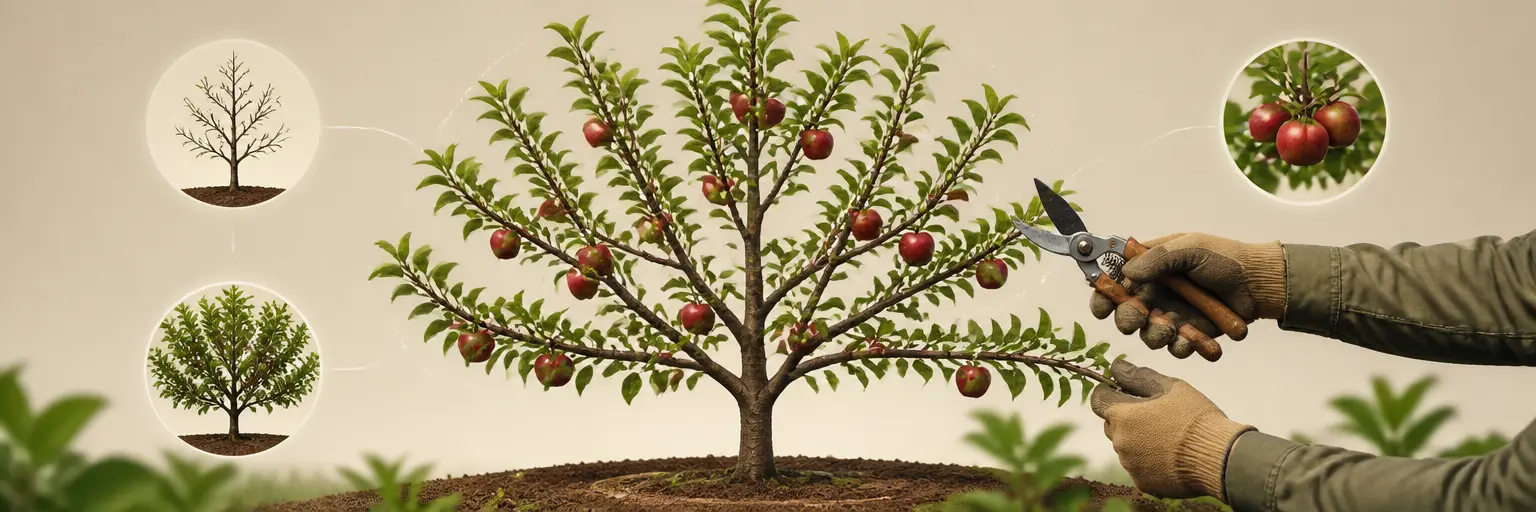
How to Identify and Remove Dead, Diseased, or Damaged Wood
Prune smarter, harvest more! 🍎✂️ Learn how strategic fruit tree pruning improves sunlight exposure, air circulation, tree health, and fruit production. Discover sustainable, organic techniques for shaping branches, removing deadwood, timing seasonal cuts, and encouraging a maximum yield of delicious homegrown fruit—without stressing your trees. Perfect for backyard gardeners ready to grow healthier, more productive orchards naturally.
8 articles
Pruning Fruit Trees to Maintain a Manageable Size and Shape
Pruning Established Fruit Trees: Maintaining Health and Yield
Pruning Fruit Trees: Transforming Your Garden into a Fruit Paradise
Pruning Apple Trees: Techniques for Abundant and Healthy Fruit
Pruning Fruit Trees in Small Spaces: Maximizing Yield in Limited Areas
Pruning Fruit Trees: Understanding the Different Types of Cuts
Pruning Fruit Trees in the Third Year: Focusing on Fruit Production
🍎 Pruning Fruit Trees for Maximum Yield
Welcome to Pruning Fruit Trees for Maximum Yield at CultivateYourFood, your practical resource for growing healthier, more productive fruit trees at home. Learn how strategic pruning improves sunlight penetration, air circulation, tree structure, flowering, and fruit production while supporting sustainable and organic fruit tree care. Whether you grow apples, pears, peaches, plums, cherries, citrus, or other backyard fruit trees, discover how to prune with confidence and encourage larger, healthier, better-tasting harvests.
✂️ Learn the Fundamentals of Fruit Tree Pruning
Discover why pruning is essential for maintaining strong, productive fruit trees. Our guides explain how to remove dead, damaged, diseased, crossing, and overcrowded branches so the tree can direct its energy toward healthy growth and fruit development. You will learn the difference between structural pruning, maintenance pruning, thinning cuts, and heading cuts.
Clear instructions help beginners understand where to cut, when to cut, and how much to remove. Explore practical advice for selecting pruning tools, making clean cuts, recognizing fruiting wood, and avoiding common mistakes that can reduce flowering or weaken the tree.
🌱 Choose the Best Pruning Time for Every Fruit Tree
Timing plays a major role in fruit tree health and yield. Learn when to prune deciduous fruit trees during dormancy, how summer pruning controls excessive vegetative growth, and why certain species require specialized schedules. Proper seasonal pruning can improve bud development, manage tree size, and support consistent fruit production.
Find guidance for adapting pruning practices to your climate, tree age, and local growing season. These resources explain how to avoid pruning during extreme cold, wet weather, or periods of active disease, helping you create a safer and more effective fruit tree maintenance routine.
🍑 Prune Different Fruit Tree Varieties Correctly
Every fruit tree has unique growth habits and fruiting patterns. Learn how to prune apple and pear trees for strong central leaders or modified open-center forms, while understanding the different needs of peaches, nectarines, plums, cherries, citrus, figs, and other popular backyard fruit trees.
Our variety-focused advice helps you identify one-year-old wood, fruiting spurs, water sprouts, suckers, and productive branches. By matching pruning techniques to the tree species, you can protect fruiting buds, improve canopy balance, and increase the potential for a generous harvest.
☀️ Improve Sunlight, Airflow, and Fruit Quality
A well-pruned canopy allows sunlight to reach inner branches and improves air circulation throughout the tree. Better light exposure supports flowering, fruit color, sweetness, and even ripening, while improved airflow helps reduce damp conditions that encourage fungal diseases and pest problems.
Learn how to open congested canopies without over-pruning. Step-by-step guidance explains how to remove competing leaders, narrow branch angles, and thin dense growth while preserving enough leaves to support photosynthesis and healthy organic fruit production.
🪴 Manage Young and Mature Fruit Trees
Training young fruit trees establishes a durable framework that can support heavy crops for many years. Learn how to select scaffold branches, develop balanced spacing, guide branch angles, and shape newly planted trees with minimal stress. Early training can also make harvesting and future maintenance easier.
Mature trees require a more careful approach. Discover how to restore neglected fruit trees gradually, reduce excessive height, remove unsafe limbs, and rejuvenate declining growth without causing unnecessary stress. Small, well-planned pruning sessions are often safer than removing large portions of the canopy at once.
🧰 Use Safe, Sustainable Pruning Practices
Successful pruning depends on clean, sharp tools and safe working habits. Learn how to use bypass pruners, loppers, pruning saws, and pole pruners appropriately. You will also find advice on disinfecting tools between trees, especially when working with branches affected by bacterial or fungal disease.
CultivateYourFood promotes environmentally responsible gardening. Explore organic approaches that limit unnecessary chemical treatments, encourage beneficial insects, support soil health, and combine pruning with composting, mulching, natural pest control, and other sustainable fruit tree care practices.
❓ Frequently Asked Questions About Pruning Fruit Trees
🍏 When is the best time to prune fruit trees?
Most deciduous fruit trees are pruned during late winter or early spring while they are dormant and before vigorous new growth begins. However, the ideal time depends on the species, climate, and pruning goal. Summer pruning can help control size and excessive growth, while some stone fruits are better pruned during dry weather to reduce disease risk.
✂️ How much of a fruit tree should I prune?
As a general guideline, avoid removing more than about 20% to 25% of the canopy in one year unless the tree requires professional restoration. Remove damaged, diseased, dead, crossing, and poorly positioned branches first. Over-pruning can trigger vigorous water sprouts, reduce fruit production, and expose branches to sun damage.
🍎 Does pruning increase fruit production?
Proper pruning can improve fruit production by increasing sunlight, airflow, and the tree’s ability to distribute nutrients. It also helps maintain productive fruiting wood and prevents the canopy from becoming overcrowded. However, excessive pruning may encourage leafy growth instead of flowers and fruit, so balance is essential.
🪚 Should I use pruning seal or wound dressing?
In most cases, pruning sealants are unnecessary because healthy trees naturally compartmentalize small, clean cuts. Focus on using sharp, sanitized tools and making correct cuts just outside the branch collar. Wound dressings may trap moisture or interfere with natural healing, particularly in humid conditions.
🌿 Can an old or neglected fruit tree be pruned back all at once?
It is usually safer to restore a neglected tree gradually over two or more seasons. Begin by removing dead, diseased, dangerous, and severely crossing branches, then reduce height and density step by step. Gradual pruning minimizes stress, limits excessive water sprouts, and gives the tree time to adjust while preserving future fruit production.