
Espalier in the Winter: Protecting Your Trained Fruit Trees From the Cold
Discover smart ways to grow abundant fruit in limited spaces with espalier and other space-saving fruit tree techniques 🍎🌿 Learn how to train, prune, and support fruit trees along walls, fences, trellises, and containers while improving sunlight exposure, airflow, and harvests. Explore practical organic fruit tree care tips for compact gardens, patios, balconies, and small backyards—helping you cultivate healthy, productive trees sustainably at home.
5 articles
Espalier Fruit Trees: Maximizing Sunlight and Airflow for Healthy Growth
The Benefits of Columnar Fruit Trees: Compact Varieties for Limited Areas
Espalier Fruit Trees in Containers: Growing Vertically on Your Patio or Balcony
Espalier Fruit Trees: The Best Time to Start Your Training
🌿 Espalier and Other Space-Saving Fruit Tree Techniques
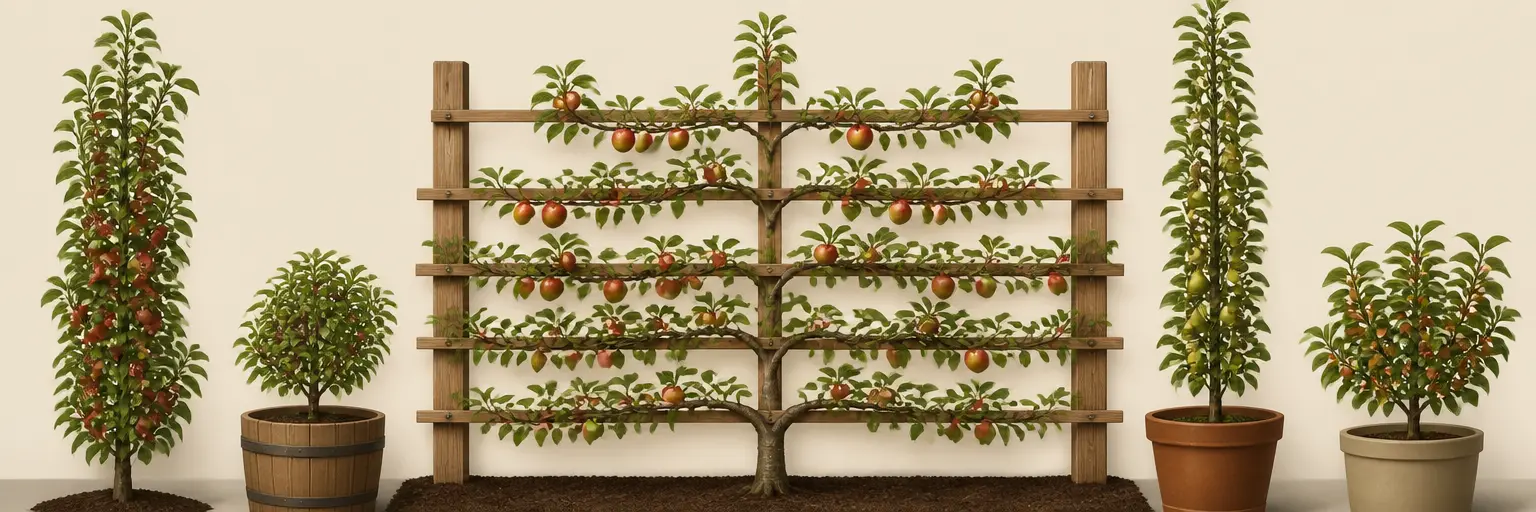
Discover practical ways to grow productive fruit trees in small gardens, patios, courtyards, balconies, and urban growing spaces with espalier and other space-saving fruit tree techniques. This CultivateYourFood subcategory explains how to train, prune, support, and care for fruit trees so they produce healthy harvests without requiring a large traditional orchard. Learn about wall-trained trees, cordons, fans, step-over trees, dwarf varieties, container growing, and other sustainable methods for making the most of limited garden space.
🌳 Learn How Espalier Fruit Trees Work
Espalier is a classic technique that trains fruit tree branches into attractive, controlled patterns against a wall, fence, trellis, or other sturdy support. Our guides cover popular espalier designs, including horizontal tiers, Belgian fences, candelabra forms, fans, and informal patterns, helping you choose an approach that suits your garden layout and available sunlight.
Readers can expect practical advice on selecting suitable fruit tree varieties, installing supports, tying flexible branches, and pruning at the right time of year. Detailed guidance can help beginners avoid common mistakes such as forcing branches too quickly, using weak ties, overcrowding the framework, or choosing a wall with insufficient light.
🏡 Space-Saving Fruit Trees for Small Gardens
Small gardens can still provide abundant homegrown fruit when trees are chosen and trained carefully. Explore information about dwarf fruit trees, semi-dwarf rootstocks, columnar trees, cordons, and compact cultivars that are well suited to narrow borders, raised beds, patios, and urban gardens.
These resources explain how mature tree size, rootstock, pollination needs, sunlight, soil drainage, and seasonal maintenance affect long-term success. You will also find ideas for combining compact apple, pear, plum, peach, cherry, fig, and citrus trees with edible landscaping while preserving walkways and usable outdoor space.
✂️ Pruning and Training Techniques for Better Harvests
Correct pruning is essential for maintaining a compact fruit tree and encouraging reliable fruit production. Learn how formative pruning, summer pruning, winter pruning, thinning cuts, heading cuts, and renewal pruning can shape a tree while improving airflow, sunlight penetration, branch strength, and fruit quality.
Our content focuses on organic and sustainable fruit tree care, including gentle training methods that reduce plant stress and promote balanced growth. Step-by-step explanations help gardeners understand when to remove competing shoots, how to manage vigorous growth, and how to keep trained trees productive without excessive pruning.
🪴 Growing Fruit Trees in Containers
Container fruit trees are an excellent option for renters, balconies, rooftops, patios, and gardens with poor soil. Learn how to select appropriately sized pots, choose well-draining organic potting mixes, improve drainage, and position containers for adequate sunlight and protection from harsh weather.
Container-grown trees require special attention to watering, feeding, root restriction, repotting, winter protection, and structural support. Our guides explain how to grow compact apples, citrus, figs, peaches, nectarines, cherries, and other fruiting plants in containers while avoiding problems such as root congestion, inconsistent moisture, and nutrient deficiencies.
🧱 Using Walls, Fences, and Trellises Efficiently
Walls and fences can transform unused vertical space into productive growing areas. Discover how to assess sunlight exposure, select durable trellis materials, provide safe anchoring, and leave enough room between branches and masonry for healthy airflow and maintenance access.
Vertical fruit growing can also help protect crops from wind, improve garden organization, and make pruning and harvesting easier. Readers will learn how to combine fruit tree supports with sustainable garden design while ensuring that structures can safely carry the weight of mature branches and fruit.
🐝 Pollination, Pest Control, and Organic Fruit Tree Care
Space-saving trees need the same careful attention to pollination, watering, soil health, and pest prevention as full-sized orchard trees. Find practical information about self-fertile and cross-pollinating varieties, attracting bees and beneficial insects, improving soil with compost, and using mulch to conserve moisture.
Because CultivateYourFood promotes environmentally responsible gardening, these resources emphasize organic pest control and preventative care. Learn how to monitor for aphids, caterpillars, scale, fungal diseases, and common fruit tree problems using inspection, sanitation, resistant varieties, physical barriers, and low-impact treatments whenever appropriate.
❓ Frequently Asked Questions About Space-Saving Fruit Trees
🌱 What is the best fruit tree technique for a very small garden?
Espalier, cordon training, and columnar fruit trees are among the most effective choices for very small gardens. Espalier uses a wall or fence for horizontal growth, while cordons train trees into narrow vertical or angled forms. The best option depends on available sunlight, support structures, climate, fruit variety, and how much pruning you can provide.
☀️ How much sunlight do espalier fruit trees need?
Most fruit trees need approximately six to eight hours of direct sunlight each day for strong growth and dependable fruit production. A sunny, south-facing or west-facing wall can provide useful warmth in suitable climates, but always consider local conditions, heat buildup, reflected light, and the specific requirements of the fruit tree species.
✂️ When should espalier fruit trees be pruned?
Pruning times vary by fruit tree type and training stage. Formative pruning is often carried out while the tree is young, while summer pruning is commonly used to control vigorous shoots and maintain shape. Dormant-season pruning may be appropriate for some species, but gardeners should avoid excessive cuts and follow guidance suited to their climate and tree variety.
🪴 Can fruit trees grow successfully in containers?
Yes, many fruit trees can thrive in containers when grown on suitable dwarf or compact rootstocks. Use a large container with drainage holes, a quality growing medium, consistent watering, balanced organic fertilizer, and a sunny position. Container trees may need winter protection, regular root management, and occasional repotting to remain healthy and productive.
🐝 Do espalier fruit trees need another tree for pollination?
Some fruit trees are self-fertile, while others produce better crops when planted near a compatible pollination partner. Apples, pears, sweet cherries, and certain plums often benefit from cross-pollination, although requirements vary by cultivar. Check flowering groups, compatibility, and local pollinator activity before choosing trees for a small-space orchard.