
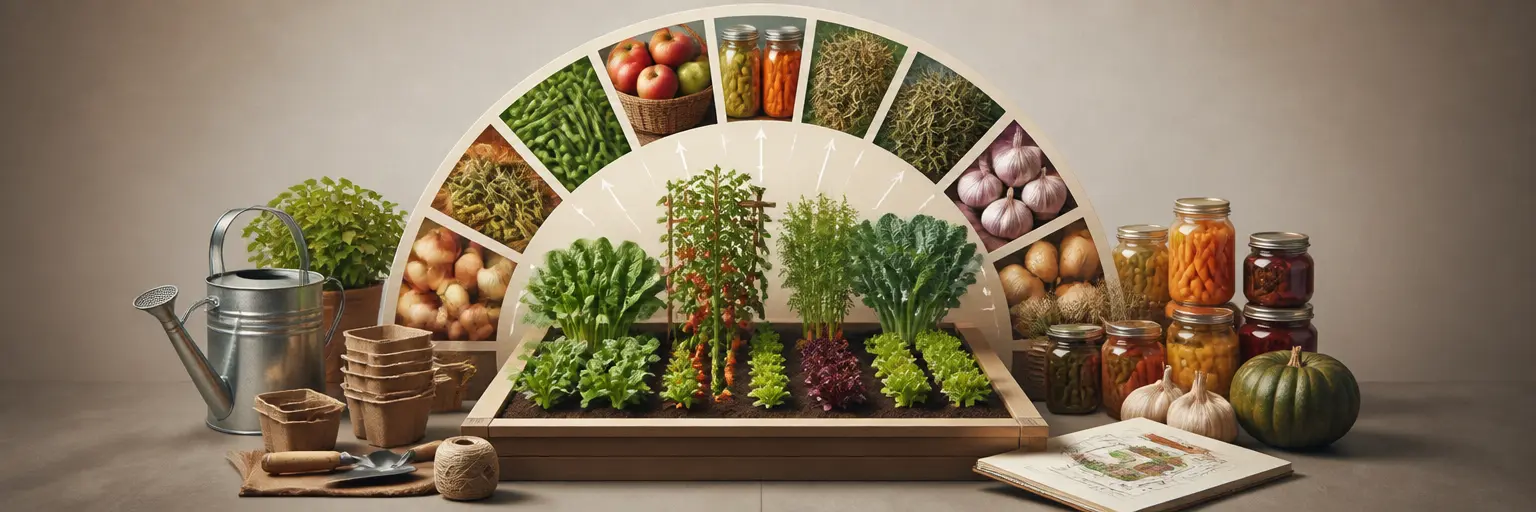
Planning for a MultiPurpose Garden: Fresh Eating and Preservation
Plan your garden for food preservation and enjoy a reliable harvest year-round! 🌱 Discover practical strategies for growing crops suited to canning, freezing, drying, fermenting, and root-cellaring. Learn how to choose productive, storage-friendly fruits, vegetables, and herbs; schedule succession plantings; estimate household needs; and harvest at peak quality. With sustainable, organic gardening techniques, you can reduce waste, build food security, and create a thriving self-sufficient garden. 🥕 Preserve more of what you grow and make every season count!
6 articles
Planning a Tomato Garden for Preservation: Sauce, Paste, and Whole Tomatoes
Planning a Garden with Children: Involving the Whole Family in the Process
Planning a Cucumber Garden for Preservation: Pickles, Relish, and More
PreservationFocused Garden Design: Combining Beauty and Functionality
Choosing the Right Tools for Preservation: Essential Equipment for a Successful Harvest
🌱 Planning Your Garden for Food Preservation
Planning your garden for food preservation helps you grow more of the foods your household already enjoys while reducing waste, grocery costs, and dependence on store-bought products. This subcategory from CultivateYourFood provides practical guidance for designing a productive, sustainable garden with harvesting, storage, and preservation in mind from the very beginning. Learn how to choose preservation-friendly crops, schedule successive plantings, estimate yields, and create a reliable supply of vegetables, fruits, and herbs for canning, freezing, drying, fermenting, and root-cellaring.
🥕 Choosing Crops for Long-Term Food Storage
Discover how to select vegetables, fruits, and herbs that preserve well and provide lasting value after harvest. Useful crops may include tomatoes for canning, beans for freezing or drying, cucumbers for pickling, onions and garlic for storage, potatoes and winter squash for curing, and herbs for drying or freezing. You will learn how crop variety, maturity time, storage life, and household preferences influence a successful food preservation garden.
Our guidance helps you match garden space with your preservation goals so you can grow enough food without planting more than you can use. Expect practical advice on selecting disease-resistant, high-yielding, open-pollinated, and heirloom varieties while maintaining organic and sustainable gardening practices.
📅 Garden Planning for a Reliable Harvest Calendar
A well-planned garden produces crops at the right time for preserving. Learn how to create a garden planting schedule using frost dates, days to maturity, local climate, and preservation deadlines. Succession planting, staggered sowing, and thoughtful crop rotation can help prevent a sudden surplus while ensuring a steady harvest throughout the growing season.
This section explains how to coordinate spring, summer, and fall plantings for continuous production. You can also learn how to plan around busy preservation periods, allowing tomatoes, peppers, berries, beans, and root crops to mature in manageable quantities for canning, freezing, fermenting, dehydrating, and fresh storage.
🫙 Growing Crops for Canning, Pickling, and Fermentation
Explore how to design a garden specifically for home canning, pickling, and fermentation. Learn which crops are especially useful for salsa, tomato sauce, relishes, pickles, sauerkraut, chutneys, and other preserved foods. Planting compatible ingredients together can simplify harvest days and ensure you have the vegetables and herbs needed for complete recipes.
You will find ideas for growing dependable quantities of tomatoes, cucumbers, cabbage, peppers, onions, dill, garlic, and culinary herbs. The content emphasizes safe food handling, appropriate harvesting, organic soil care, and planning realistic yields rather than relying on uncertain or excessive harvest estimates.
❄️ Planning for Freezing, Drying, and Dehydrating
Freezing and drying are convenient ways to preserve garden produce while maintaining flavor and extending usability. Learn how to grow crops suited to blanching and freezing, including green beans, peas, broccoli, carrots, corn, and leafy greens. You will also discover how herbs, peppers, onions, tomatoes, mushrooms, and fruits can be planned for dehydrating and air-drying.
Effective preservation planning includes estimating freezer space, drying capacity, preparation time, and storage containers. These strategies can help you prioritize compact, high-value crops and reduce food waste by preserving produce at peak freshness instead of allowing an abundant harvest to spoil.
🌳 Perennial Fruits, Herbs, and Low-Maintenance Crops
Perennial plants can provide dependable harvests with less annual replanting, making them valuable in a self-sufficient garden. Learn how berries, fruit trees, asparagus, rhubarb, perennial herbs, and other long-lived crops can support a long-term food preservation plan. These plants may supply ingredients for jams, jellies, fruit leather, syrups, dried fruit, herbal teas, and frozen produce.
This section also covers spacing, pollination, soil preparation, pruning, companion planting, and seasonal maintenance. By combining perennial crops with annual vegetables, you can create a diverse home food system that supports sustainable harvesting and preservation year after year.
📏 Estimating Garden Space, Yields, and Household Needs
Successful food preservation begins with realistic calculations. Learn how to estimate how much garden space is required for each crop, how many plants your household needs, and how much produce may be available for storage. Simple planning methods can help you set goals for canned jars, frozen portions, dried ingredients, seed saving, and fresh eating.
You will also learn how to account for crop losses caused by pests, weather, disease, and uneven germination. Using conservative yield estimates and keeping garden records makes it easier to improve future planting plans while avoiding excess work, unnecessary expenses, and preventable food waste.
🌿 Organic Soil and Sustainable Garden Preparation
Healthy soil is essential for abundant harvests and successful food preservation. Explore organic methods such as composting, mulching, cover cropping, crop rotation, natural soil amendments, and responsible watering. These practices support strong plant growth while reducing the need for synthetic fertilizers and helping protect beneficial soil organisms.
Readers can expect practical recommendations for building fertile garden beds that produce nutritious crops suitable for long-term storage. Sustainable garden preparation also improves water efficiency, supports biodiversity, and creates a more resilient food-growing system for home self-sufficiency.
🐞 Pest, Disease, and Weather Planning
Garden pests and plant diseases can reduce the amount of food available for preservation. Learn how to include organic pest control and preventative plant care in your garden design. Strategies may include crop rotation, physical barriers, companion planting, beneficial insects, sanitation, resistant varieties, and regular monitoring.
This section also explains how to prepare for heat, drought, heavy rain, frost, and unexpected harvest delays. A resilient plan helps protect important preservation crops and gives you backup options when weather or pest pressure affects the growing season.
🧺 Harvesting and Storage Preparation
Harvest timing has a direct effect on flavor, nutrition, texture, and storage life. Learn when to pick common garden crops for fresh use, curing, canning, freezing, drying, and cellar storage. Careful handling, clean tools, proper sorting, and prompt processing can significantly improve the quality of preserved food.
You will also find guidance on preparing a garden harvest for short-term and long-term storage. Topics may include curing onions and garlic, storing root vegetables, selecting undamaged produce, organizing preservation batches, and maintaining a clear inventory of your homegrown food.
❓ Frequently Asked Questions About Planning a Food Preservation Garden
🌱 What vegetables are best for a food preservation garden?
Popular preservation crops include tomatoes, green beans, cucumbers, peppers, onions, garlic, carrots, potatoes, cabbage, winter squash, peas, and sweet corn. Choose varieties according to your preferred methods, such as canning, freezing, fermenting, drying, or root-cellaring.
📅 When should I start planning my garden for food preservation?
Begin planning several months before your local planting season. Review frost dates, seed availability, garden space, preservation equipment, household needs, and expected harvest dates. Early planning allows time for starting seeds, ordering specialty varieties, and creating a succession-planting schedule.
🫙 How much should I plant for canning and freezing?
The ideal amount depends on household size, eating habits, available storage, and the number of preservation recipes you intend to make. Start by recording how much food your household uses in a year, then add a modest margin for crop losses and seasonal variation.
🌿 Can a small garden produce enough food to preserve?
Yes. A small garden can provide meaningful amounts of herbs, tomatoes, peppers, greens, berries, beans, and other high-value crops. Focus on productive varieties, vertical growing, succession planting, compact crops, and preservation methods that match your available freezer, pantry, or drying space.
🐞 How can I grow preservation crops organically?
Use compost-rich soil, crop rotation, mulch, natural fertilizers, disease-resistant varieties, beneficial insects, physical pest barriers, and careful watering. Regular observation and preventative care help reduce pest and disease problems while supporting a healthy, sustainable garden ecosystem.