
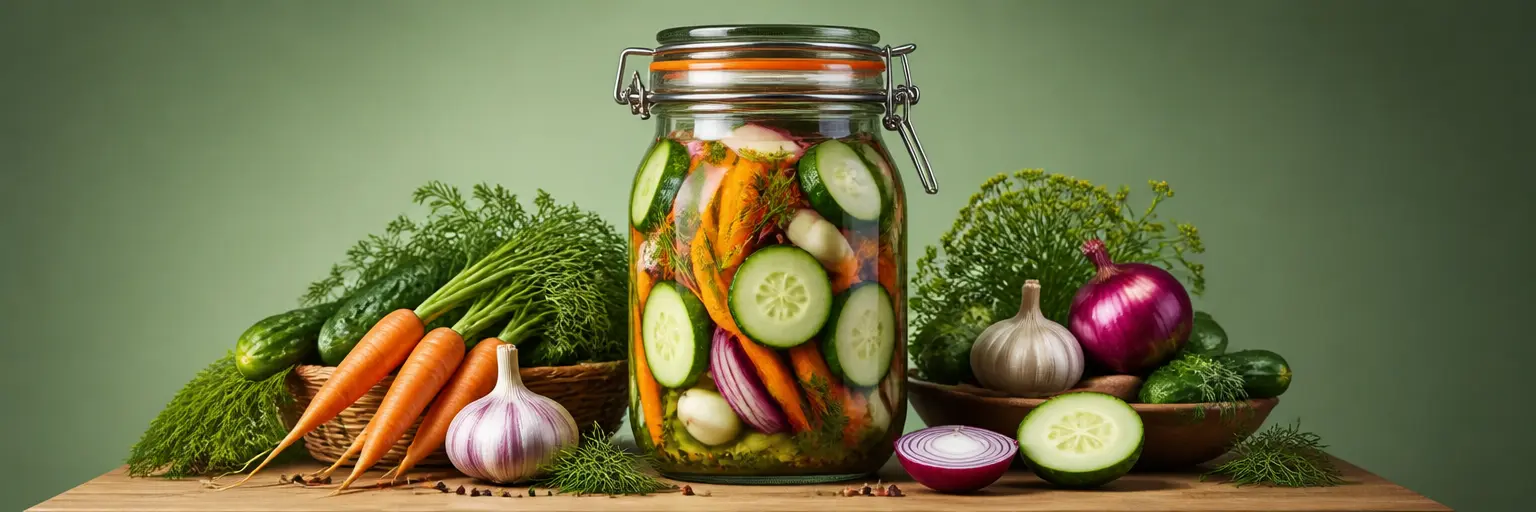
Pickling Radishes: A Zesty and Colorful Addition to Your Preserving Repertoire
Turn your garden’s fresh harvest into delicious, shelf-stable treats with pickling vegetables! 🥒 Discover easy, sustainable methods for preserving cucumbers, carrots, beans, peppers, and more using organic ingredients, flavorful brines, and safe food-handling practices. Perfect for reducing food waste and enjoying homegrown produce year-round, these practical tips help every gardener create crisp, tangy pickles at home.
7 articles
Garlic and Dill: The Classic Combination for Pickled Garden Vegetables
Pickled Cabbage: Transforming Your Garden Harvest into Sauerkraut or Kimchi
Crisp & Crunchy: Achieving the Perfect Texture in Your Homemade Pickles
Pickling Garden Bounty: A Beginner's Guide to Preserving Your Harvest
Preventing Mushy Pickles: Tips for Maintaining Crispness in Your Garden Preserves
LactoFermented Garden Vegetables: A Guide to Traditional Pickling Methods
🥒 Pickling Vegetables from Your Garden: Fresh, Flavorful Preservation
Pickling vegetables from your garden is a practical way to preserve homegrown produce while creating crisp, flavorful foods for meals, snacks, and gift baskets. At CultivateYourFood, discover reliable guidance for harvesting vegetables at their peak, preparing safe pickling brines, and using sustainable, organic gardening methods to extend the life of your garden harvest. Explore refrigerator pickles, fermented vegetables, water-bath canning, vinegar pickling, and storage tips for cucumbers, carrots, beans, beets, peppers, onions, cabbage, and more.
🌱 Choosing and Harvesting Vegetables for Pickling
The best pickled vegetables begin with fresh, firm, unblemished produce harvested at the right stage. Learn how to select small cucumbers for crunchy dill pickles, tender green beans for pickled beans, young carrots for vibrant jars, and peppers or onions for sweet, spicy, and tangy relishes. Proper harvesting helps preserve natural texture, color, and flavor.
Readers can also learn how organic growing practices influence pickling quality. Sustainable watering, healthy compost, crop rotation, and natural pest control can support vigorous vegetables with fewer surface defects. Harvesting early in the day, washing produce carefully, and removing damaged pieces are important steps for preparing vegetables for safe and attractive preservation.
🧂 Vinegar Pickling and Brine Basics
Vinegar pickling uses an acidic brine to create the familiar tangy flavor associated with pickles. This section explains the role of vinegar, water, salt, sugar, herbs, garlic, and spices in a balanced recipe. You will find helpful information about using food-safe vinegar with consistent acidity, measuring ingredients accurately, and avoiding unnecessary changes to tested preservation recipes.
Discover how brine ingredients affect crunch, flavor, and appearance. Dill, mustard seed, coriander, peppercorns, bay leaves, and chili flakes can create distinctive flavor combinations, while salt and sugar help shape the final taste. Clear preparation guidance makes it easier to pickle garden vegetables confidently, whether you are making a small refrigerator batch or preserving jars for long-term storage.
🥕 Refrigerator Pickles for Quick Garden Preservation
Refrigerator pickles are an accessible option for gardeners who want fast results without using a pressure canner or water-bath canner. Learn how to prepare quick pickled cucumbers, carrots, onions, radishes, peppers, and beans using a hot or cold brine. These recipes are ideal for small harvests and can be customized with fresh herbs from your garden.
This method is especially useful for beginners because it requires minimal equipment and offers flexible flavor experimentation. Readers will learn how to use clean containers, allow vegetables to absorb the brine, label jars with preparation dates, and store pickles correctly in the refrigerator. Since these pickles are not shelf-stable, proper chilling and timely consumption are essential.
🫙 Water-Bath Canning for Shelf-Stable Pickled Vegetables
Water-bath canning can help preserve acidified vegetables for longer storage when a tested recipe and correct processing method are followed. This section covers jar preparation, headspace, lid selection, processing time, altitude considerations, and signs of a proper seal. Popular projects include dill pickles, pickled beets, bread-and-butter pickles, pickled peppers, and pickled green beans.
Safe canning depends on maintaining the correct acidity and following trusted instructions rather than guessing ingredient ratios. Readers will learn why tested recipes should not be casually altered, how to inspect jars after processing, and how to store sealed products in a cool, dark, dry place. Any jar with an unusual odor, bulging lid, mold, or other signs of spoilage should be discarded without tasting.
🦠 Fermented Vegetables and Natural Lacto-Fermentation
Fermentation is another traditional way to preserve garden vegetables while developing complex sour flavors. Explore the basics of lacto-fermentation for cabbage, cucumbers, carrots, radishes, peppers, and mixed vegetable blends. Salt creates an environment that encourages beneficial lactic acid bacteria while discouraging many unwanted microorganisms.
Successful fermentation requires clean equipment, appropriate salt concentration, vegetables kept beneath the brine, and careful observation. Readers can learn to recognize normal bubbling, sour aromas, and gradual flavor development, as well as warning signs such as fuzzy mold, rotten smells, or unusual discoloration. Fermented vegetables should be handled hygienically and refrigerated when the desired flavor is reached.
🌿 Herbs, Spices, and Creative Pickle Flavor Combinations
Homegrown herbs and spices can make each jar of pickled vegetables unique. Fresh dill, thyme, oregano, rosemary, basil, garlic, horseradish, and chili peppers can complement different vegetables and create sweet, savory, smoky, or spicy profiles. This subcategory offers inspiration for combining garden ingredients without overpowering the natural taste of the produce.
Experiment with pickled carrot ribbons, spicy cucumber spears, garlic green beans, beet and onion pickles, jalapeño rings, and seasonal vegetable medleys. Keeping notes about ingredient quantities, brine strength, processing method, and taste results can help you improve future batches. Small, clearly labeled test batches are an excellent way to develop signature pickle recipes safely.
📦 Storing, Serving, and Enjoying Homemade Pickles
Proper storage helps preserve the quality of homemade pickles after preparation. Learn how to label jars, track dates, check seals, organize pantry shelves, and refrigerate opened products. Pickled vegetables can add acidity and crunch to sandwiches, salads, grain bowls, burgers, tacos, charcuterie boards, and simple home-cooked meals.
Pickles also provide a useful way to reduce garden waste during periods of abundant harvest. Sharing jars with friends, using seasonal produce, and reusing suitable glass containers responsibly can support a more sustainable kitchen. Always prioritize safe storage practices and follow recipe-specific instructions for shelf life and refrigeration.
❓ Frequently Asked Questions About Pickling Garden Vegetables
🥒 What vegetables are best for pickling?
Cucumbers, carrots, green beans, beets, onions, cabbage, radishes, peppers, cauliflower, and asparagus are popular choices. Select vegetables that are fresh, firm, and free from mold, bruises, or decay. Smaller and younger produce often provides better texture, while thicker vegetables may need slicing or blanching.
🧂 What type of vinegar should I use for pickling?
Use food-safe vinegar with a consistent acidity, commonly 5% acidity, unless a tested recipe specifies otherwise. White vinegar creates a clean, sharp flavor, while apple cider vinegar offers a milder and slightly fruity taste. Avoid reducing the vinegar in a tested recipe because acidity is important for safe preservation.
🫙 Are refrigerator pickles shelf-stable?
No. Refrigerator pickles are not shelf-stable because they have not been processed to create a safe sealed product for pantry storage. Keep them refrigerated, use clean utensils, and follow the recipe’s recommended storage period. For long-term room-temperature storage, use a tested water-bath canning recipe.
🌡️ Why did my homemade pickles become soft?
Soft pickles can result from overripe vegetables, prolonged soaking, insufficient freshness, improper processing, or using unsuitable salt or water. Harvest cucumbers promptly, remove the blossom ends when appropriate, use a tested recipe, and avoid overprocessing. Keeping vegetables cold before pickling may also help maintain crispness.
⚠️ How can I tell if pickled vegetables are unsafe?
Discard pickled vegetables if the jar is leaking, the lid is bulging, the seal is broken, or the contents show mold, unusual discoloration, a foul odor, or unexpected texture. Never taste food to test whether it is safe. When in doubt, throw it out and follow current food-preservation guidance from a trusted extension service or food-safety authority.