
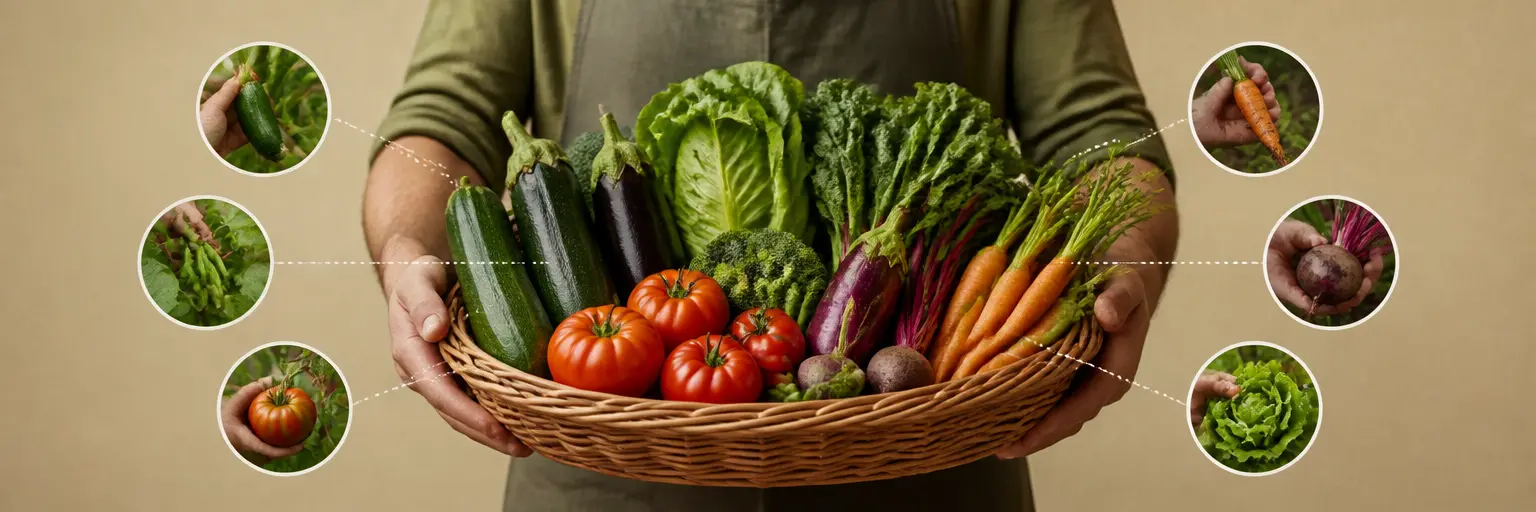
The Science of Harvesting: Understanding the Physiology of Ripening
Harvest vegetables at their peak with practical guidance on recognizing the right color, size, firmness, and aroma for every crop. 🥕🥒 Learn how to identify ideal harvest times, avoid overripe produce, and pick gently to preserve freshness, flavor, and continued plant growth. 🌱 These sustainable gardening tips help home growers enjoy healthier, tastier vegetables while making the most of every harvest.
7 articles
Texture Tells All: Using Touch to Determine Vegetable Harvest Time
The Ideal Time of Day: When to Harvest Vegetables for the Best Quality
The Raised Bed Gardener's Guide: Harvesting Vegetables in Raised Beds
Maximize Your Yield: Knowing When to Harvest for the Best Results
The Vertical Gardener's Guide: Harvesting Vegetables Up High
The Impact of Weather: How Climate Affects Vegetable Harvest Timing
🥕 Knowing When to Harvest Vegetables
Harvesting vegetables at the right time is essential for achieving the best flavor, texture, nutrition, and storage life. On CultivateYourFood, this subcategory helps home gardeners identify vegetable harvest signs, understand crop maturity, and pick produce at its peak using sustainable and organic gardening methods. Learn how to harvest vegetables from a backyard garden, raised bed, container, or allotment while reducing waste and protecting plant health.
🌱 Vegetable Harvest Signs and Maturity Indicators
Discover how to recognize the most reliable signs vegetables are ready to harvest. Guides cover color, size, firmness, scent, flowering, seed development, and days to maturity for popular crops such as tomatoes, cucumbers, zucchini, peppers, beans, peas, carrots, onions, potatoes, and leafy greens.
Because every variety and growing condition is different, you will learn why seed packets provide estimates rather than exact harvest dates. Our practical advice explains how sunlight, temperature, soil fertility, watering, and organic growing practices influence vegetable maturity and help you make confident harvesting decisions.
🍅 How to Know When Common Vegetables Are Ready
Find crop-specific guidance for knowing when to harvest vegetables at their best. Learn when tomatoes should be picked for full flavor, how to judge cucumber size, when zucchini becomes too large, and how to identify ripe peppers, eggplants, squash, and melons.
You will also find advice for root crops and cool-season vegetables, including carrots, beets, radishes, potatoes, garlic, onions, cabbage, broccoli, spinach, lettuce, and kale. These resources explain whether to harvest young and tender or allow the crop to reach full maturity for better storage and cooking results.
✂️ Harvesting Techniques for Healthy Plants
Use simple, gentle techniques to harvest vegetables without damaging stems, roots, leaves, or developing fruit. Learn when to use clean scissors, pruners, a garden knife, or hand-picking, and how to make clean cuts that reduce the risk of disease.
Proper harvesting encourages continued production in many crops. Guidance includes picking beans and peas regularly, harvesting leafy greens using the cut-and-come-again method, collecting herbs before flowering, and removing ripe produce promptly. These techniques support productive organic vegetable gardens throughout the growing season.
🌦️ Best Time of Day to Harvest Garden Vegetables
Timing your harvest during the day can improve freshness and quality. Learn why early morning is often ideal for leafy greens, herbs, peas, and root vegetables, while dry conditions may be preferable for onions, garlic, potatoes, and other crops intended for curing or storage.
Our harvesting advice also explains how weather affects picking decisions. You will learn what to do before frost, during heat waves, after rainfall, and at the end of the growing season. This helps protect crops from splitting, wilting, rot, and cold damage.
🧺 Harvesting Vegetables for Fresh Eating and Storage
Different uses require different maturity levels. Learn how to select vegetables for immediate meals, farmers’ market quality, freezing, fermenting, pickling, dehydrating, canning, and long-term storage. Harvesting at the correct stage improves flavor while preserving firmness and nutritional value.
After picking, discover basic post-harvest care, including gentle cleaning, sorting, cooling, curing, and storing. These steps help extend the life of homegrown produce and make it easier to enjoy an abundant organic harvest for weeks or months.
🌿 Sustainable and Organic Harvesting Practices
CultivateYourFood focuses on harvesting methods that support healthy soil, strong plants, and responsible food production. Learn how to avoid unnecessary waste, leave beneficial plant material in place, save suitable seeds, and harvest in ways that protect pollinators and garden ecosystems.
These guides connect harvesting with composting, crop rotation, natural pest control, and seasonal garden planning. By using low-waste and chemical-free gardening practices, you can produce healthier food while caring for the soil and environment.
❓ Frequently Asked Questions About Knowing When to Harvest Vegetables
🥦 How do I know when vegetables are ready to harvest?
Look for crop-specific maturity signs such as the expected size, color, firmness, aroma, and texture. Compare these signs with the seed packet or plant label, but rely on the plant’s appearance and growing conditions rather than the date alone.
🍅 Should I harvest vegetables in the morning or evening?
Early morning is usually best because many vegetables are hydrated, crisp, and cool. Harvest on a dry morning when possible, especially for produce intended for storage. Avoid picking wet vegetables if you plan to store them for an extended period.
🥒 What happens if I leave vegetables on the plant too long?
Overripe vegetables can become tough, bitter, fibrous, seedy, or more vulnerable to pests and disease. Crops such as zucchini, cucumbers, beans, and peas may decline quickly when left unpicked, while some tomatoes and peppers can continue ripening safely on or off the plant.
✂️ What tools should I use to harvest vegetables?
Use clean hands for delicate produce and clean, sharp scissors, pruners, or a garden knife for firm stems and branches. Disinfect tools between plants when disease is a concern, and handle harvested vegetables gently to prevent bruising and cuts.
🧺 How should I store vegetables immediately after harvesting?
Remove damaged produce, avoid unnecessary washing before storage, and cool vegetables quickly when appropriate. Leafy greens and tender vegetables generally benefit from refrigeration, while onions, garlic, potatoes, and winter squash need dry, well-ventilated curing and storage conditions.