
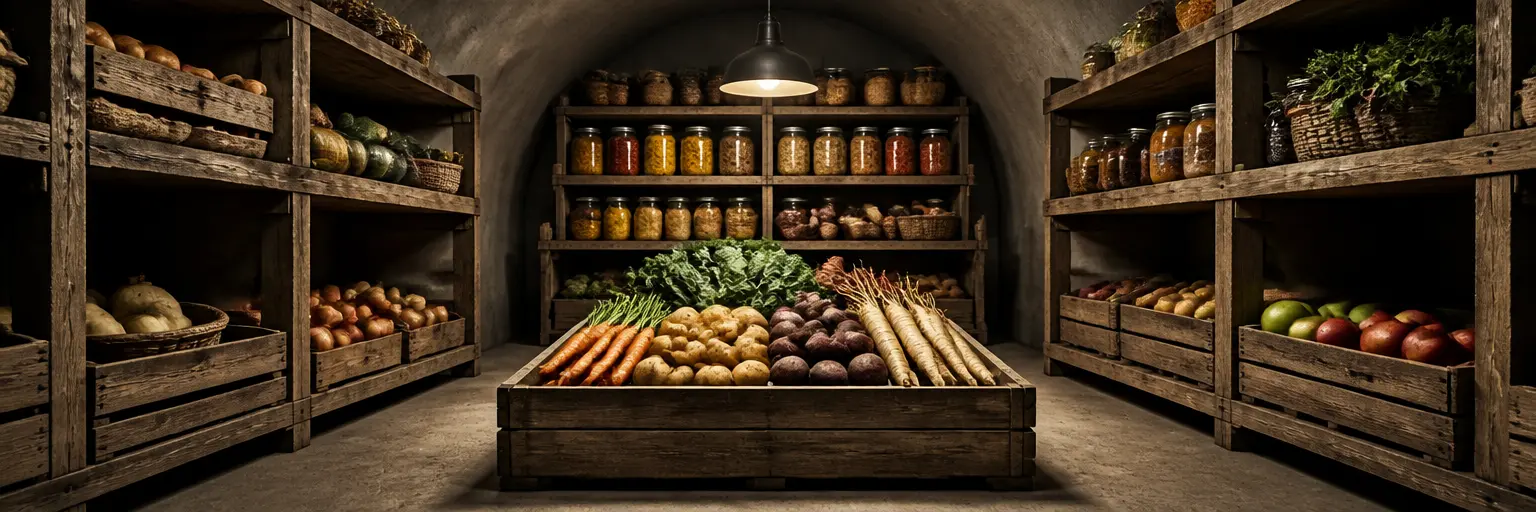
Understanding Humidity Levels in Your Root Cellar: A Detailed Guide
Discover the art of root cellaring for long-term storage 🥕🥔—a natural, energy-efficient way to preserve fresh harvests without electricity. Learn how to store root vegetables, fruits, and other garden produce in cool, dark, humid conditions while maintaining flavor, texture, and nutrients. 🌱 Explore practical tips for choosing produce, preparing crops, managing temperature and humidity, preventing spoilage, and organizing a sustainable home root cellar for year-round food storage.
5 articles
The Benefits of Root Cellaring: Beyond Food Storage
How to Air Out Your Root Cellar Effectively
Root Cellaring: A CostEffective Way to Preserve Your Harvest
The Art of Layering Vegetables in Your Root Cellar for Maximum Storage
🥕 Root Cellaring for Long-Term Storage
Discover how root cellaring for long-term storage can help you preserve homegrown fruits, vegetables, and herbs naturally, without relying on electricity or chemical preservatives. This subcategory from CultivateYourFood provides practical guidance for storing harvests in cool, dark, humid, and well-ventilated conditions. Learn how to extend the shelf life of potatoes, carrots, beets, onions, garlic, winter squash, apples, and other garden crops while reducing food waste and supporting sustainable, organic living.
🏡 Building or Choosing a Root Cellar
Learn how to create an effective root cellar for vegetables using a basement, underground room, insulated box, buried container, garage, shed, or other cool storage space. Articles will explain the ideal temperature, humidity, ventilation, darkness, and organization required for successful long-term food storage. You will also discover affordable root cellar ideas for small homes, apartments, homesteads, and backyard gardens.
Expect practical advice on selecting storage shelves, crates, bins, sand, straw, sawdust, and other natural materials. You will learn how to monitor temperature and humidity, prevent condensation, improve airflow, and protect your stored produce from freezing, sprouting, mold, rodents, and premature spoilage.
🥔 Storing Root Vegetables Successfully
Explore proven techniques for storing root crops such as potatoes, carrots, parsnips, beets, turnips, rutabagas, and radishes. This subcategory explains how to harvest roots at the right maturity, remove excess soil, avoid unnecessary washing, trim foliage, and prepare vegetables for storage. These steps help preserve flavor, texture, nutrients, and freshness for several months.
Readers will find crop-specific recommendations for long-term vegetable storage, including the best temperatures and humidity levels for different root crops. You will also learn how to layer vegetables in damp sand or other natural packing materials, inspect stored produce regularly, and remove damaged items before rot spreads.
🧅 Preserving Onions, Garlic, and Alliums
Discover how to cure and store onions, garlic, shallots, and other alliums for extended use. Proper curing allows outer skins to dry and form a protective barrier, making these crops ideal for pantry storage, basement storage, or a dedicated root cellar. Guidance will cover harvesting, drying, trimming roots, handling stems, and choosing the best storage containers.
Learn why good air circulation and low humidity are essential for keeping onions and garlic firm and free from mold. You can expect tips for braiding garlic, using mesh bags, separating varieties, checking for soft bulbs, and preventing sprouting during long-term storage.
🍎 Storing Apples and Other Fruits
Find out how to store apples, pears, quinces, and other suitable fruits in a cool storage environment. Topics include harvesting fruit carefully, selecting undamaged specimens, wrapping individual apples, using ventilated crates, and separating fruits from vegetables when necessary. These methods can help maintain quality while extending the seasonal harvest.
This section also explains how ripening gases can affect nearby produce. You will learn how to inspect fruit frequently, remove bruised or spoiled pieces, control humidity, and reduce odors. With careful organization, a root cellar can become an efficient system for storing fresh fruit without refrigeration.
🎃 Winter Squash and Pumpkin Storage
Learn how to cure and store winter squash and pumpkins, including butternut, acorn, delicata, kabocha, and Hubbard varieties. Proper curing strengthens the skin, reduces moisture loss, and improves storage life. Articles will cover when to harvest, how to handle fruit gently, and how to provide warm, dry curing conditions before moving squash into a cooler storage area.
Expect practical recommendations for arranging squash on shelves, preventing direct contact with damp floors, and checking stems and skins for signs of decay. These techniques support natural food preservation and help gardeners enjoy homegrown squash throughout winter and early spring.
🌡️ Managing Temperature, Humidity, and Ventilation
Successful root cellaring depends on maintaining the right storage environment for each crop. Learn how to use thermometers, hygrometers, vents, insulation, damp materials, and airflow strategies to create stable conditions. You will discover why root vegetables generally prefer cool, humid conditions, while onions, garlic, and winter squash require drier storage.
This section provides troubleshooting advice for common problems, including excessive moisture, dry or shriveled produce, freezing temperatures, condensation, bad odors, and poor air circulation. By adjusting ventilation and storage materials, you can improve root cellar climate control and protect your harvest for longer.
🧺 Organizing, Inspecting, and Maintaining Stored Food
Discover simple systems for labeling, rotating, and organizing stored crops so that older produce is used first. Learn how to keep different foods in suitable containers, avoid overcrowding, maintain clean shelves, and create an easy inspection routine. Organized storage makes it easier to track quantities and plan meals throughout the colder months.
Regular maintenance is essential for preventing food waste and preserving quality. Readers will learn how to identify soft spots, mold, sprouting, dehydration, pest damage, and unpleasant smells. These habits support a safe and efficient root cellar while helping households make the most of every organic harvest.
❓ Frequently Asked Questions About Root Cellaring
What is root cellaring?
Root cellaring is a traditional method of preserving fresh produce in a cool, dark, humid, and well-ventilated space. It is commonly used for root vegetables, apples, winter squash, onions, and garlic. Unlike freezing or canning, root cellaring uses natural environmental conditions to extend shelf life.
What vegetables store best in a root cellar?
Potatoes, carrots, beets, parsnips, turnips, rutabagas, and celeriac are among the best vegetables for root cellar storage. Winter squash and pumpkins also store well after curing. Each crop has different temperature and humidity needs, so separating produce into suitable areas can improve results.
Does a root cellar need to be underground?
No. An underground cellar is helpful because soil naturally moderates temperature, but it is not essential. A cool basement, insulated closet, buried storage container, garage, shed, or specially designed storage cabinet can also work when temperature, humidity, darkness, and ventilation are managed properly.
How long can vegetables last in a root cellar?
Storage time varies by crop, variety, harvest condition, and environment. Potatoes, carrots, beets, and parsnips may last for several months, while onions, garlic, and winter squash can often remain usable for much of the winter. Inspecting produce regularly and removing damaged items helps maximize storage life.
How can I prevent mold and rot in stored produce?
Begin with healthy, undamaged produce and handle it gently. Provide appropriate ventilation, avoid excess water, use clean storage materials, and maintain the correct humidity for each crop. Check the cellar frequently and promptly remove any soft, leaking, or moldy food to prevent decay from spreading.