
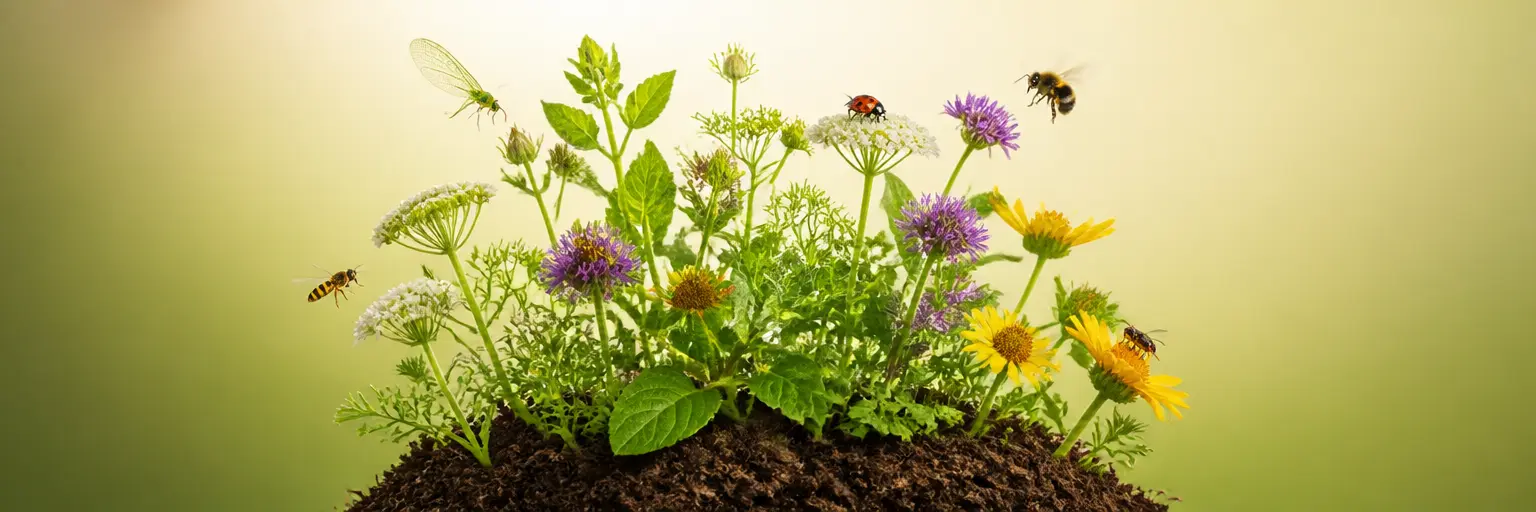
Beneficial Insects and Organic Gardening: A Natural Partnership
Attract beneficial insects to your garden naturally 🐝🌼 and create a healthier, more productive growing space. Discover organic gardening strategies using pollinator-friendly flowers, native plants, companion planting, and habitat shelters to welcome ladybugs, lacewings, bees, and other helpful insects. Reduce reliance on chemical pesticides, support biodiversity, and encourage natural pest control while cultivating thriving fruits, vegetables, and herbs at home.
7 articles
The Benefits of Biodiversity: A Thriving Garden Ecosystem
Attracting Pollinators: Boosting Your Garden's Fruit and Veggie Yield
Attract Parasitic Wasps: Tiny Allies Against Garden Pests
Shelter for Good Bugs: Creating Habitats in Your Garden
Attracting Praying Mantis: The Master Hunters of Your Garden
Attracting Beneficial Insects with Specific Colors: A Visual Guide
🐝 Attracting Beneficial Insects for a Thriving Organic Garden
Welcome to the Attracting Beneficial Insects subcategory at CultivateYourFood, your practical resource for using nature-based solutions in the home garden. Discover how to invite pollinators and predatory insects into your growing space to improve fruit, vegetable, and herb production while reducing reliance on synthetic pesticides. Learn sustainable pest control methods, companion planting strategies, insect-friendly gardening techniques, and ways to build a healthy garden ecosystem naturally.
🌼 Why Beneficial Insects Matter in Sustainable Gardening
Beneficial insects play two essential roles in an organic garden: they pollinate flowering crops and help control pests. Bees, hoverflies, butterflies, and other pollinators support the production of fruits, seeds, and vegetables, while ladybugs, lacewings, praying mantises, and predatory wasps feed on aphids, caterpillars, whiteflies, and other common garden pests.
Readers can expect clear guidance on creating a balanced garden environment where helpful insects can thrive. By encouraging natural pest control, you can protect crops, support biodiversity, reduce chemical pesticide use, and cultivate healthier plants using sustainable gardening practices.
🌺 Choosing Flowers That Attract Pollinators
Learn how to select nectar-rich and pollen-rich flowers that attract bees, butterflies, hoverflies, and other important pollinators. Articles in this subcategory can help you choose suitable annuals, perennials, herbs, and native plants for your climate, soil type, available space, and growing season.
Discover why planting a variety of flower shapes, colors, and bloom times creates a reliable food source throughout the year. Native flowering plants, marigolds, calendula, borage, lavender, sunflowers, cosmos, dill, fennel, and flowering herbs can make vegetable gardens more productive and welcoming to beneficial insects.
🐞 Encouraging Natural Pest Control
Explore practical ways to attract predatory insects that naturally reduce pest populations. Lady beetles can help manage aphids, lacewings consume soft-bodied insects, and hoverfly larvae often feed on troublesome garden pests. These allies can support organic pest management without harming your crops or soil.
You will find advice on avoiding broad-spectrum insecticides, identifying helpful insects before removing them, and providing suitable shelter and food sources. Integrated pest management combines observation, prevention, physical controls, and beneficial insects to keep pest problems manageable and environmentally responsible.
🌿 Companion Planting for Insect-Friendly Gardens
Companion planting can help create a more diverse and resilient garden. Learn how to combine vegetables, fruits, herbs, and flowers so that blooming plants provide nectar while aromatic plants support pollinator activity and may help confuse or deter certain pests.
Readers can discover companion planting ideas for tomatoes, peppers, cucumbers, squash, beans, brassicas, carrots, and culinary herbs. Although no plant completely prevents pest problems, thoughtful plant combinations can improve habitat, increase biodiversity, and make your garden more attractive to beneficial insects and pollinators.
🏡 Creating Shelter and Water Sources for Helpful Insects
Beneficial insects need more than flowers to establish themselves. Learn how leaf litter, native grasses, ground cover, small logs, hollow stems, stone areas, and undisturbed soil can provide nesting and overwintering habitat for bees and predatory insects.
Find simple ideas for adding shallow water sources, insect hotels, and protected garden areas while avoiding hazards such as deep containers or stagnant water. A few carefully planned features can transform an ordinary backyard into a pollinator-friendly and wildlife-supporting garden habitat.
🌱 Organic Gardening Practices That Protect Beneficial Insects
Discover how soil health, composting, mulching, crop rotation, and careful watering contribute to a strong garden ecosystem. Healthy plants are often better able to tolerate pest pressure, while organic matter and diverse planting provide habitat for insects above and below the soil surface.
This subcategory emphasizes responsible pest control, including hand-picking, insect netting, row covers, pruning, and targeted treatments when necessary. If an organic spray is needed, learn why timing and careful application are important for protecting bees, butterflies, predatory insects, and other non-target organisms.
❓ Frequently Asked Questions About Attracting Beneficial Insects
🐝 What are beneficial insects?
Beneficial insects are species that support garden health through pollination or natural pest control. Examples include bees, butterflies, hoverflies, ladybugs, lacewings, ground beetles, and some parasitic wasps. They help produce food and reduce populations of harmful insects.
🌸 Which plants attract the most beneficial insects?
Many beneficial insects are attracted to nectar- and pollen-rich plants such as borage, calendula, cosmos, sunflowers, lavender, dill, fennel, yarrow, native wildflowers, and flowering herbs. Planting different species that bloom at various times provides food throughout the growing season.
🧴 Should I stop using all insecticides in my garden?
Avoiding broad-spectrum insecticides is generally best for beneficial insects. Start with prevention, monitoring, hand-picking, barriers, and other nonchemical controls. If treatment is necessary, choose a targeted organic option, follow the label, and apply it when pollinators are least active.
🏠 How can I provide shelter for beneficial insects?
Leave some undisturbed areas with leaf litter, hollow plant stems, mulch, native grasses, logs, stones, and bare soil. You can also add an insect shelter made from natural materials. Avoid over-cleaning the garden, since many helpful insects overwinter in plant debris and soil.
🌿 Do beneficial insects completely eliminate garden pests?
Beneficial insects rarely remove every pest, but they can help maintain pest populations at manageable levels. The most effective approach combines biodiversity, healthy soil, regular monitoring, companion planting, physical barriers, and minimal, targeted intervention as part of an integrated organic pest management strategy.